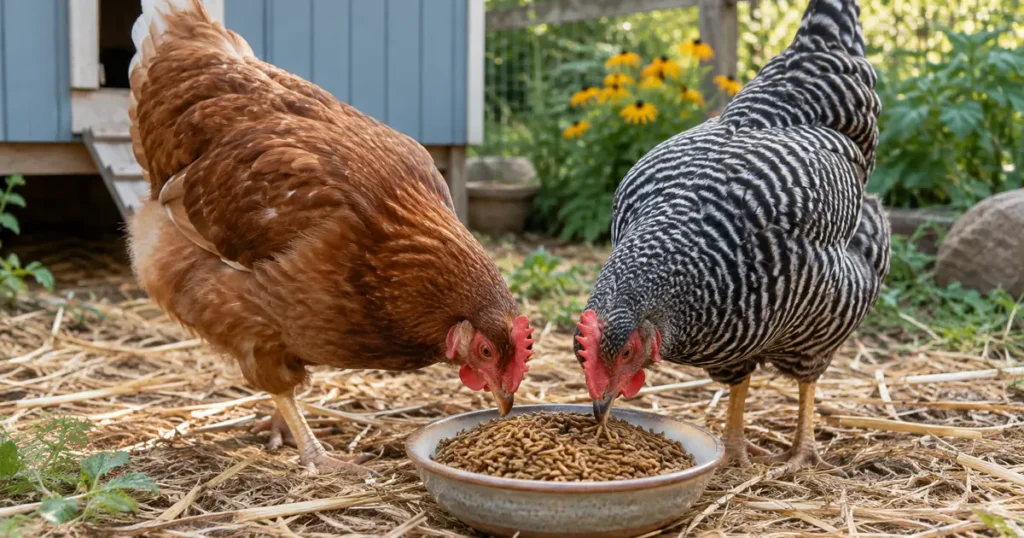
Mealworms are a good treat for chickens: they are rich in protein and fat, hens go wild for them, and dried mealworms are easy to store and portion. They are still a treat, not a feed. Mealworms are low in calcium and high in fat, so keep them to a small pinch per hen as part of the 10% treat allowance, with complete layer feed as the base of the diet.
Quick answer
- Yes, mealworms are good for chickens in small amounts: roughly half their dry weight is protein.
- They are also high in fat and much lower in calcium than phosphorus, so they cannot replace layer feed.
- Dried and live mealworms are both safe; dried are easier to store, live ones contain more water.
- Black soldier fly larvae offer similar protein with far more calcium, which makes them a handy alternative for laying hens.
- Count mealworms in the 10% treat limit: a small pinch per hen, hand-fed or scattered, a few times a week.
In this guide
Are mealworms good for chickens?
Yes. Mealworms are the larvae of the yellow mealworm beetle (Tenebrio molitor). Chickens are natural insect eaters, and Cooperative Extension poultry specialists note that pastured birds forage for a wide range of insects and worms on their own. Dried mealworms simply bring that natural food into the run.
According to Feedipedia, the animal-feed database run by INRAE, CIRAD, AFZ and the FAO, dried mealworms average about 50% crude protein and about 36% fat on a dry matter basis, with wide ranges between products. That makes them far richer in protein than layer feed, which Oregon State University Extension puts at about 16% protein.
The catch is balance. Layer feed carries about 3-4% calcium for strong eggshells. Mealworms average only about 0.24% calcium against roughly 0.77% phosphorus on a dry basis, so they bring far more phosphorus than calcium. Feedipedia also cites research in which birds fed only mealworms developed calcium deficiency and bone disease. As a small extra on top of a complete feed, that is not a concern; as a large part of the diet, it would be.
What mealworms are useful for
- Training and taming. Few things bring hens running like a handful of mealworms, which helps with handling and getting birds into the coop at dusk.
- Enrichment. Scattering a pinch in bedding encourages natural scratching and foraging.
- Molt support. Hens regrowing feathers need protein. A few mealworms are a welcome extra, though the real protein boost should come from the feed itself, as covered in the chicken molting guide.
Mealworms are not a medicine and do not fix health problems. A hen that is lethargic, hunched, losing weight or not eating needs an avian or poultry vet, and the guide to signs of a sick chicken can help you decide how urgent it is.
Dried mealworms vs. live mealworms for chickens
Both forms are safe. The choice is mostly about convenience and budget.
| Dried mealworms | Live mealworms | |
|---|---|---|
| Storage | Months in a sealed container in a cool, dry place | Kept in a ventilated bin, usually in the fridge or a cool spot |
| Protein per ounce | Higher, because the water is removed | Lower, because live larvae are mostly water |
| Appeal to hens | Very high | Very high; movement triggers hunting behavior |
| Cost | Easy to buy in bulk bags | Usually cost more per serving unless you raise your own |
| Effort | None | Need feeding and care if kept for more than a few days |
| Best for | Everyday treats, winter, training | Enrichment, keepers who want to raise their own |
Dried mealworms can be rehydrated in a little warm water for a few minutes, which some hens prefer and which adds a bit of moisture in hot weather. Store bags sealed and dry, and throw out any that smell rancid or look moldy.
Warning: Do not confuse store-bought mealworms with the lesser mealworm, or darkling beetle (Alphitobius diaperinus), that can infest coop litter and feed. UF/IFAS describes that species as a pest that can carry poultry pathogens such as Salmonella and the viruses behind Marek’s disease and avian influenza. If you raise live mealworms, keep the colony in a closed bin away from the coop and buy starter stock from a reputable supplier.
Gear that helps
- Dried mealworms in a resealable bag: Shelf-stable treat that is easy to portion for training and enrichment.
As an Amazon Associate we earn from qualifying purchases. Check current prices and reviews on Amazon.
How many mealworms per chicken?
There is no official mealworm ration for backyard hens, so the best guide is the overall treat limit. Oregon State University Extension keeps extras such as scratch and scraps to about 10-15% of daily intake, and most keepers use 10%.
Alabama Extension feed tables put laying hens at roughly 18 to 27 lbs of feed per 100 birds per day, or about 0.18 to 0.27 lb (80-120 g) per hen. Ten percent of that is roughly 8-12 g of treats per hen per day, and that covers all treats combined. Because mealworms are so rich in fat and protein, it makes sense to use only part of that allowance for them.
In practice, that means:
- A small pinch per hen as a hand-fed or scattered treat, rather than a full scoop.
- A few times a week instead of a big daily serving, especially if hens also get scratch, scraps or free-range forage.
- Weigh it once. A kitchen scale shows how little 5 g of dried mealworms looks, which helps keep portions in check from then on.
Research summarized by Feedipedia found that when hens had unrestricted access to live soldier fly larvae, they ate a lot of them and less of their concentrate feed. Insects are a treat hens will happily overeat, so you have to set the limit for them.
Coop hack: Mix a pinch of dried mealworms into a pile of fresh leaves or straw in the run instead of pouring them on bare ground. The same amount of treat keeps the flock busy for much longer, and timid hens get a better chance at a share.
Black soldier fly larvae vs. mealworms
Dried black soldier fly larvae (Hermetia illucens), often sold as “grubs,” are the other insect treat you will see in US farm stores. They look similar, but their mineral profile is quite different.
| Dry matter basis (typical) | Mealworms | Black soldier fly larvae |
|---|---|---|
| Crude protein | About 50% (range 43-60%) | About 40-44% |
| Fat | About 36% (range 23-46%) | Highly variable, about 15-49% depending on what the larvae ate |
| Calcium | About 0.24% | About 5-8% |
| Phosphorus | About 0.77% | About 0.6-1.5% |
Figures from the Feedipedia datasheets for each insect. Individual products vary with how the insects were raised and processed.
The big difference is calcium. Soldier fly larvae carry many times more calcium than mealworms and more calcium than phosphorus, which suits laying hens better. Protein is in the same general range, and both are fatty. For laying hens, soldier fly larvae are often the more balanced choice; mealworms remain a fine treat as long as layer feed and oyster shell cover calcium.
Whichever you choose, the same rules apply: small portions, inside the 10% limit, on top of a complete layer feed.
Gear that helps
- Dried black soldier fly larvae: Similar protein with much more calcium, a good fit for laying hens.
As an Amazon Associate we earn from qualifying purchases. Check current prices and reviews on Amazon.
Mealworms for chickens during molt and winter
Fall is when many hens molt, and feathers are made mostly of protein. That is why mealworms are such a popular fall treat. The most effective change, though, is switching to a higher-protein feed for the molt period and keeping oyster shell available, as explained in the molting guide. Mealworms are the bonus, not the plan.
In winter, hens burn more energy to stay warm, and University of Minnesota Extension notes that flock feed intake can rise by up to 25% in cold weather. A few mealworms or a handful of scratch in the afternoon add calories, but the full feeder matters far more. The guide to keeping chickens warm in winter covers the rest of cold-weather care.
The complete guide · 2027 Edition
Backyard Chickens Mastery
Feed your hens right at every age. More eggs, healthy hens, zero losses: every coop hack in one step-by-step guide.
- 188 pages, 9 parts, 70 Coop Hacks
- 20 breed profiles, a 60-food safe chart and a laying troubleshooter
- 9 printable checklists, including the Winter Egg-Laying Checklist
How to feed mealworms to chickens
- Feed layer feed first. Offer mealworms in the afternoon, after hens have eaten their main feed.
- Portion before you go out. Put the day’s pinch in a cup so you are not pouring from the bag.
- Scatter or hand-feed. Spread them out so every hen gets some, or hand-feed to build trust.
- Keep grit and oyster shell available. Grit helps the gizzard grind whole insects; oyster shell covers calcium.
- Introduce chicks slowly. Chicks can have a few crushed dried mealworms after their first weeks, with chick grit, while starter feed stays almost their whole diet.
For the bigger picture on what else to offer, see the guide to healthy chicken treats and the full chart of what chickens can and can’t eat.
Gear that helps
- Crushed oyster shell for laying hens: Free-choice calcium that balances low-calcium treats like mealworms.
As an Amazon Associate we earn from qualifying purchases. Check current prices and reviews on Amazon.
Common mistakes to avoid
- Pouring mealworms by the scoop instead of the pinch.
- Using mealworms as a “protein feed” instead of a complete layer feed.
- Forgetting that mealworms are low in calcium; keep oyster shell out for layers.
- Leaving a bowl of mealworms or larvae in the run all day.
- Storing dried mealworms somewhere damp or warm where they go stale or moldy.
- Keeping a live mealworm colony inside the coop.
FAQ
Can chickens eat mealworms every day?
A small daily pinch is fine if all treats together stay around 10% of the diet. Many keepers prefer a few times a week, especially when hens also get scratch or scraps.
Do mealworms help chickens lay more eggs?
Not on their own. Layer feed already supplies the protein hens need for laying, and too many treats can reduce egg production because hens eat less of their balanced feed.
Are dried mealworms as good as live ones?
Yes. Dried mealworms have the water removed, so they are more concentrated, and hens eat them eagerly. Live mealworms add movement and moisture but need more care.
Can baby chicks eat mealworms?
Chicks can have a few crushed dried mealworms after their first weeks, as long as chick grit is available and starter feed makes up nearly all of their diet.
Are black soldier fly larvae better than mealworms for chickens?
For laying hens, soldier fly larvae are often the better fit because they contain much more calcium than mealworms. Both are protein-rich treats and both belong inside the 10% limit.
Keep reading
Sources
- Mealworm (Tenebrio molitor) – Feedipedia (INRAE, CIRAD, AFZ, FAO)
- Black soldier fly larvae (Hermetia illucens) – Feedipedia (INRAE, CIRAD, AFZ, FAO)
- Insects in Poultry Diets – Small and Backyard Poultry (Cooperative Extension, J. Jacob, University of Kentucky)
- Lesser Mealworm, Litter Beetle, Alphitobius diaperinus (EENY-367) – UF/IFAS Extension
- How to Feed Your Laying Hens (PNW 477) – Oregon State University Extension
- Nutrition for Backyard Chicken Flocks – Alabama Cooperative Extension System
- Caring for Chickens in Cold Weather – University of Minnesota Extension