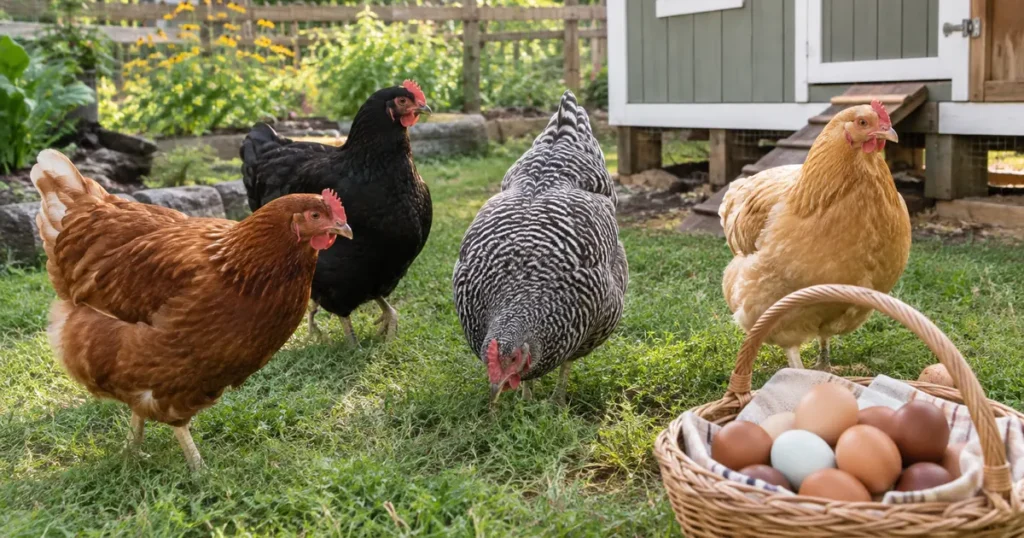
The best egg-laying chickens for beginners are modern hybrids like the ISA Brown, Golden Comet and Black Star, plus a handful of calm, hardy breeds such as the Australorp, Rhode Island Red and Barred Rock. Hybrids top the charts at roughly 250 to 300 eggs a year, while heritage breeds lay a bit less but keep going for more seasons. The right pick for you depends on your climate, your family and the egg color you want in the carton.
Quick answer
- Chickens that lay the most eggs: ISA Brown, Golden Comet, Black Star, Leghorn and Australorp (about 250 to 300 eggs a year in their first year).
- Hybrids lay the most early on, but production usually drops sooner than in heritage breeds.
- Best chickens for beginners with kids: Australorp, Buff Orpington, Barred Rock, Sussex and Easter Egger.
- Cold winters: pick breeds with small combs and heavy bodies (Wyandotte, Australorp, Ameraucana). Hot summers: lighter birds like Leghorns and sex-link hybrids.
- Want a colorful egg basket? Mix brown layers with Easter Eggers or Cream Legbars (blue) and Marans (dark chocolate).
In this guide
Best egg-laying chicken breeds at a glance
Egg counts below are typical first-year ranges for well-fed hens with enough daylight. Hatcheries often quote the top of the range, so plan around the middle. Strain matters too: a hatchery Rhode Island Red bred for production will out-lay a show-line bird of the same breed.
| Breed | Eggs/year | Egg color | Cold hardy | Heat tolerant | Temperament |
|---|---|---|---|---|---|
| ISA Brown | 280-300+ | Brown | Yes | Good | Very friendly |
| Golden Comet | 250-300 | Brown | Yes | Good | Friendly, easygoing |
| Leghorn | 250-300 | White | Fair (big comb) | Excellent | Flighty, active |
| Rhode Island Red | 200-300 | Brown | Yes | Good | Confident, calm |
| Australorp | 250-300 | Brown | Excellent | Good | Gentle, quiet |
| Barred/Plymouth Rock | 200-280 | Brown | Yes | Fair to good | Docile, friendly |
| Buff Orpington | 180-250 | Light brown | Excellent | Poor | Very docile |
| Sussex | 200-250 | Tan to brown | Yes | Fair | Calm, curious |
| Easter Egger | 200-250 | Blue, green, olive | Yes | Good | Friendly |
| Wyandotte | 200-240 | Brown | Excellent | Fair | Calm, a bit bossy |
| Sapphire Gem | 250-290 | Brown | Yes | Good | Calm, friendly |
| Ameraucana | 150-200 | Blue | Yes | Good | Alert, independent |
| Black Star | 250-300 | Brown | Excellent | Good | Friendly, sturdy |
| Marans | 150-200 | Dark chocolate | Fair to good | Fair | Docile, quiet |
| Cream Legbar | 150-200 | Sky blue | Fair (big comb) | Good | Active, chatty |
Hybrids vs. heritage breeds: the trade-off nobody mentions
Sex-link hybrids (ISA Brown, Golden Comet, Red Star, Black Star, Sapphire Gem) come from crosses selected for one job: laying. They start early, often around 18 to 22 weeks, and can come close to an egg a day during their first year. Hatcheries also sell them as reliable pullets because chick color reveals the sex at hatch, so you are far less likely to end up with a surprise rooster.
The catch is longevity. Hybrids pour so much into early production that many slow down noticeably by their third year, and keepers often report shorter lifespans and more reproductive problems than in heritage birds. Heritage breeds like the Plymouth Rock or Sussex lay fewer eggs per year, yet The Livestock Conservancy notes some Plymouth Rock hens keep laying well into old age. Hybrids also do not breed true, so you cannot hatch more of the same from your own flock.
A simple strategy: mix two or three hybrids for volume with a few heritage hens for steady, longer-term laying and personality.
Gear that helps
- Chick brooder starter kit: Readers ordering pullets or chicks need a safe brooder setup with a heating plate instead of a heat lamp.
As an Amazon Associate we earn from qualifying purchases. Check current prices and reviews on Amazon.
The 15 best egg-laying chicken breeds for beginners
1. ISA Brown
The ISA Brown is a commercial sex-link hybrid developed for brown-egg production, and it shows. A healthy hen can lay 280 to 300 or more large brown eggs in her first year, with laying often starting before 22 weeks. These red-brown hens are famously people-friendly; many follow you around the yard and tolerate being picked up, which makes them a hit with kids. They handle both cold and heat well. The downside is the hybrid trade-off: production tends to fall off after two years, and some hens have shorter lives.
2. Golden Comet
Golden Comet is a hatchery name for a red sex-link hybrid, close cousin to the ISA Brown and the Red Star. Murray McMurray Hatchery points out that each hatchery gives its own name to similar crosses, so do not expect big differences between them. Expect roughly 250 to 300 brown eggs a year, an early start to laying and a mellow, curious personality. Golden Comets are a bit lighter-bodied than most dual-purpose breeds, eat a little less, and handle summer heat better than fluffy breeds. They are also rarely broody, which suits beginners who want eggs, not chicks.
3. Leghorn
White Leghorns are the backbone of the commercial white-egg industry, and UNH Extension lists them at 250 to 300 eggs a year, the top of the breeds it compares. They are lean birds (hens weigh about 4.5 lbs) that eat less feed per egg and shine in hot climates. The trade-offs: Leghorns are flighty, noisy and not cuddly, so they are not the best choice if kids want lap chickens. Their large single combs can get frostbite in harsh winters; the rose-comb variety holds up better in the cold.
4. Rhode Island Red
The Rhode Island Red earned its reputation as America’s farm chicken because it lays well under less-than-perfect conditions. The Livestock Conservancy gives a range of 200 to 300 brown eggs a year, with laying starting around six months. Hatchery production strains sit toward the high end; old-type heritage lines are darker, heavier and lay a bit less. Hens are calm and hardy in both cold and heat. They can be assertive at the feeder, so watch them if you mix them with very gentle breeds. Roosters of this breed can be aggressive, another reason most beginners stick with hens.
5. Australorp
The Black Australorp, developed in Australia from Orpington stock, is famous for a hen that laid 364 eggs in 365 days during early breeding trials. Your hens will not match that record, but 250 to 300 brown eggs a year is realistic. Australorps are quiet, gentle and tolerate confinement well, which makes them one of the best chickens for beginners in suburban yards. Their dense black feathering keeps them comfortable in cold winters, and they handle heat reasonably if given shade.
6. Plymouth Rock (Barred Rock)
The Plymouth Rock, best known in its black-and-white Barred variety, dates back to mid-1800s New England. The Livestock Conservancy credits hens with about 200 large brown eggs a year from heritage lines; hatchery strains often lay more, around 250 to 280. Their real strength is temperament: both hens and roosters are described as docile and sweet, which makes them a classic family bird. They feather early and handle cold well, and they adapt to confinement, though they love to free-range. Good layers, long laying life and easy handling make them a smart pick for a first flock.
7. Buff Orpington
The Buff Orpington is the golden retriever of chickens: big, fluffy and almost always calm. Expect around 180 to 250 light-brown eggs a year. Hens are heavy (around 8 lbs), very cold hardy and often sit happily in a child’s lap. Two things to know before you buy. First, Orpingtons go broody often, and a broody hen stops laying until you break the brood. Second, all that fluff makes summer hard; in hot, humid areas they need deep shade and good airflow. In cold states, they are among the best beginner chickens there are.
8. Sussex
The Sussex is an English dual-purpose breed that comes in Speckled, Light and Red varieties. The Livestock Conservancy lists 200 to 250 large tan to brown eggs a year and describes the breed as calm, curious and confident without picking fights. Speckled Sussex in particular are a favorite with families because the pattern gets more beautiful after each molt. They do well in winter but do not enjoy heat, so provide shade in the South.
9. Easter Egger
An Easter Egger is not a recognized breed but a mixed bird carrying the blue-egg gene. Meyer Hatchery explains that eggs can be blue, green, olive or occasionally cream or tan, and you will not know the color until the hen starts laying. Production is solid at roughly 200 to 250 eggs a year, often slightly larger than true Ameraucana eggs. Easter Eggers tend to be friendly and hardy, and many have pea combs that resist frostbite. They are inexpensive, sturdy and add instant color to your egg basket, which is why they are a top pick for families.
10. Wyandotte
Wyandottes are a classic American breed with laced feather patterns (Silver Laced and Golden Laced are the most common). Their low, flat rose comb shrugs off frostbite, and The Livestock Conservancy calls them cold hardy, calm and friendly. Expect about 200 to 240 brown eggs a year, with decent winter laying. Hens weigh about 6.5 lbs and can be a little bossy toward smaller flockmates. Like other heavy, well-feathered birds, they appreciate shade in hot summers.
11. Sapphire Gem
The Sapphire Gem is a newer sex-link hybrid with soft blue-gray feathering. Hatcheries generally advertise around 250 to 290 large brown eggs a year, putting it in the same league as the red sex-links, with a calmer, quieter reputation. Hens are medium-sized and handle cold and heat reasonably well. Because it is a hybrid, the same caveats apply: very strong early laying, a likely drop after year two, and offspring that will not look or lay like their mother. Choose it if you want hybrid production with a prettier, more unusual look.
12. Ameraucana
The Ameraucana is the true, standardized blue-egg breed recognized by the American Poultry Association. Meyer Hatchery notes that Ameraucanas always lay blue eggs and average about three to four a week, or roughly 150 to 200 a year. They have muffs, a beard and a small pea comb, so they cope well with cold. Hens tend to be alert and a bit independent rather than cuddly. You will pay more per chick than for an Easter Egger. Choose Ameraucanas if you want a guaranteed blue egg and birds that breed true.
13. Black Star
The Black Star (also called Black Sex Link) is a hybrid usually made by crossing a Rhode Island Red rooster with Barred Rock hens. Murray McMurray rates it excellent for cold tolerance and good for heat, and it is one of their top brown-egg layers. Plan on around 250 to 300 large brown eggs a year. Black Stars are a bit heavier than red sex-links, so they handle northern winters very well. Most are friendly, though personalities vary. Female chicks hatch nearly all black while males show a white head spot, so sexing is very reliable.
14. Marans
Marans are a French breed prized for dark, chocolate-brown eggs, with Black Copper Marans usually laying the darkest. They are not top producers: hatcheries and Tractor Supply’s breed guide put them at about 150 to 200 large eggs a year. Hens are docile, quiet and do well in cooler climates, but their single combs can suffer frostbite in deep cold. Egg color is often darkest at the start of each laying season and lightens over time. Add two or three Marans if you want a showstopper carton rather than a high count.
15. Cream Legbar
The Cream Legbar, developed in 1930s England, is an autosexing breed: Meyer Hatchery explains that female chicks show a dark stripe down the back while males have a pale head spot. Hens lay pale to medium sky-blue eggs, roughly three to four a week (about 150 to 200 a year). They are active, chatty, curious foragers that love space. Their large single combs make them less suited to very cold winters without frostbite precautions. They are a good pick if you want blue eggs and reliable sexing in a heritage breed.
Which chickens lay the most eggs?
If raw egg count is all that matters, the chickens that lay the most eggs are the red and black sex-link hybrids (ISA Brown, Golden Comet, Red Star, Black Star) and production White Leghorns. In their first year, a top layer may produce five to six eggs a week. A hen cannot lay more than one egg a day, because forming an egg takes about 25 to 26 hours, according to Poultry Extension (extension.org).
All hens slow down over time. UF/IFAS Extension notes that production peaks a few weeks after laying begins and then gradually falls, and many hens decline significantly after two or three years. Shorter fall and winter days also cut laying unless hens get about 14 hours of light. For realistic weekly numbers per family, see our guide on how many chickens you should get, and if your hens slow down early, check the common reasons chickens stop laying.
Gear that helps
- Egg skelter / countertop egg holder: Keeps fresh eggs organized oldest-first once high-production hens start laying.
As an Amazon Associate we earn from qualifying purchases. Check current prices and reviews on Amazon.
How to choose the best chickens for beginners
Match the breed to your climate
In cold states, favor heavy birds with small combs: Wyandotte, Australorp, Black Star, Ameraucana, Buff Orpington and Easter Eggers with pea combs. Large single combs (Leghorn, Cream Legbar, Marans) are prone to frostbite in deep cold. In hot, humid areas, lighter breeds such as Leghorns and sex-link hybrids cope better than fluffy Orpingtons or Sussex. Every breed needs shade, airflow and cool water in summer.
Families with kids
For children who want to hold and pet their hens, the calmest choices are Buff Orpington, Australorp, Barred Rock, Sussex, Easter Egger and ISA Brown. Leghorns and Cream Legbars are better watched than held. Always have kids wash their hands after handling chickens or eggs, since poultry can carry Salmonella even when they look healthy.
Pick your egg colors
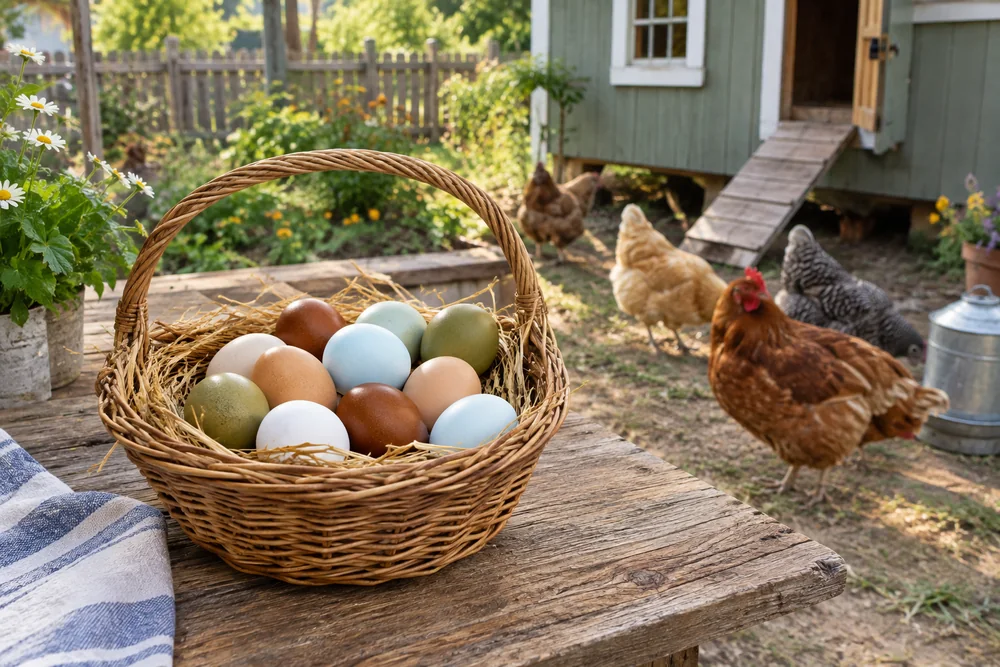
A mixed basket is half the fun. Brown: most breeds on this list. White: Leghorn. Blue: Ameraucana, Cream Legbar and most Easter Eggers. Green or olive: some Easter Eggers. Dark chocolate: Marans. Egg color does not change nutrition or flavor; diet and freshness matter far more.
Think about space and noise
Calm heavy breeds tolerate smaller runs better than active foragers like Leghorns and Legbars. Each standard hen still needs about 4 sq ft inside the coop and 8 to 10 sq ft in the run, so size your setup with our chicken coop size guide before you order chicks.
Coop hack: Order a mix of breeds that look different from each other (one ISA Brown, one Barred Rock, one Easter Egger, one Buff Orpington). You will be able to tell who is laying, who is broody and who is under the weather at a glance, and you will know whose egg is whose by color.
Still planning your first flock? Our backyard chickens for beginners guide walks through coop, feed, chicks and daily care step by step.
Backyard Chickens Mastery
More eggs, healthy hens, zero losses: the step-by-step guide that puts every coop hack in one place, from first flock to fifth winter.
Get the guide ($17)Gear that helps
- Chicken breed guide book: Helps beginners compare breeds, temperaments and egg colors before ordering chicks.
As an Amazon Associate we earn from qualifying purchases. Check current prices and reviews on Amazon.
Common mistakes to avoid
- Choosing on egg count alone. The top layers may slow down by year three. Mix in a few long-lived heritage hens.
- Buying “straight run” chicks by accident. Straight run means unsexed, so roughly half may be roosters, which many towns do not allow. Order pullets or sex-link breeds.
- Ignoring your climate. Fluffy breeds suffer in Southern heat; big-combed breeds get frostbite up north.
- Expecting eggs right away. Most hens start laying around 18 to 24 weeks, and chicks hatched late in the year may not lay until spring.
- Trusting catalog numbers blindly. Hatchery figures assume ideal feed, light and young birds. Plan on the middle of the range.
- Mixing very flighty and very docile breeds in a tight run. Bullying and stress drop laying for everyone.
FAQ
What is the best chicken for eggs for a beginner?
For most beginners, the ISA Brown or Golden Comet gives the most eggs with an easy temperament, while the Australorp and Barred Rock offer strong laying, calm personalities and a longer productive life.
Which chicken breed lays an egg every day?
No breed lays every single day all year. Top hybrids and production Leghorns can lay five to six eggs a week in their first year, but production drops in fall and winter, during molt and as hens age.
How long do egg-laying chickens lay eggs?
Hens lay best in their first two years. Many slow significantly after two or three years, but heritage breeds often keep laying at a lower rate for several more years.
Do I need a rooster for my hens to lay eggs?
No. Hens lay eggs without a rooster. You only need a rooster if you want fertilized eggs to hatch chicks, and many towns ban roosters because of noise.
What chickens lay blue eggs?
Ameraucanas and Cream Legbars lay blue eggs, and most Easter Eggers lay blue or green eggs. Easter Egger egg color varies from bird to bird.
What is the most cold-hardy egg-laying chicken?
Wyandottes, Australorps, Black Stars, Buff Orpingtons and Ameraucanas are among the most cold-hardy layers, thanks to heavy bodies, dense feathers and small combs.
Keep reading
Sources
- Raising chickens for eggs – University of Minnesota Extension
- Producing Your Own Eggs – UNH Cooperative Extension
- Factors Affecting Egg Production in Backyard Chicken Flocks – UF/IFAS Extension
- Avian Reproductive System: Female – Poultry Extension (extension.org)
- Plymouth Rock Chicken – The Livestock Conservancy
- Rhode Island Red Chicken – The Livestock Conservancy
- Leghorn Chicken – The Livestock Conservancy
- Sussex Chicken – The Livestock Conservancy
- Red Star – Murray McMurray Hatchery
- Black Star – Murray McMurray Hatchery
- Ameraucana or Easter Egger, What’s the Difference? – Meyer Hatchery
- Breed Spotlight: The Legbar – Meyer Hatchery
- Marans Breed Guide – Tractor Supply Co.