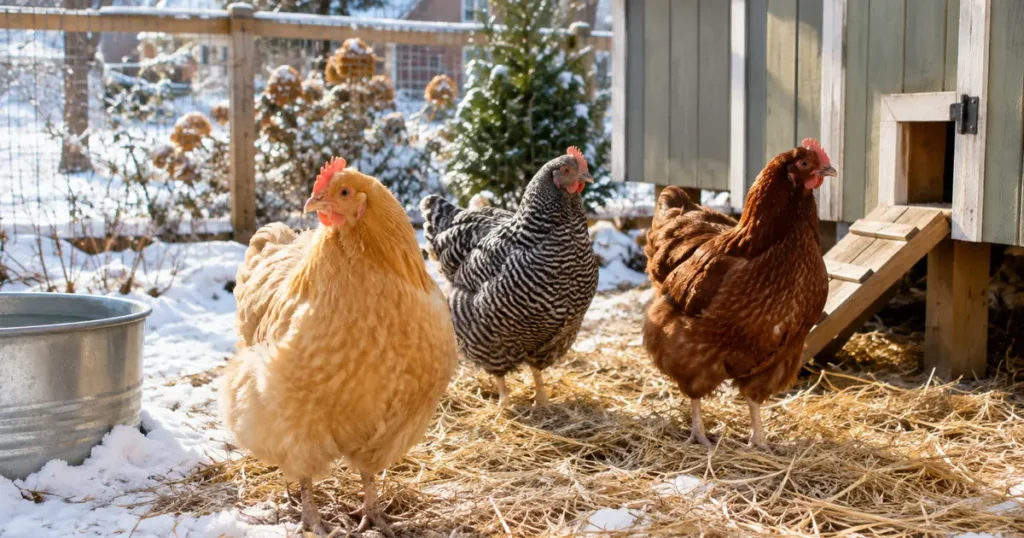
Healthy adult chickens keep themselves warm in winter far better than most new keepers expect. Your job is not to heat the coop but to help their own system work: a dry, draft-free coop with good ventilation, wide roosts, deep bedding, unfrozen water and enough feed. Get those right and most backyard flocks sail through a US winter without a single heat lamp.
Quick answer
- Most healthy, fully feathered adult chickens do not need supplemental heat, even below freezing.
- Moisture and drafts are the real enemies: block wind at bird level, but keep vents open high in the coop.
- Give flat 2×4 roosts (wide side up), 4-6 inches of dry bedding and unfrozen water at all times.
- Feed intake can rise by up to 25% in cold weather; a small handful of scratch in the late afternoon helps.
- Heat lamps are a leading cause of coop fires. If heat is truly needed, use a radiant panel made for coops.
In this guide
- How chickens stay warm on their own
- Do chickens need heat in winter?
- How cold is too cold for chickens?
- What temperature is too cold for chickens? (Quick reference)
- Choose cold-hardy breeds
- A draft-free but well-ventilated coop
- Roosts: 2x4s with the flat side up
- Use deep litter for insulation
- Block the wind in the run
- Keep water from freezing
- Feed for warmth: calories and evening scratch
- How to keep chickens warm without electricity
- Prevent frostbite
- Why heat lamps are a fire risk
- A note on bird flu in winter
- Common mistakes to avoid
- FAQ
How chickens stay warm on their own
A chicken’s normal body temperature runs around 106°F (41°C), and its feathers are built to hold that heat in. Under the outer feathers sits a layer of soft down. When it gets cold, a hen fluffs those feathers to trap pockets of warm air, the same way a down jacket works.
Chickens also have a few behaviors that save heat:
- Roosting together: birds pack shoulder to shoulder on the roost and share body heat.
- Tucking in: they pull their head under a wing and sit down over their feet, covering their toes with belly feathers.
- Standing on one leg: during the day, a hen will often lift one foot into her feathers to warm it.
- Eating more: digesting feed produces body heat, which is why intake climbs as temperatures drop.
Chickens also acclimate to gradual fall cooling. That is one reason a heated coop can backfire: if the power fails on the coldest night, birds kept warm all winter are the least prepared.
Do chickens need heat in winter?
For most flocks, no. University of Maine Extension has stated plainly that chickens do not need a heat source in winter, and University of New Hampshire Extension advises against supplemental heat in most cases because of the fire hazard around dry, combustible bedding. Ohio State University Extension notes that heat is often unnecessary if the coop is well built and ventilated.
Advice does vary: University of Minnesota Extension suggests supplemental heat at roost or nest-box height when coop temperatures fall below 35°F (2°C). Treat heat as a tool for specific birds and situations, not a default.
Heat can make sense for:
- Bantams, Silkies and frizzles, which lose heat faster.
- Birds in a hard molt with bare patches.
- Sick, injured or very old birds.
- Prolonged, extreme sub-zero cold, especially in a small or poorly insulated coop.
- Chicks, which always need a heat source in the brooder.
If you fall into one of those groups, read our guide to safe chicken coop heaters before you buy anything.
How cold is too cold for chickens?
There is no single number, because wind, humidity and the bird itself matter as much as the thermometer. University of Minnesota Extension notes that most poultry hold their body temperature with the least effort between 60 and 75°F (16-24°C). Below that, they work harder to stay warm, but a dry, acclimated, cold-hardy hen copes with temperatures well below freezing.
Trouble starts when cold combines with one of three things: wind blowing on the birds, damp air or bedding, or a bird that cannot hold heat well (small, sick, molting or wet). A hen in a dry coop at 5°F (-15°C) is often better off than a hen in a damp, drafty coop at 25°F (-4°C).
What temperature is too cold for chickens? (Quick reference)
Use this table as a practical guide for healthy adult standard-size hens in a sheltered coop. These are management thresholds, not hard survival limits.
| Outdoor temperature | What it means for hens | What to do |
|---|---|---|
| Above 40°F (above 4°C) | Comfortable for adult birds | Normal care |
| 32 to 40°F (0 to 4°C) | Normal winter weather; water may freeze overnight | Check water morning and evening, keep bedding dry |
| 10 to 32°F (-12 to 0°C) | Fine for cold-hardy breeds in a dry, draft-free coop | Unfrozen water, extra bedding, windbreak on the run, scratch in the afternoon |
| 0 to 10°F (-18 to -12°C) | Frostbite risk rises, especially for large single combs and in damp air | Keep birds in on windy days, watch combs and feet, check ventilation for moisture |
| Below 0°F (below -18°C) | Extreme cold; hardy birds usually cope, vulnerable birds may not | Check birds twice a day; consider safe radiant heat for bantams, Silkies, sick or molting birds |
Watch the birds more than the thermometer. Huddling, fluffing up for long periods, lifting one foot and then the other, and refusing to leave the coop are all signs of cold stress, according to UNH Extension. A bird that is lethargic, hunched and not eating is more likely sick than cold; contact an avian vet or your state extension service.
Choose cold-hardy breeds
Larger, heavier breeds with small combs handle cold best. Ohio State University Extension lists Ameraucanas, Anconas, Black Australorps, Brahmas, Buff Orpingtons, Cochins, Wyandottes, Rhode Island Reds and Plymouth Rocks among the cold-hardy options.
Comb style matters for frostbite. Rose combs (Wyandottes) and pea combs (Brahmas, Ameraucanas) sit close to the head; tall single combs, like those on Leghorns and many roosters, are the most exposed. If you live in a cold state and are still planning your flock, our list of the best egg-laying chickens flags which breeds are winter-tough.
A draft-free but well-ventilated coop
This is the part most beginners get backward. Sealing every gap feels warm, but a closed coop traps the moisture hens breathe out and the ammonia from droppings. Damp air pulls heat from birds and is a major driver of frostbite. Ohio State and UNH Extension both stress ventilation as a winter priority.
The goal is no wind at bird level, steady air exchange above it:
- Block drafts at roost height and below: close gaps in walls near the roosts and floor.
- Keep vents open high, near the roofline and above the birds’ heads, ideally on the side away from prevailing winds.
- Cover vent openings with hardware cloth for predator protection.
- If you wrap a run or coop in plastic or tarps, leave a gap at the top for air to escape.
Two quick checks tell you if ventilation is off: an ammonia smell when you open the door, or frost and condensation on the inside of walls and windows in the morning. Either one means you need more air exchange, not less. Our guide to winterizing a chicken coop covers insulation and vent placement step by step.
Coop hack: Put an inexpensive digital thermometer with a humidity reading in the coop. If the humidity inside stays well above the humidity outside, moisture is building up and you need more ventilation.
Gear that helps
- Digital thermometer-hygrometer with remote sensor: Lets readers monitor coop temperature and humidity to catch moisture buildup that causes frostbite.
As an Amazon Associate we earn from qualifying purchases. Check current prices and reviews on Amazon.
Roosts: 2x4s with the flat side up
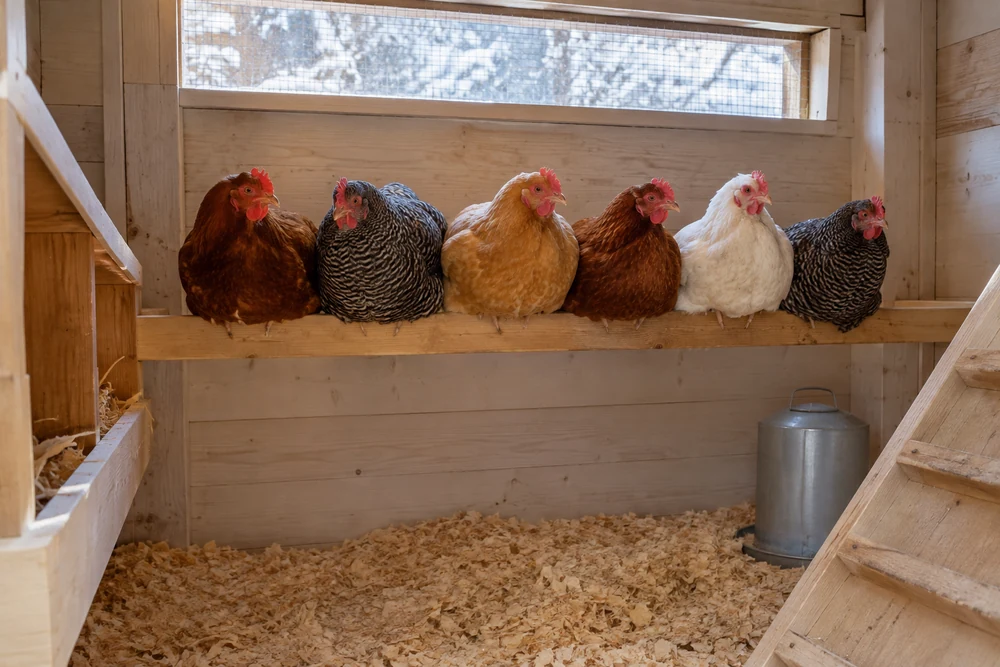
A wide, flat roost lets hens sit down over their feet so their belly feathers cover their toes all night. That single detail prevents a lot of frostbitten toes. University of Minnesota Extension recommends wooden 2×4 or 2×2 roosts, at least 12 inches off the floor, with about 9 inches of space per bird.
- Turn a 2×4 so the 3.5-inch side faces up for winter.
- Use wood, not metal or plastic pipe.
- Keep roosts away from vents and windows.
Use deep litter for insulation
A thick layer of dry bedding insulates the floor and keeps feet off cold boards. UMN and UNH Extension both suggest 4 to 6 inches of pine shavings or straw. Many keepers use the deep litter method: instead of cleaning out weekly, you stir the bedding and add a fresh layer on top through the winter, then clean out fully in spring.
Done well, deep litter stays dry and mostly odor-free. Done badly, it turns into a damp, ammonia-heavy mat. Stir it every few days, remove wet spots around waterers right away, and add fresh material whenever it looks packed or smells.
Gear that helps
- Compressed pine shavings bedding: Absorbent bedding for a 4-6 inch deep litter layer.
As an Amazon Associate we earn from qualifying purchases. Check current prices and reviews on Amazon.
Block the wind in the run
Wind strips heat from feathers fast. UNH Extension calls protection from wind and precipitation one of the most important winter considerations. Chickens will go outside in the cold if they have a sheltered spot to stand.
- Wrap the windward sides of the run with clear plastic sheeting, a tarp or plywood, leaving the top open for air.
- Stack straw bales along the coop’s north and west walls as an extra windbreak.
- Shovel a patch of ground or lay down straw or wood chips; many chickens refuse to walk on snow.
Gear that helps
- Clear heavy-duty tarp / plastic sheeting: Quick windbreak for the windward sides of the run while letting light in.
As an Amazon Associate we earn from qualifying purchases. Check current prices and reviews on Amazon.
Keep water from freezing
Chickens need fresh water every day, winter included. A hen that cannot drink will eat less, and she will stop laying quickly. Ohio State Extension recommends changing water twice a day, more often in extreme cold, and making sure birds have water at night.
You have two main options: a heated waterer or base plugged into a GFCI-protected outlet, or swapping out waterers morning and afternoon. Our full guide to heated chicken waterers compares the types and the no-power tricks that work, and the ones that do not.
Coop hack: Keep two identical waterers. Bring one inside to thaw while the other is out, then swap them. It costs nothing to run and carries no electrical risk.
Gear that helps
- Heated poultry waterer: Keeps water liquid all day so hens keep drinking and laying.
As an Amazon Associate we earn from qualifying purchases. Check current prices and reviews on Amazon.
Feed for warmth: calories and evening scratch
Cold weather raises a hen’s energy needs. University of Minnesota and UNH Extension both note that feed intake can increase by up to 25% in cold weather. Keep the feeder full and make sure a complete layer feed (16% protein or so) stays the main diet.
Scratch grains are the classic winter treat. Offered in the late afternoon, they give birds something to digest overnight, which produces a little extra body heat. Keep it small: UMN suggests no more than about a handful per 10 birds, since scratch is low in protein and too much dilutes the balanced feed. UNH also reminds keepers to offer grit when snow covers the ground and birds cannot find their own small stones.
Egg laying slows in winter mostly because of shorter days, not cold. That is normal.
Backyard Chickens Mastery
More eggs, healthy hens, zero losses: the step-by-step guide that puts every coop hack in one place, from first flock to fifth winter.
Get the guide ($17)How to keep chickens warm without electricity
Everything above works without a single outlet. If you have no power at the coop, focus on these:
- Insulate the floor with 4 to 6 inches of deep litter.
- Block wind at bird level with straw bales, tarps or plywood, and keep high vents open.
- Use flat, wide roosts so toes stay covered.
- Do not oversize the coop: a moderately stocked coop stays warmer from body heat than a huge, mostly empty one.
- Swap waterers twice a day, using black rubber pans you can flex to pop ice out.
- Use the sun: south-facing windows let in daytime warmth.
- Feed well, with a small handful of scratch in the late afternoon.
Prevent frostbite
Frostbite usually hits combs, wattles and toes. The tissue turns pale or gray, then dark or black, and may swell or blister. Ohio State Extension lists gray, black or brittle tissue as the signs to look for.
Prevention comes back to the basics: dry air, no drafts on roosting birds, flat roosts, and dry bedding. Some extension services, including UMN and UNH, suggest a thin coat of petroleum jelly on large combs and wattles before extreme cold. Results are mixed, and UMN is clear that it may help prevent damage but does not treat frostbite.
If you find frostbite:
- Bring the bird somewhere sheltered and warm her slowly. Ohio State suggests a warm (not hot) water soak for feet.
- Do not rub the tissue or try to remove dark tips; damaged tissue usually dries and falls off on its own.
- Keep her dry and away from pecking flockmates.
- Contact an avian or poultry vet if there is swelling, discharge, a bad smell, or if the bird is lethargic or stops eating.
Why heat lamps are a fire risk
Warning: Heat lamps are a leading cause of chicken coop fires, and many of those fires spread to garages and homes. A heat lamp bulb can run around 500°F, hot enough to ignite straw or shavings within minutes if it falls or is knocked into the bedding.
The Maine Fire Marshal’s office has pointed out that chickens can knock poorly secured lamps into the bedding. In Elk Ridge, Utah, a heat lamp ignited wood chips in a coop, and birds died from smoke inhalation. Dust, feathers and cobwebs on hot bulbs and cords add fuel.
If you must use any heat source:
- Choose a radiant panel heater made for coops instead of a bulb-style heat lamp.
- Mount it solidly with screws or a chain, never hung by its cord or held by a clamp alone.
- Keep it at least 20 inches from bedding and other flammable material, the clearance Penn State Extension gives for heat lamps.
- Plug into a GFCI-protected outlet with a heavy-duty, outdoor-rated cord, and check cords often for damage.
- Clean dust off heaters and cords regularly.
A note on bird flu in winter
As of October 2026, avian influenza (HPAI) is still being detected in US backyard flocks, and fall migration raises the risk. Keep wild birds away from feed and water, use dedicated coop shoes, and report sudden deaths or very sick birds to your state veterinarian or USDA APHIS (1-866-536-7593).
Common mistakes to avoid
- Sealing the coop airtight and trapping moisture and ammonia.
- Using a heat lamp as the default winter plan.
- Hanging any heater by its cord or clamping it to a rafter.
- Running damaged or indoor-only extension cords to the coop.
- Letting water freeze overnight or forgetting the evening water check.
- Round dowel roosts that leave toes exposed.
- Overfeeding scratch so birds skip their balanced layer feed.
FAQ
Can chickens freeze to death?
It is uncommon for healthy, acclimated adult chickens in a dry, draft-free coop. The risk is higher for wet, sick, molting or very small birds, and for any flock exposed to wind and damp bedding.
Should I close the chicken coop door at night in winter?
Yes. Closing the pop door keeps out predators and wind. Keep high vents open so moisture can still escape overnight.
Is straw or shavings better for winter bedding?
Both work. Pine shavings absorb moisture well and are easy to stir for deep litter. Straw has hollow stems that insulate but can mat down when wet. Whichever you use, keep it dry and 4 to 6 inches deep.
Can chickens go outside in the snow?
Yes. Many hens dislike walking on snow, so shovel a patch or spread straw. Give them a wind-sheltered area and let them decide whether to go out.
Should I put Vaseline on my chickens’ combs?
Some extension services suggest a thin coat on large combs before extreme cold. It may help a little, but it does not treat frostbite. Dry air and a draft-free coop matter much more.
Keep reading
Sources
- Caring for chickens in cold weather – University of Minnesota Extension
- Winter and Your Backyard Chickens – Ohio State University Extension
- How Should I Take Care of Backyard Chickens in the Winter? – University of New Hampshire Extension
- Brooding of Domestic Fowl – Penn State Extension
- Don’t put heat lamps in your chicken coop (Maine Fire Marshal, UMaine Extension) – Bangor Daily News
- Chicken coop fire prompts safety reminders from firefighters – KSL
- H5N1 Highly Pathogenic Avian Influenza – USDA APHIS