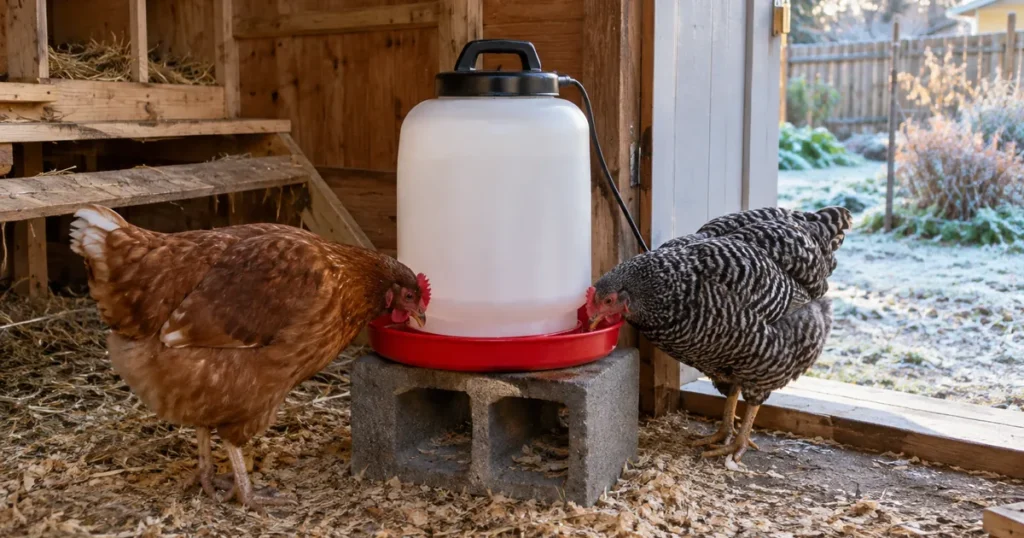
The best heated chicken waterer for most backyard flocks is a thermostatically controlled model sized to your flock, plugged into a GFCI-protected outlet with a heavy-duty outdoor cord. Which type fits you, a heated base, an all-in-one heated waterer, a heated nipple bucket or a heated bowl, depends on how many hens you keep, how cold your winters get and whether you already own a metal fount.
Quick answer
- Pick a waterer with a built-in thermostat so it only heats near freezing.
- Check the low-temperature rating: some heated bases are only rated to around 10°F, while many heated nipple waterers are rated well below 0°F.
- Plan on roughly a pint of water per hen per day, then size up for a buffer.
- Always use a GFCI-protected outlet and an outdoor-rated cord, routed where hens cannot peck it.
- No power? Swap two waterers twice a day. Ping-pong balls and salt-water bottles only help in mild cold.
In this guide
Why winter water matters so much
Chickens need fresh water every day, and an egg is mostly water. A hen that cannot drink eats less and can stop laying quickly. University of Maryland Extension estimates a flock needs at least 5 to 6 gallons per 100 birds daily, and large or laying hens often drink more, so plan on about a pint (16 oz) per hen as a safe figure.
In winter, the problem is simple: water freezes, often overnight. Ohio State University Extension recommends changing water at least twice a day in cold weather and checking it in the evening so birds have water through the night and first thing in the morning. A heated waterer turns that twice-daily chore into a quick check. For the bigger picture on cold-weather care, see our guide on how to keep chickens warm in winter.
Types of heated chicken waterers
Here is how the main options compare. Ratings vary by model, so always read the product label for wattage and the lowest temperature it is designed for.
| Type | Typical wattage | Best for | Watch out for |
|---|---|---|---|
| Heated base under a metal fount | About 80-125 W | Keepers who already own a double-wall galvanized fount | Many bases are made for metal founts only; some lose ground in deep cold |
| All-in-one heated plastic waterer | About 60-100 W | Small to medium flocks wanting one plug-in unit | Open trough gets dirty; check the cold rating |
| Heated nipple bucket or waterer | About 60-150 W | Clean water, very cold climates, larger flocks | Birds must already know nipples; exposed nipples can freeze in wind |
| DIY bucket with a submersible deicer | About 150 W or more | Handy keepers with a bucket or nipple system | Use only a deicer rated for the job and keep the cord protected |
| Heated pet bowl | Varies | Small flocks, ducks mixed with chickens | Open water gets dirty and wets bedding and wattles |
Heated base under a metal fount
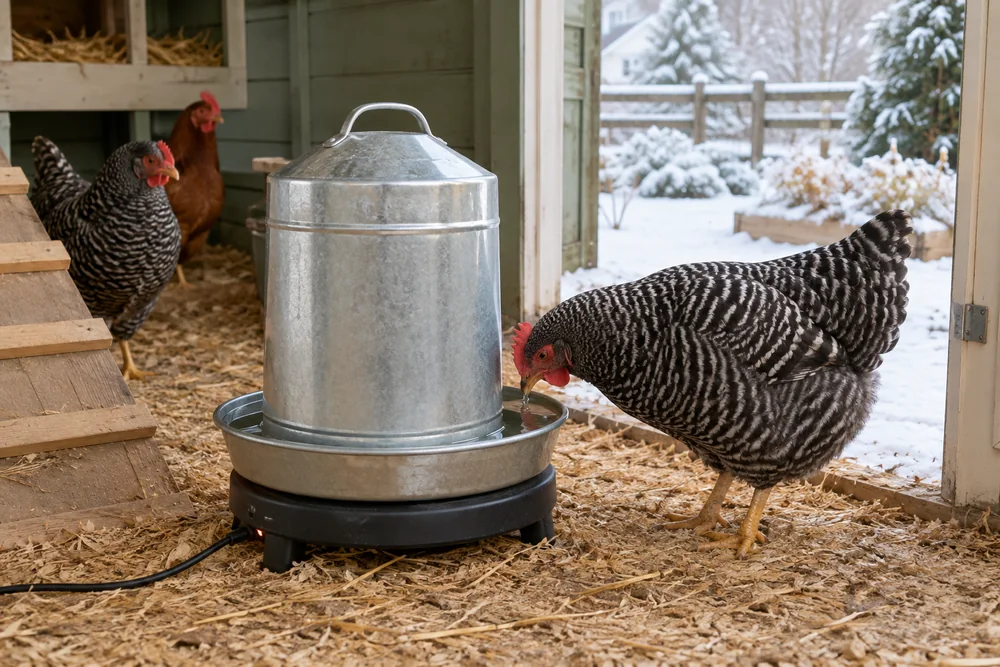
A heated base is a flat, round heater you set under a galvanized double-wall fount. It is a classic choice because many keepers already own the fount. Wattages around 125 W are common.
The key detail: many heated bases are designed only for metal founts, because a plastic fount sitting directly on a heating plate can warp or melt. Some newer bases are built for both metal and plastic, so read the label before you pair them. Also check the rated low: some bases are listed as effective only to around 10°F, and owners report trouble in hard cold or wind.
All-in-one heated plastic waterer
These combine the tank and the heater in a single plastic unit with a trough around the bottom. They are easy to fill, light and usually draw about 60 to 100 W. Common sizes run from 2 to 3 gallons, which suits most backyard flocks of 4 to 15 hens.
The open trough collects bedding and droppings, so set it on a block or hang it at about the height of the birds’ backs to keep it cleaner.
Heated nipple bucket
Heated nipple waterers keep water sealed, so it stays clean and the bedding stays dry, a real plus in winter when damp litter leads to frostbite. Many heated models use side-mounted nipples. One 3-gallon model, for example, uses a 100 W heater that turns on at 40°F and off at 60°F and is rated to -20°F.
Two cautions: your hens need to know how to use nipples before winter (train them in the fall), and the manufacturer of that model warns that nipples can still freeze in direct wind, so keep it inside the coop.
DIY bucket with a deicer
A 5-gallon bucket with side-mounted nipples plus a submersible poultry deicer is a popular homemade setup. Choose a deicer sold for poultry or small livestock with a thermostat and a protected cord, and follow its instructions for minimum water depth. Never improvise with aquarium or immersion heaters not made for this use.
Heated pet bowl
A thermostatically controlled heated dog bowl works in a pinch and is handy if you also keep ducks. The trade-offs are dirty water, spills that wet the bedding, and roosters with long wattles dipping them in the water, which can increase frostbite risk. Use it in the run rather than the coop if possible.
Gear that helps
- Heated poultry waterer base for metal founts: Lets readers reuse an existing galvanized double-wall fount through winter.
As an Amazon Associate we earn from qualifying purchases. Check current prices and reviews on Amazon.
How to choose a heated waterer
Capacity per hen
Use about a pint per hen per day as your planning number, then add a buffer. For 4 to 6 hens, 2 gallons is usually enough. For 8 to 15 hens, 3 gallons or more gives you a day of slack. Larger flocks do well with 5-gallon nipple buckets or more than one waterer, which also helps timid hens drink.
Not sure how many birds you will end up with? Our guide on how many chickens to get can help you plan.
Thermostat control
Choose a model with a built-in thermostat that turns the heater on near freezing and off once the water is safe. Thermostatic heaters only draw power when needed, which keeps electric costs low and reduces wear. The water does not get warm; it just stays liquid.
Wattage and low-temperature rating
Higher wattage handles colder conditions but uses more electricity. More important than wattage is the manufacturer’s lowest rated temperature. If your winters regularly drop below 0°F, look for a model rated for sub-zero use and place it inside the coop, out of the wind.
Cord safety and the outlet
Warning: Water and electricity in a dusty coop call for extra care. Connect heated waterers to a GFCI-protected outlet; the National Electrical Code requires GFCI protection for outdoor 125 V receptacles, and at least one manufacturer’s instructions require it for its heated poultry waterer.
- Use a heavy-duty, outdoor-rated extension cord, as short as possible, rated above the waterer’s draw.
- Run cords up high or through conduit so hens cannot peck them and rodents cannot chew them.
- Keep connections off the floor and out of bedding; a cord-connection cover helps keep out moisture and dust.
- Check the cord and plug weekly for cracks, chewing or heat.
- Never chain several extension cords together.
Gear that helps
- Heated chicken waterer, 3 gallon: All-in-one thermostatically controlled waterer sized for a typical backyard flock.
- Heated nipple bucket waterer: Clean, sealed water that stays liquid in sub-zero weather and keeps bedding dry.
As an Amazon Associate we earn from qualifying purchases. Check current prices and reviews on Amazon.
How to keep chickens’ water from freezing without electricity
If you have no power at the coop, these methods are worth trying. Be realistic about what each can do.
- Swap waterers twice a day. Keep two waterers; bring one inside to thaw while the other is in use. This is the most reliable no-power method in any climate.
- Black rubber pans or tubs. Dark rubber absorbs sunlight, and flexible rubber lets you knock out ice with a stomp. Works best on sunny days.
- Mini greenhouse or cold frame. Set the waterer inside a box of old windows or clear polycarbonate on the sunny side of the run. Meyer Hatchery found this works well on sunny days but not during long cloudy stretches.
- Insulated tire. An old tire filled with expanding foam with a black rubber pan nested inside holds heat better than a bare pan. Meyer Hatchery rated this the best of the no-power methods it tried for northern climates.
- Ping-pong balls. A few floating balls move in the wind and slow ice from forming on the surface. Only useful where winters are mild.
- Salt-water bottle trick. A sealed bottle of very salty water floating in the waterer stays liquid, so it can keep a small opening in the ice in mild cold. In Meyer Hatchery’s test at a 20°F high, the drinking water froze solid while the salt water in the bottle stayed liquid. It does not add heat, so treat it as a minor helper. Make sure the cap is tight so salt water never leaks into the drinking water.
Coop hack: Fill waterers with warm (not hot) water each morning. It buys extra hours before the first ice forms, especially if the waterer sits in a sunny, wind-sheltered spot.
Backyard Chickens Mastery
More eggs, healthy hens, zero losses: the step-by-step guide that puts every coop hack in one place, from first flock to fifth winter.
Get the guide ($17)Gear that helps
- Heated pet bowl (thermostatic): Simple backup option for small flocks or mixed chicken-and-duck setups.
As an Amazon Associate we earn from qualifying purchases. Check current prices and reviews on Amazon.
Where to place a heated waterer
- Inside the coop or a covered, wind-sheltered part of the run, out of direct wind.
- On a stable, level, non-flammable surface such as a paver or cinder block, raised off the bedding.
- Away from roosts so droppings do not land in it.
- Where spills will not soak the bedding; wet litter raises humidity, and damp air makes frostbite more likely.
If you are also adding heat to the coop, read our guide to chicken coop heaters first, and see how to winterize a chicken coop so you rely on good design instead of electricity.
Common mistakes to avoid
- Setting a plastic fount on a heated base made only for metal founts.
- Using an indoor extension cord, or a cord with cracks or chewed spots.
- Plugging into an outlet without GFCI protection.
- Switching to a nipple waterer in the middle of a cold snap before hens know how to use it.
- Leaving a nipple waterer in the wind, where nipples can freeze.
- Letting an open trough fill with bedding and droppings.
- Relying on ping-pong balls or salt-water bottles in a northern winter.
- Forgetting an evening water check.
FAQ
Do chickens need heated water in winter?
Chickens need liquid water, not warm water. A heated waterer just keeps it from freezing. If you can swap thawed waterers at least twice a day, you can manage without one.
How much electricity does a heated chicken waterer use?
Most draw roughly 60 to 150 W while heating. With a built-in thermostat, they only run when the water is near freezing, so the real cost depends on your climate and electric rate.
Can you use a plastic waterer on a heated base?
Only if the base is labeled for plastic founts. Many heated bases are designed for metal founts only, and plastic can warp or melt on them.
Do chicken nipple waterers freeze?
Unheated ones do. Heated nipple waterers are often rated below 0°F, but nipples exposed to wind can still freeze, so keep them inside the coop.
Does a salt-water bottle keep chicken water from freezing?
Only a little, in mild cold. The salt water stays liquid but does not heat the drinking water, which can still freeze solid around it.
Are heated waterers a fire risk?
Any electrical device in a dusty coop carries some risk. Choose a thermostatically controlled model, use a GFCI outlet and an outdoor-rated cord, keep it off the bedding, and inspect cords often.
Keep reading
Sources
- Winter and Your Backyard Chickens – Ohio State University Extension
- Water: The Forgotten Nutrient – University of Maryland Extension
- How Should I Take Care of Backyard Chickens in the Winter? – University of New Hampshire Extension
- Poultry Winter Waterers Without Electricity – Meyer Hatchery
- Heated Poultry Waterer specifications and safety notes – Premier1Supplies
- A Heated Waterer for Chickens – Backyard Poultry Magazine
- NEC Requirements for Ground-Fault Circuit Interrupters – EC&M