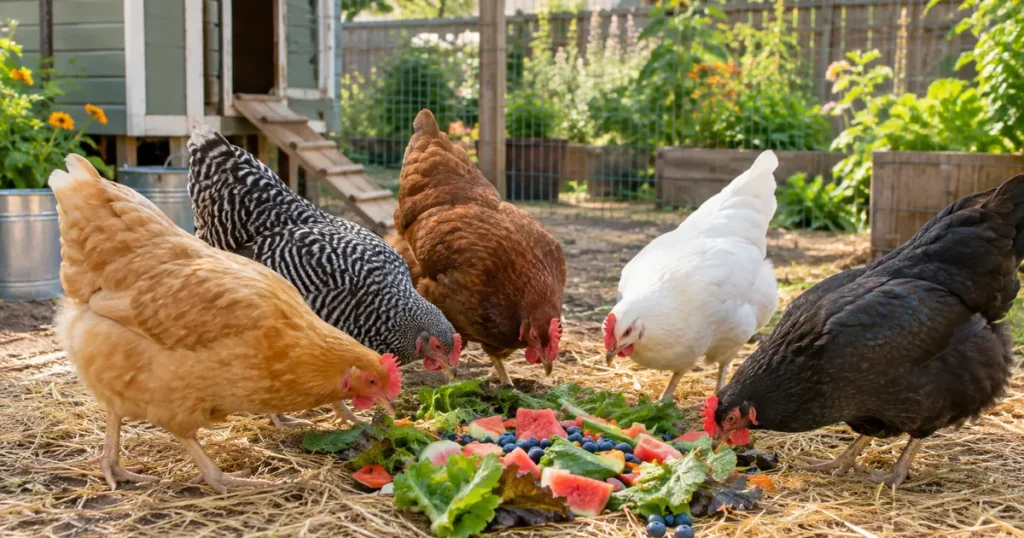
Chickens can eat most fruits, vegetables, grains and cooked leftovers, but those should only be extras. What chickens should eat every day is a complete layer feed, with treats kept to about 10% of what they eat. A short list of foods is off-limits: avocado skins and pits, chocolate, raw dried beans, green potato peels, moldy food, salty junk food and alcohol.
Quick answer
- About 90% of the diet should be a complete layer feed (around 16% protein, 3-4% calcium) once hens start laying.
- Treats and kitchen scraps should stay around 10% of the daily diet, roughly what the flock cleans up in 15-20 minutes.
- Safe favorites include grapes (cut up), bananas, ripe tomatoes, apples without the seeds, pumpkin, greens, cooked rice and mealworms.
- Never feed avocado skin or pit, chocolate, raw dried beans, green potatoes, moldy or rotten food, alcohol, coffee or very salty food.
- Offer oyster shell free-choice for calcium, and grit if your hens eat whole grains or forage.
In this guide
- What do chickens eat? The 90/10 rule
- Grit and oyster shell: the two supplements that matter
- What can chickens eat? The printable chart
- What can’t chickens eat? Foods to never feed
- Best chicken treats (and how much to give)
- Can chickens eat grapes, bananas and tomatoes?
- What do free-range chickens eat?
- Can chickens eat kitchen scraps?
- Common mistakes to avoid
- FAQ
What do chickens eat? The 90/10 rule
A laying hen needs a precise balance of protein, energy, calcium, vitamins and minerals to stay healthy and keep making eggs. Commercial layer feed is formulated to deliver all of that in every bite, which is why poultry specialists at extension services recommend it as the base of the diet.
The simple way to think about it is the 90/10 rule:
- 90% complete feed. Layer feed for hens 18 weeks and older, usually about 16% protein with 3-4% calcium for strong shells.
- 10% extras. Kitchen scraps, garden produce, scratch grains and store-bought treats.
Oregon State University Extension puts the limit at about 10-15% of daily intake, or what the birds will finish in about 20 minutes. Go much beyond that and hens fill up on low-nutrient snacks, eat less of their balanced feed and can lay fewer eggs. If your flock has slowed down, too many treats is one of the first things to check in our guide to why chickens stop laying eggs.
Which feed for which age?
| Age / stage | Feed | Protein (approx.) |
|---|---|---|
| Chicks, 0-6 weeks | Starter | 18-20% |
| Pullets, 6-18 weeks | Grower / developer | 14-16% |
| Laying hens, 18+ weeks or first egg | Layer | About 16% |
| Molting hens | Layer or a higher-protein “all flock” feed plus oyster shell | 16-20% |
Do not give layer feed to young chicks: the extra calcium is too much for growing kidneys. Molting hens benefit from more protein, as explained in our chicken molting guide.
Gear that helps
- Layer feed pellets 16% protein: The complete feed that should make up about 90% of the diet.
As an Amazon Associate we earn from qualifying purchases. Check current prices and reviews on Amazon.
Grit and oyster shell: the two supplements that matter
Chickens have no teeth. They grind food in the gizzard, a muscular stomach that uses small stones (grit) to crush whole grains, seeds, grass and bugs. If your hens eat only crumbles or pellets, they need little grit. As soon as they eat scratch grains, scraps or forage, offer insoluble poultry grit in a separate dish.
Oyster shell is different: it is a soluble calcium source, not a grinding tool, and the two cannot replace each other. Most layer feeds already contain enough calcium, but high-producing hens, older hens and flocks that eat a lot of treats often benefit from crushed oyster shell offered free-choice. Hens take what they need. Thin, rough or soft shells are a sign to add it.
Coop hack: Save your hens’ eggshells, rinse them, bake them at 250°F (120°C) for 10 minutes, then crush them into small, unrecognizable bits. Mix them with oyster shell in the free-choice dish for a zero-cost calcium top-up.
Gear that helps
- Crushed oyster shell for laying hens: Free-choice calcium for strong eggshells, offered separately from feed.
- Insoluble poultry grit: Needed for hens that eat scratch, scraps or forage.
As an Amazon Associate we earn from qualifying purchases. Check current prices and reviews on Amazon.
What can chickens eat? The printable chart
Use this A-Z chart to check common kitchen and garden foods. “Yes” means safe as an occasional treat within the 10% rule, “Limit” means fine in small amounts, and “No” means keep it away from your flock. Cut large or firm foods into beak-sized pieces and remove uneaten scraps before nightfall so they do not attract rodents.
Print this chart: use the print button to get a one-page version you can tape inside the coop door or on the fridge.
| Food | Safe? | Notes |
|---|---|---|
| Alcohol | No | Toxic even in small amounts. |
| Apples | Yes | Core and remove seeds; seeds contain compounds that release cyanide. |
| Apricots, cherries, peaches, plums | Yes (flesh only) | Remove pits; pits, leaves and stems are toxic. |
| Avocado | No | Skin, pit and leaves contain persin, which can harm the heart and breathing. Skip it entirely. |
| Bananas | Yes | Peeled flesh is a favorite; sugary, so limit portions. |
| Beans, cooked | Yes | Plain, fully cooked beans are fine. |
| Beans, raw or dried | No | Contain phytohemagglutinin, a toxin destroyed only by thorough cooking. |
| Berries (blueberries, raspberries, blackberries) | Yes | Great small treat, easy to scatter. |
| Bread, crackers, pasta | Limit | Low nutrition, fills hens up. Never moldy bread. |
| Broccoli, cabbage, kale | Yes | Hang a whole head for a boredom buster. |
| Candy and sugary snacks | No | Empty calories, often contain chocolate or xylitol. |
| Carrots | Yes | Grate or cook raw carrots; tops are fine too. |
| Celery | Yes | Chop into short pieces; long strings can be hard to swallow. |
| Cheese and yogurt | Limit | Small amounts only; chickens digest dairy poorly and cheese is salty. |
| Chocolate | No | Theobromine and caffeine can cause seizures and heart failure. |
| Coffee grounds, tea | No | Caffeine affects the heart and nervous system. |
| Corn (fresh, cooked or scratch) | Yes | Cobs are a fun treat; scratch corn adds calories, best in winter. |
| Cucumbers and zucchini | Yes | Halve them lengthwise; watery and cooling in summer. |
| Eggs, cooked | Yes | Scrambled or hard-boiled, great protein during molt. |
| Fried and fast food | No | Too salty and fatty. |
| Grapes | Yes | Cut in halves or quarters to prevent choking. |
| Lettuce and leafy greens | Yes | Dark leaves beat iceberg, which is mostly water. |
| Mealworms and black soldier fly larvae | Yes | High protein; a small handful per few hens is plenty. |
| Meat, cooked | Limit | Plain, unseasoned scraps only; nothing spoiled. |
| Melons and watermelon | Yes | Flesh, seeds and rind are all fine; a summer favorite. |
| Moldy or rotten food | No | Molds can produce toxins that cause serious illness. |
| Oats | Yes | Cooked or rolled, plain. |
| Onions and garlic | Limit | Large amounts of onion can damage red blood cells and may flavor eggs. |
| Oranges and citrus | Limit | Not toxic, but many hens ignore it. Small amounts only. |
| Peas | Yes | Fresh or thawed frozen peas. |
| Peppers (sweet and hot) | Yes | Birds do not feel capsaicin the way mammals do. Skip the leaves. |
| Pineapple | Yes | Fresh flesh in small pieces; skip the tough skin and core. |
| Popcorn | Yes | Plain, air-popped only; no butter or salt. |
| Potatoes, cooked | Yes | Plain cooked flesh is fine. |
| Potatoes, green or raw peels | No | Green parts, sprouts and peels contain solanine. |
| Pumpkin and squash | Yes | Flesh, guts and seeds are all safe. See our pumpkin guide. |
| Raisins | Limit | Very sugary; a few as a training treat. |
| Rhubarb leaves | No | High in oxalic acid. |
| Rice, cooked | Yes | Plain, unsalted. Spoils fast, so do not leave it out. |
| Salty snacks (chips, pretzels) | No | Salt can cause dehydration and kidney damage. |
| Spinach | Limit | Fine in small amounts; oxalates can bind calcium. |
| Strawberries | Yes | Tops and all. |
| Sunflower seeds | Yes | Unsalted, in or out of the shell; rich in fat. |
| Sweet potatoes | Yes | Cooked is easiest to eat. |
| Tomatoes, ripe | Yes | Ripe fruit is fine; avoid the leaves, stems and green tomatoes. |
| Tomato leaves and vines | No | Nightshade family; contain solanine-type compounds. |
| Watercress, herbs (parsley, basil, oregano) | Yes | Fresh herbs make good forage. |
| Weeds (chickweed, clover, dandelion) | Yes | Only from areas never sprayed with herbicides. |
What can’t chickens eat? Foods to never feed
Chickens will peck at almost anything, so “they ate it” does not mean it was safe. These are the foods most often listed as dangerous by extension specialists, including the University of Florida IFAS Extension:
- Avocado skin, pit and leaves: persin can cause breathing trouble, weakness and heart damage in birds.
- Chocolate, coffee and caffeinated tea: theobromine and caffeine overstimulate the heart and nervous system.
- Raw or undercooked dried beans: phytohemagglutinin causes severe digestive harm. Cooked beans are fine.
- Green potatoes, sprouts and raw peels: solanine affects the nervous and digestive systems.
- Moldy, rotten or fermented leftovers: mold toxins can make a whole flock sick.
- Salty, greasy and processed food: chips, fast food, deli meats.
- Alcohol: never, in any amount.
- Fruit pits and apple seeds: the flesh is fine; the seeds and pits are the problem.
Warning: If a hen suddenly becomes weak, wobbly, stops eating or breathes with effort after eating something unusual, remove the food, offer fresh water and contact an avian vet or your state extension service right away. Do not try to treat poisoning at home.
Best chicken treats (and how much to give)
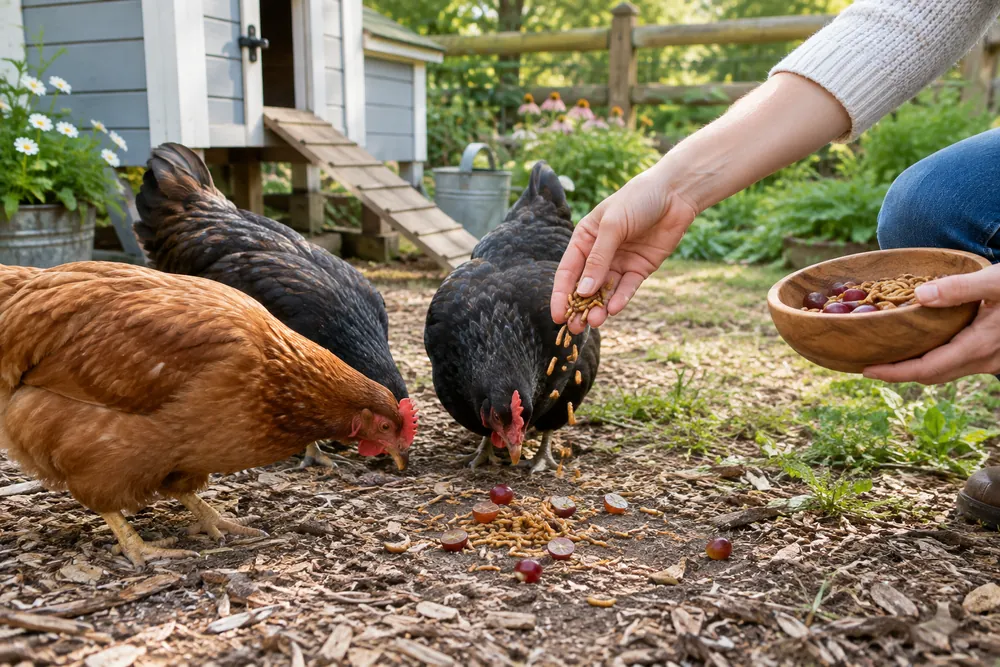
Treats are useful: they make hens easier to handle, encourage foraging and bring them back to the run at night. The best ones add something the feed does not, like moisture in summer, extra protein during molt or something to scratch for in winter.
Healthy chicken treats by season
- Summer: frozen watermelon chunks, cucumber, berries frozen in a block of ice.
- Fall: pumpkin halves, apple slices (no seeds), sunflower heads.
- Winter: a handful of scratch grains in the late afternoon, which keeps hens busy and adds calories before a cold night. Our guide to keeping chickens warm in winter has more ideas.
- Molt: mealworms, black soldier fly larvae, scrambled eggs.
How much is a treat?
A standard-size hen eats roughly a quarter pound (about 115 g) of feed a day. Ten percent of that is about 1.5 tablespoons of dense treats like mealworms or scratch, or a larger handful of watery produce like lettuce or melon. For a flock of six, a cup of chopped greens or fruit a day is a reasonable ceiling. Offer treats after hens have eaten their feed, ideally later in the day.
Coop hack: Keep a lidded “chicken bucket” next to the trash can. Toss in safe scraps all day, check it against the chart, and serve it once in the afternoon. It keeps portions in check and stops forgotten scraps from going moldy.
Gear that helps
- Dried mealworms or black soldier fly larvae: High-protein treat, ideal during molt and for training.
As an Amazon Associate we earn from qualifying purchases. Check current prices and reviews on Amazon.
Can chickens eat grapes, bananas and tomatoes?
These three are among the most searched foods, so here is the short version.
Grapes
Yes. Grapes are safe for chickens, but whole grapes can lodge in the throat, especially in bantams and young birds. Cut them in halves or quarters. Raisins are dried grapes and much more concentrated in sugar, so a few go a long way.
Bananas
Yes. Ripe banana flesh is soft and easy to eat. Peels are not toxic, but most hens ignore them and they may carry pesticide residues, so peel first or chop the peel finely if you want to use it.
Tomatoes
Yes, ripe tomatoes are safe. Tomatoes belong to the nightshade family, and the leaves, stems and unripe green fruit contain compounds that can be harmful. Fence your tomato plants or let hens into the garden only after harvest.
Apples, carrots and celery
All three are safe. Core apples and remove the seeds, which contain amygdalin, a compound that can release cyanide. Raw carrots are hard for hens to break up, so grate them or offer them cooked. Celery is fine but stringy; chop it into short pieces so long fibers do not ball up in the crop.
Watermelon, strawberries and pineapple
Watermelon is one of the best hot-weather treats because it is mostly water, and hens will pick the rind clean. Strawberries can go in whole, green tops included. Fresh pineapple is safe in small, soft pieces, but the skin and core are tough and fibrous, so leave those out.
What do free-range chickens eat?
Chickens are omnivores. Given space to roam, they eat grass, clover, weed seeds, insects, worms, grubs and the occasional small frog or mouse. Foraging is good for them: it adds variety, keeps them active and can deepen yolk color thanks to the pigments in green plants.
Foraging does not replace feed, though. A backyard lawn rarely supplies enough protein and calcium for a hen laying five or six eggs a week, and forage quality drops sharply in late fall and winter. Keep layer feed available every day, even for birds that range all afternoon.
- Do let hens clean up the garden after harvest, when they eat pests and weed seeds.
- Do provide grit, since foraged plants and seeds need grinding.
- Do not let them graze areas treated with herbicides, pesticides or slug bait.
- Do not let them into ornamental beds with toxic plants such as foxglove, oleander, yew or daffodil bulbs.
Backyard Chickens Mastery
More eggs, healthy hens, zero losses: the step-by-step guide that puts every coop hack in one place, from first flock to fifth winter.
Get the guide ($17)Can chickens eat kitchen scraps?
Yes, within limits. Plain vegetable trimmings, fruit, cooked grains and cooked eggs are all good scraps. Avoid anything salty, sugary, greasy, moldy or heavily seasoned. Check local rules too: some states restrict feeding meat scraps or food waste to livestock, so if you sell eggs, ask your state department of agriculture.
Biosecurity matters as well. Highly pathogenic avian influenza (HPAI) has continued to circulate in US wild birds and flocks as of October 2026. Do not leave scraps out where wild birds can share them with your hens, and report sudden deaths in your flock to your state veterinarian or USDA APHIS.
Common mistakes to avoid
- Feeding treats in the morning, so hens fill up before eating their layer feed.
- Letting treats creep above 10% because the flock “loves them.”
- Giving layer feed to chicks or skipping layer feed for scratch grains only.
- Offering oyster shell instead of grit, or grit instead of oyster shell.
- Tossing moldy bread, spoiled leftovers or rotting fruit into the run.
- Leaving uneaten scraps overnight, which attracts rats and raccoons.
- Feeding lawn clippings or weeds from treated lawns.
FAQ
What is a chicken’s favorite food?
Most hens go wild for mealworms, watermelon, scrambled eggs, cooked rice and pumpkin. Favorites vary by flock, so watch what disappears first.
Can chickens eat bread?
Yes, a little plain bread is not harmful, but it has little nutritional value and fills hens up. Never feed moldy bread.
Can chickens eat oranges and citrus?
Citrus is not toxic to chickens, but many hens dislike it. Offer only small amounts.
Can chickens eat popcorn?
Yes, if it is plain and air-popped. Buttered, salted or flavored popcorn should be skipped.
Can chickens eat avocado?
No. The skin, pit and leaves contain persin, which can be toxic to birds. It is safest to keep all avocado away from your flock.
Do chickens need grit if they eat layer pellets?
Not much, but if they eat scratch grains, scraps or forage outdoors, offer insoluble grit free-choice so the gizzard can grind food.
Keep reading
Sources
- How to Feed Your Laying Hens (PNW 477) – Oregon State University Extension
- Feeding the Laying Hen – Alabama Cooperative Extension System
- 10 Foods You Should Never Feed Chickens – UF/IFAS Extension
- Successfully Raising a Small Flock of Laying Chickens – Penn State Extension
- Defend the Flock – USDA APHIS