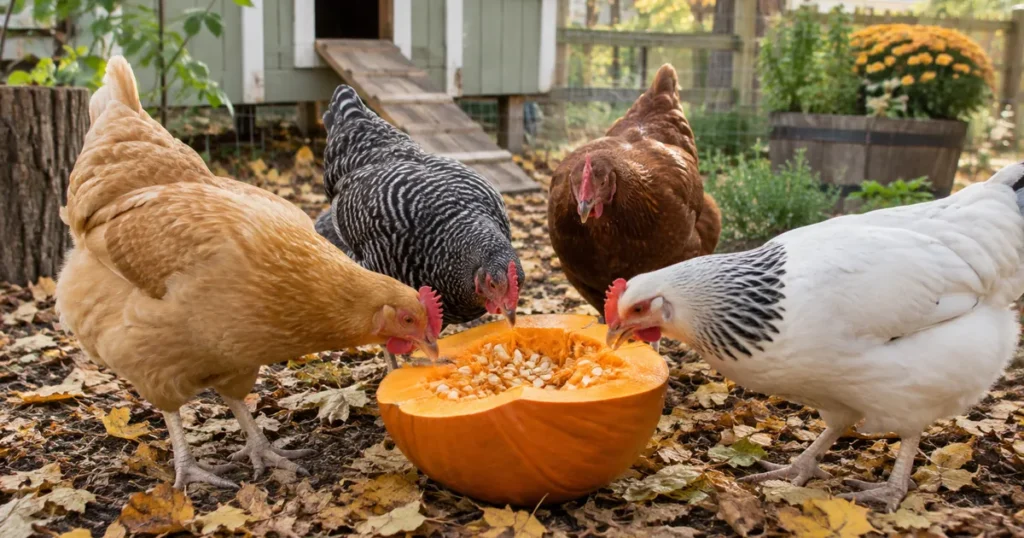
Yes, chickens can eat pumpkin, and they love it. The flesh, the stringy guts and the seeds are all safe, raw or cooked, which makes a leftover Halloween pumpkin one of the best fall treats you can give your flock. The only pumpkins to skip are ones that are moldy, rotting, painted, glittered or coated in wax.
Quick answer
- Chickens can eat raw or cooked pumpkin: flesh, guts, seeds and soft skin.
- Pumpkin seeds are safe raw and are a good snack, but roasted seeds must be plain, with no salt or seasoning.
- There is no solid evidence that pumpkin seeds deworm chickens. Use a fecal test and your vet for worms.
- Never feed a jack-o’-lantern that is moldy, mushy, painted, waxed or full of candle residue.
- Pumpkin is a treat: keep all treats to about 10% of the daily diet.
In this guide
Can chickens eat pumpkin?
Pumpkin is safe and nutritious for chickens. The orange flesh is rich in beta-carotene, which the body turns into vitamin A, and it also supplies fiber, potassium and plenty of water. It is low in calories, so a pumpkin half is a treat hens can work on for a long time without overloading on sugar.
Like all extras, pumpkin should stay within the 90/10 rule: about 90% complete layer feed and no more than 10% treats. Our full chart of what chickens can and can’t eat explains why the balance matters for egg production.
Can chickens eat raw pumpkin?
Yes. Raw pumpkin is perfectly safe. Hens can peck soft flesh straight off a halved pumpkin, but a whole, uncut pumpkin is too hard for them to break into. Split it with a sturdy knife or drop it on a hard surface so the inside is exposed.
Can chickens eat cooked pumpkin?
Yes, as long as it is plain. Leftover baked or steamed pumpkin is easy for hens to eat. Pumpkin pie filling, pie and spiced pumpkin bread are a different story: they are full of sugar, butter and salt and should stay off the menu, or be offered only as a tiny taste.
Can chickens eat pumpkin skin and guts?
The stringy guts are often the first thing to disappear. They are soft, wet and full of seeds. The skin of a ripe pumpkin is safe too, though tough; many hens leave the rind until it softens after a few days. Clear away any leftover rind before it starts to rot.
Can chickens eat pumpkin seeds?
Yes. Pumpkin seeds are safe for chickens, raw or roasted, in or out of the shell. Hens can swallow them whole, and the gizzard grinds them with the help of grit. Seeds are rich in fat, protein and minerals like zinc and magnesium, so they make a calorie-dense snack in cold weather, alongside the other tips in our guide to keeping chickens warm in winter.
Two rules keep them safe:
- Plain only. Roasted seeds made for people are usually salted or seasoned. Salt is hard on chickens’ kidneys, so roast a separate unsalted batch or serve them raw.
- Small amounts. Because they are fatty, a tablespoon or two per hen is plenty. The guts of one pumpkin, seeds included, are a fair treat for a small flock.
Coop hack: Scoop the seeds and guts into a muffin tin, top each cup with a little water and freeze. On a cold morning, pop out the “pumpkin pucks” and toss them in the run. Hens get a long-lasting treat, and nothing goes to waste.
Gear that helps
- Insoluble poultry grit: Helps the gizzard grind whole pumpkin seeds.
As an Amazon Associate we earn from qualifying purchases. Check current prices and reviews on Amazon.
Are pumpkin seeds a natural dewormer for chickens?
This is one of the most repeated claims in backyard chicken circles, and the evidence does not support it. Pumpkin seeds contain cucurbitin, an amino acid (often confused with cucurbitacin) that has shown activity against some worms in lab tests. That is a long way from proof that a handful of seeds clears worms from a hen.
Here is what the research actually shows:
- Lab and mouse studies: A 2016 study in the International Journal of Molecular Sciences found that concentrated pumpkin seed extracts damaged larvae of a rodent intestinal worm in the lab and lowered worm counts in infected mice, mostly at high doses of an ethanol extract. Extracts are not the same as whole seeds, and mice are not chickens.
- Goats: A Delaware State University trial fed ground pumpkin seeds to meat goat kids for 21 days and found no meaningful drop in worm egg counts compared with untreated goats.
- Chickens: There are no published controlled studies showing that feeding pumpkin seeds reduces worm loads in laying hens.
Cucurbitin content also varies a lot between pumpkin varieties, so even if it worked, nobody could tell you how many seeds to feed. Pumpkin seeds are a fine treat, but they are not a worm treatment.
Warning: If you suspect worms (weight loss, pale comb, diarrhea, drop in laying, or worms seen in droppings), ask your vet or state poultry lab for a fecal float test. If treatment is needed, use a product labeled for laying hens, follow the label and egg-withdrawal times, and ask your vet. A hen that is lethargic, hunched or not eating needs a vet promptly; our guide to signs of a sick chicken can help you decide.
Can chickens eat jack-o’-lanterns and Halloween pumpkins?
Often, yes. A carved pumpkin that sat on the porch for a few days in cool weather is usually still fine. Check it carefully first, because a pumpkin that looks festive can be unsafe after a week outdoors.
| Pumpkin condition | Safe for chickens? | Why |
|---|---|---|
| Fresh, uncarved decorative pumpkin | Yes | Same as any pumpkin; just split it open. |
| Carved, firm, carved within a few days | Yes | Trim off any dirty or soft edges first. |
| Carved and burned with a real candle | Limit | Cut away wax drips and blackened areas. |
| Painted, glittered, varnished or sprayed | No | Paint, glitter and sealants are not food-safe. |
| Treated with bleach or preservative spray | No | Chemical residues can be toxic. |
| Soft, slimy, fuzzy or smelly | No | Mold can produce toxins that make hens very sick. |
| Frozen and thawed several times | Limit | Turns mushy fast; feed right away or compost. |
When in doubt, compost it. Many keepers also ask neighbors for their pumpkins after Halloween; that is a great idea, but ask how they were decorated and inspect each one before it goes in the run.
How to feed pumpkin to chickens
- Inspect it. Look and smell for mold, soft spots and any paint or wax.
- Rinse and trim. Wash off dirt and cut away anything questionable.
- Split it. Halve or quarter the pumpkin so hens can reach the flesh. For a small flock, one quarter at a time is plenty.
- Serve it in the afternoon. Hens should eat their layer feed first; treats come later.
- Remove leftovers. Pick up rinds and scraps by evening, or within a day or two in cold weather, so they do not mold or attract rats.
Want to stretch the treat? Bake pumpkin halves until soft, scoop the flesh into freezer bags, and thaw small portions through the winter. The extra seeds can be dried on a tray and stored in a jar for snowy days.
Coop hack: Hang a halved small pumpkin, cut side down, from a string at beak height. Hens have to jump and peck for it, which keeps them busy during long winter days in the run and reduces feather pecking from boredom.
Backyard Chickens Mastery
More eggs, healthy hens, zero losses: the step-by-step guide that puts every coop hack in one place, from first flock to fifth winter.
Get the guide ($17)Gear that helps
- Hanging treat feeder / treat ball for chickens: Lets you hang pumpkin chunks or squash so hens stay busy in winter.
As an Amazon Associate we earn from qualifying purchases. Check current prices and reviews on Amazon.
Can chickens eat other squash and gourds?
Most edible winter squash, such as butternut, acorn, spaghetti and hubbard, are as safe as pumpkin. Zucchini and other summer squash are fine too. Be careful with ornamental gourds, though: they are not grown for eating, can taste very bitter and are often varnished. Bitterness in squash comes from cucurbitacins, which can cause digestive upset at high levels in people and animals. If a squash tastes or smells unusually bitter, do not feed it.
Common mistakes to avoid
- Feeding a jack-o’-lantern that has gone soft or moldy.
- Giving painted, glittered or wax-coated pumpkins.
- Serving salted, seasoned or sugared roasted pumpkin seeds.
- Counting on pumpkin seeds to treat worms instead of testing and calling a vet.
- Dumping a whole pumpkin pile in the run so treats replace feed for a week.
- Leaving rinds to rot in the run, where they attract rodents.
FAQ
Can baby chicks eat pumpkin?
Chicks can try a little soft, mashed pumpkin after a few weeks, as long as they have chick grit. Keep it to a tiny amount so they eat their starter feed.
Do pumpkin seeds need to be shelled for chickens?
No. Chickens can eat whole raw pumpkin seeds, shells and all, and their gizzard grinds them with grit.
Can chickens eat rotten pumpkin?
No. Soft, slimy or moldy pumpkin can contain mold toxins and harmful bacteria. Compost it instead.
How much pumpkin can I give my chickens?
Keep pumpkin within the 10% treat limit. For a flock of four to six hens, a quarter of a medium pumpkin a day is a reasonable amount.
Does pumpkin make egg yolks more orange?
Pumpkin is rich in carotenoid pigments, and pigment-rich foods can deepen yolk color. The effect depends on how much the hens eat compared with their feed.
Keep reading
Sources
- Evaluation of Anthelmintic Activity and Composition of Pumpkin Seed Extracts – International Journal of Molecular Sciences (Grzybek et al., 2016)
- Pumpkin Seeds and Worms in Meat Goat Kids – Delaware State University
- Are Pumpkins Safe for Livestock to Eat? – Texas Farm Bureau
- 10 Foods You Should Never Feed Chickens – UF/IFAS Extension
- How to Feed Your Laying Hens (PNW 477) – Oregon State University Extension