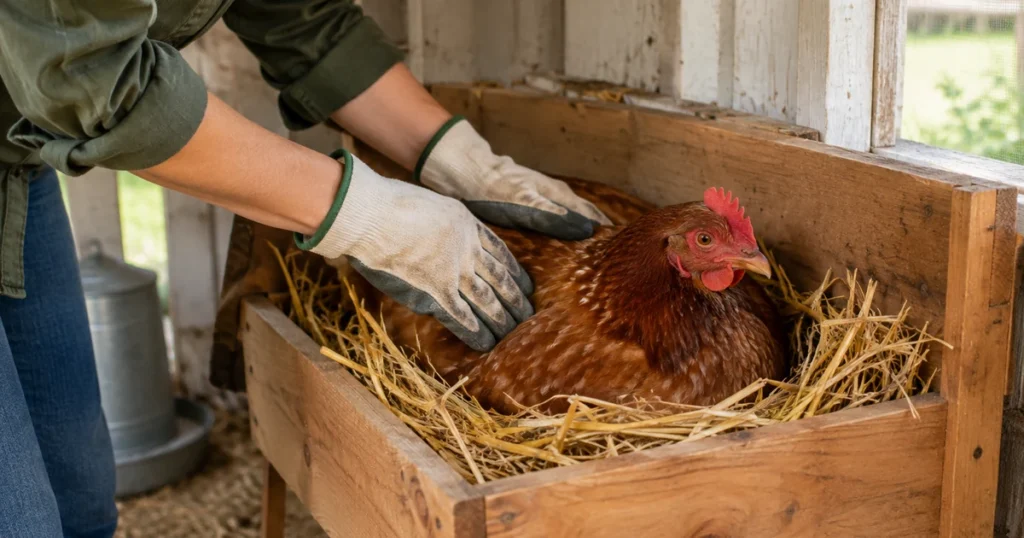
The most common signs of a sick chicken are lethargy, a hunched posture with fluffed feathers, a pale or purple comb, not eating or drinking, sneezing or labored breathing, abnormal droppings and a sudden stop in laying. If you spot any of these, separate the hen into a warm, quiet hospital crate, offer water, check her crop, vent and feet, and call a poultry vet if she is not improving within hours. Sudden deaths in several birds must be reported right away because they can signal bird flu.
Quick answer
- Chickens hide illness, so a hen that looks “off” is often sicker than she seems.
- First aid: isolate, keep warm and calm, offer water with poultry electrolytes, and examine her head to toe.
- Call a vet for labored breathing, blood, not eating for a day, a swollen or purple head, or several sick birds.
- Report sudden or multiple deaths to your state veterinarian or USDA at 1-866-536-7593 (verified on USDA APHIS materials, October 2026).
- Your state’s poultry diagnostic lab can test sick or dead birds, often at low cost.
In this guide
- Why chickens hide being sick
- Signs of a sick chicken: what to look for
- Sick chicken symptoms: what to do now
- How to set up a chicken hospital crate
- Chicken lethargic: what it can mean
- Chicken sneezing: when to worry
- Common chicken diseases: a short overview
- Bird flu (HPAI): signs and how to report
- How to find a poultry vet or diagnostic lab
- Common mistakes to avoid
- FAQ
Why chickens hide being sick
Chickens are prey animals. In a flock, the weak bird gets picked on and attracts predators, so hens instinctively act normal for as long as they can. By the time a chicken stands alone with her eyes half closed, the problem has often been building for days.
That’s why a 30-second daily check is your best tool. Watch your birds when you open the coop and when they come out to eat. You’ll learn what normal looks like for each hen, and the first change will jump out at you.
Signs of a sick chicken: what to look for
University of Minnesota Extension lists the classic warning signs: depression, ruffled feathers, poor appetite, fewer eggs, eye or nasal discharge, breathing trouble, lameness and abnormal droppings. In practice, look for:
- Behavior: sitting alone, hunched, tail down, eyes closed, sleeping during the day, not running to treats.
- Head: pale, dark or purple comb and wattles; swelling around the eyes or face; bubbles in the eyes.
- Breathing: sneezing, gurgling, open-mouth breathing, tail bobbing with each breath.
- Droppings: blood, very watery, bright green or white diarrhea lasting more than a day.
- Body: weight loss you can feel at the keel (breastbone), a swollen belly, a crop that stays full in the morning.
- Legs and feet: limping, a swollen footpad, scaly raised leg scales, paralysis.
- Eggs: sudden stop in laying outside of molt or winter, soft-shelled or misshapen eggs. Our guide on why chickens stop laying covers the non-medical causes.
Sick chicken symptoms: what to do now
Use this table as a first-response guide, not a diagnosis. Many diseases look alike, and only a vet or lab can confirm the cause.
| Sign | Possible causes | What to do now | Call the vet if… |
|---|---|---|---|
| Lethargic, hunched, fluffed up | Infection, egg binding, parasites, injury, heat stress, many others | Isolate in a warm, quiet crate; offer water with electrolytes; check crop, vent and feet | She won’t eat or drink, or isn’t better within 12-24 hours |
| Sneezing, nasal discharge, bubbly eyes | Respiratory infection (mycoplasma, coryza, others), dust or ammonia | Isolate; improve coop ventilation and dry the bedding | Several birds affected, face swells, or she gasps or wheezes |
| Open-mouth breathing, gasping | Serious respiratory disease, heat stress, HPAI | Move to shade and cool if hot; isolate and keep calm | Right away, especially with any deaths in the flock |
| Bloody or very watery droppings | Coccidiosis (most common in young birds), worms, other infections | Isolate; clean and dry the bedding; keep water available | Same day, especially for chicks and young pullets |
| Straining, penguin stance, no egg | Egg binding | Warm, quiet crate; a warm (not hot) shallow soak can help her relax | No egg within a few hours, or she becomes weak |
| Crop full and squishy in the morning, sour smell | Sour crop or impacted crop | Remove feed overnight but leave water; recheck in the morning | The crop still hasn’t emptied, or she is weak or vomiting fluid |
| Limping, swollen footpad with a dark scab | Bumblefoot (bacterial infection) or injury | Clean and dry the area; lower high roosts; check for sharp edges | Swelling spreads, she can’t walk, or the foot is hot |
| Feather loss around vent, crawling specks at night | Mites or lice | Check birds and roosts with a flashlight after dark; clean the coop | Pale comb or anemia, or heavy infestation in many birds |
| Leg or wing paralysis, gray irregular pupil | Marek’s disease, injury, nutritional problems | Isolate; provide easy access to food and water | Always, to confirm the cause and protect the rest of the flock |
| Swollen head, purple comb or legs, sudden deaths | Possible HPAI or other serious disease | Don’t move birds off the property; keep others away; wear dedicated clothes and boots | Immediately: state veterinarian or USDA 1-866-536-7593 |
How to set up a chicken hospital crate
A sick hen needs to be away from the flock: other hens may peck her, and if the illness is contagious, isolation slows the spread. Set up a “hospital” before you ever need it.
- Choose the spot: a large dog crate, plastic tote or spare brooder in a garage, mudroom or shed, away from your other birds and out of drafts.
- Keep her warm and calm: dim light, old towels or pine shavings, and a draped sheet over part of the crate. A sick bird struggles to keep warm, so avoid cold floors.
- Offer water first: a shallow dish she can reach without standing up. Add a poultry vitamin and electrolyte powder, following the label.
- Offer easy food: her usual feed moistened into a mash, or a little scrambled egg.
- Examine her: gently feel the crop (it should be nearly empty in the morning), look at the vent for pasty droppings, swelling, mites or a stuck egg, and check feet for swelling or scabs.
- Write things down: what she eats, drinks and passes, and when symptoms started. A vet will ask.
- Practice biosecurity: care for the sick bird last, wash hands, and use separate boots or boot covers.
Coop hack: Keep a “chicken first aid bin” ready: a towel, disposable gloves, a flashlight, a small dish, poultry electrolytes, saline wound wash, a notebook, and your vet’s and state poultry lab’s phone numbers taped inside the lid.
Warning: Don’t give leftover human or pet medications, antibiotics or dewormers on a guess. Many are not approved for laying hens, can leave residues in eggs, and can hide the real problem. For any treatment, use a product labeled for laying hens, follow the label and egg-withdrawal time, and ask your vet first.
Gear that helps
- Large wire dog crate for a hospital pen: Isolates a sick hen in a calm, safe space
- Poultry vitamin and electrolyte powder: Supports hydration of a sick or stressed hen (supplement, not medicine)
As an Amazon Associate we earn from qualifying purchases. Check current prices and reviews on Amazon.
Chicken lethargic: what it can mean
Lethargy is the most common sign of a sick chicken, and the least specific. A sleepy, hunched hen can have an egg stuck, a heavy parasite load, an infection, a sour crop, heat stress or an internal problem such as egg-yolk peritonitis.
Start by ruling out the simple causes: is she molting (hens can look rough and tired then; see chicken molting explained), broody (flattening in the nest and growling), or overheated (panting with wings held out)? If none of those fit and she is not eating, treat it as urgent.
Chicken sneezing: when to worry
An occasional sneeze after dust bathing or scratching in dry bedding is normal. Repeated sneezing, especially with wet nostrils, bubbles in the eye corners, facial swelling or a rattly sound, points to a respiratory problem.
Respiratory diseases spread easily and some, like mycoplasma, can stay in a flock for life once established. Check your coop first: a strong ammonia smell or dusty, moldy bedding irritates airways. If several birds are sneezing, call a vet or your state lab for testing before the whole flock is involved.
Backyard Chickens Mastery
More eggs, healthy hens, zero losses: the step-by-step guide that puts every coop hack in one place, from first flock to fifth winter.
Get the guide ($17)Common chicken diseases: a short overview
These are the problems backyard keepers run into most often. This overview is for recognition only: treatment decisions belong with a veterinarian.
Respiratory infections
Mycoplasma (chronic respiratory disease), infectious coryza, infectious bronchitis and infectious laryngotracheitis cause sneezing, nasal discharge, swollen faces and breathing trouble. ILT can cause loud gasping and bloody mucus. Buying from NPIP-certified sources and quarantining new birds are the best defenses.
Coccidiosis
Coccidiosis is caused by a microscopic parasite that thrives in damp, crowded litter. The Merck Veterinary Manual notes it is most common in birds about 1 to 4 months old. Signs include bloody droppings, droopiness and sudden deaths in young birds. Dry bedding and enough space prevent most cases.
Mites and lice
Northern fowl mites live on the bird; red mites hide in cracks and feed at night. Lice cause ragged feathers around the vent. All of them lower egg production. Inspect birds after dark with a flashlight, and treat both birds and coop with products labeled for poultry.
Egg binding
An egg-bound hen strains, stands upright like a penguin and visits the nest repeatedly without laying. Low calcium, obesity, large eggs and stress can play a role. It can become life-threatening, so call a vet if she has not passed the egg after warm, quiet rest.
Bumblefoot
Bumblefoot is a staph infection of the footpad, usually through a small cut. It shows up as a swollen pad with a round dark scab. Lower roosts, smooth edges and dry litter help prevent it. Deep infections need a vet.
Sour crop
The crop should be full at night and nearly empty by morning. In sour crop, it stays soft, squishy and smells sour; an impacted crop feels hard. Both need attention, and a vet can tell you which you’re dealing with.
Marek’s disease
Marek’s is a herpesvirus that causes tumors and nerve damage, often seen as paralysis of a leg or wing, or a gray, irregular pupil. It cannot be cured, but vaccination at hatch is highly effective, so ask your hatchery for vaccinated chicks.
Bird flu (HPAI): signs and how to report
Highly pathogenic avian influenza remains active in US wild birds and poultry as of October 2026, and fall migration raises the risk. Backyard flocks are as vulnerable as commercial farms.
USDA lists these warning signs:
- Sudden death, or several birds dying in a short time
- Lack of energy and appetite
- A drop in egg production, or soft and misshapen eggs
- Swelling of the head, eyelids, comb or wattles
- Purple discoloration of the comb, wattles and legs
- Nasal discharge, coughing, sneezing
- Twisted neck, tremors, stumbling or paralysis
- Diarrhea
If you see these signs or have unexplained deaths, call your state veterinarian or the USDA toll-free line at 1-866-536-7593. Testing for suspected HPAI is free. Don’t take birds or carcasses to a vet clinic or another property before you get instructions, and avoid touching sick or dead birds bare-handed. Human risk is considered low, but wear gloves and wash up afterward.
The best protection is prevention: keep feed and water covered, keep wild ducks and geese away, wear dedicated coop boots, and quarantine new birds for 30 days. See our backyard chickens for beginners guide for a full biosecurity routine.
How to find a poultry vet or diagnostic lab
Many small-animal clinics don’t treat chickens, so search for a vet before an emergency. Try these options:
- Avian or exotic vets: search “avian vet” or “exotic animal vet” plus your city, and call to ask if they see chickens.
- Farm or large-animal vets: some rural practices see poultry.
- Your state poultry or veterinary diagnostic lab: most states have one, often at the land-grant university. They can perform a necropsy (animal autopsy) on a bird that died, which protects the rest of your flock.
- Your county extension office: extension agents know local poultry resources and labs.
- Your state department of agriculture: the state veterinarian’s office and the NPIP state agency can point you to testing.
Coop hack: If a bird dies unexpectedly, put the body in a sealed plastic bag and refrigerate it (don’t freeze it), then call your state lab. A fresh, chilled bird gives the most useful necropsy results.
Gear that helps
- Poultry first aid kit basics (saline wound wash, gloves, headlamp): Ready supplies for first aid while you contact a vet
As an Amazon Associate we earn from qualifying purchases. Check current prices and reviews on Amazon.
Common mistakes to avoid
- Waiting “to see if she gets better” when a hen isn’t eating or breathing normally.
- Leaving a sick bird in the flock where others peck her or catch the illness.
- Medicating on a guess with antibiotics or dewormers not labeled for laying hens.
- Ignoring egg-withdrawal times after any treatment.
- Throwing away a bird that died suddenly instead of getting a necropsy.
- Skipping quarantine for new birds or bringing home birds from swaps without testing.
- Not reporting several sudden deaths during bird flu season.
FAQ
How do you tell if a chicken is sick?
Look for a hen that stands apart, hunched with fluffed feathers and half-closed eyes, and skips food and treats. Other signs are a pale or purple comb, sneezing, labored breathing, abnormal droppings and a sudden stop in laying.
Can a sick chicken recover on its own?
Some mild problems resolve with rest, warmth and good hydration. But chickens hide illness, so a bird that looks sick is often seriously ill. If she isn’t eating or improving within a day, call a vet.
Why is my chicken lethargic and not eating?
Common causes include egg binding, sour or impacted crop, parasites, infections, heat stress and internal laying problems. Isolate her, offer water, check her crop and vent, and contact a poultry vet if she doesn’t improve quickly.
Is chicken sneezing serious?
An occasional sneeze after dust bathing is normal. Repeated sneezing with nasal discharge, bubbly eyes or facial swelling suggests a respiratory infection that can spread through the flock, so isolate the bird and get advice.
Can I eat eggs from a sick chicken?
It’s safest not to until you know the cause and the bird has recovered. If a hen received any medication, follow the egg-withdrawal time on the label or from your vet.
Who do I call if my chickens die suddenly?
Call your state veterinarian or USDA at 1-866-536-7593. Sudden deaths can be a sign of bird flu, and testing is free.
Keep reading
Sources
- Poultry Owners: Report Sick Birds! – USDA APHIS
- Defend the Flock: Biosecurity Every Day, Every Time – USDA APHIS
- Diseases of Small Poultry Flocks – University of Minnesota Extension
- Common Infectious Diseases in Backyard Poultry – Merck Veterinary Manual
- Biosecurity for Small Poultry Flocks – Poultry Extension (extension.org)
- Understanding and Addressing Egg Binding in Chickens – DoveLewis Animal Hospital