
Yes, chickens can eat bananas, and the soft, sweet flesh is one of the easiest treats you can give a flock. Ripe banana is safe raw, mashed or frozen, and even the peel is not toxic, though most hens only eat it chopped or cooked. Because bananas are high in sugar, keep them to a small portion a few times a week.
Quick answer
- Ripe banana flesh is a safe, popular treat for chickens of all ages, chicks included in tiny amounts.
- Banana peels are not toxic, but they are tough and fibrous; wash, chop finely or cook them if you want to use them.
- One medium banana is plenty for a flock of four to six hens on treat day.
- Skip banana chips, banana bread and anything with added sugar, salt or oil.
- Never feed moldy, fermented or rotting bananas.
In this guide
Can chickens eat bananas?
Bananas are a “Yes” in our chart of what chickens can and can’t eat. The flesh is soft enough that hens do not need to tear it, so even older birds and bantams manage it easily. Most flocks crowd around a peeled banana within seconds.
That enthusiasm is the reason to be careful. Bananas are a sweet, starchy fruit, and like every treat they should stay a small part of the diet. Laying hens need a complete layer feed for protein, calcium and vitamins; bananas fill them up without providing much of any of those.
Banana nutrition for chickens
According to USDA FoodData Central, 100 grams of raw banana (a bit less than one medium fruit) contains roughly:
- 89 calories and about 75% water
- 12 g of sugar and 23 g of total carbohydrates
- 358 mg of potassium
- 2.6 g of fiber and only about 1 g of protein
Potassium is often mentioned as a reason to feed bananas, especially in hot weather when birds lose electrolytes. A complete layer feed is already formulated to cover a hen’s potassium needs, so bananas are a nice extra, not a fix for anything. In summer heat, cool water, shade and airflow matter far more than any treat.
The low protein is the bigger point. During molt, hens need more protein to regrow feathers, so bananas are a poor choice as a “pick-me-up” then. Our guide to chicken molting covers better options like a higher-protein feed and mealworms.
Gear that helps
- Dried mealworms or black soldier fly larvae: A higher-protein treat alternative during molt, when bananas fall short.
As an Amazon Associate we earn from qualifying purchases. Check current prices and reviews on Amazon.
Can chickens eat banana peels?
Yes, banana peels are not toxic to chickens. The question is whether your hens will bother with them. Raw peels are thick and leathery, and most hens pick at them briefly, then walk away. The peel is also much higher in fiber than the flesh and holds most of the banana’s tannins, compounds that can lower how well nutrients are absorbed. Feedipedia, the FAO-backed animal feed database, notes those tannins drop as the fruit ripens.
A few practical points if you want to use peels:
- Wash them first. Bananas are grown with pesticides and post-harvest fungicides, and residues sit mostly on the peel, not in the flesh. Rinse and rub peels under running water. Organic peels are a better choice if peels will be a regular snack.
- Use ripe peels. Yellow or brown-speckled peels are softer and lower in tannins than green ones.
- Chop or cook them. Cut peels into thin strips or small pieces, or simmer them for 10-15 minutes until soft. Cooked, chopped peel is much easier for hens to eat.
- Remove the stem and hard tips. They are woody and not worth the effort.
If your hens ignore peels, put them in the compost instead. They are not missing anything important.
How to serve bananas to chickens
| Form | OK? | Notes |
|---|---|---|
| Ripe banana, peeled | Yes | Slice in coins or split lengthwise; the easiest serving. |
| Overripe, brown-spotted banana | Yes | Fine and very soft; sweeter, so serve less. |
| Green (unripe) banana | Limit | Hard and starchy; most hens ignore it. |
| Banana peel, washed and chopped or cooked | Limit | Not toxic, but fibrous; small amounts only. |
| Frozen banana slices | Yes | A good cooling treat on hot days. |
| Mashed banana for chicks | Limit | A tiny taste after the first couple of weeks. |
| Banana chips | No | Usually fried in oil and coated in sugar or honey. |
| Banana bread, muffins, pudding | No | Sugar, butter, salt and sometimes chocolate. |
| Moldy, fermented or leaking banana | No | Mold toxins and alcohol from fermentation. |
Coop hack: Slice a banana in half lengthwise, leave it in the peel and set it cut side up in the run. The peel acts as a natural dish, so the flesh stays off the dirt, and you pick up one empty “boat” when they are done.
Gear that helps
- Hanging treat feeder / treat ball for chickens: Lets you hang banana chunks or peels so hens work for their treat and keep it off the dirt.
As an Amazon Associate we earn from qualifying purchases. Check current prices and reviews on Amazon.
How much banana can chickens eat?
All treats together should stay around 10% of the daily diet. A standard hen eats about a quarter pound (about 115 g) of feed a day, which leaves room for only a small amount of extras. With bananas, that works out to:
- Standard hen: 2-3 thin slices, or about one-sixth of a medium banana.
- Bantam: 1-2 small pieces.
- Flock of four to six: one medium banana, split among them.
Two or three banana days a week is a good rhythm. Rotate with lower-sugar treats like leafy greens, cucumber or a little cooked egg. If droppings turn loose and sticky after banana day, scale back.
Is the sugar in bananas bad for chickens?
In small amounts, no. Fruit sugar is fine as an occasional treat. The trouble starts when sweet treats crowd out layer feed: a hen full of banana eats less of the feed that supplies calcium for shells and protein for eggs. Overweight hens can also lay less over time. Keeping portions small solves both problems.
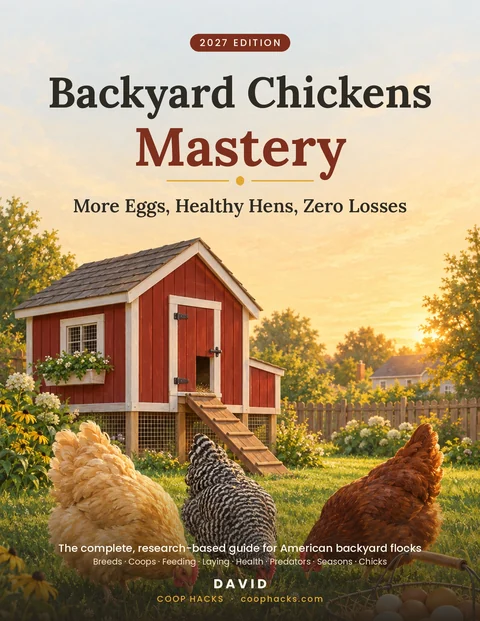
The complete guide · 2027 Edition
Backyard Chickens Mastery
Feed your hens right at every age. More eggs, healthy hens, zero losses: every coop hack in one step-by-step guide.
- 188 pages, 9 parts, 70 Coop Hacks
- 20 breed profiles, a 60-food safe chart and a laying troubleshooter
- 9 printable checklists, including the Winter Egg-Laying Checklist
Gear that helps
- Complete layer feed: Bananas are low in protein and calcium; layer feed should stay 90% of the diet.
As an Amazon Associate we earn from qualifying purchases. Check current prices and reviews on Amazon.
Can chickens eat banana chips and dried bananas?
Skip most store-bought banana chips. They are usually deep-fried in coconut or palm oil and coated with sugar or honey, which makes them a high-fat, high-sugar snack with little benefit for hens. Some are salted, and salty foods are on the University of Florida IFAS Extension list of foods to avoid for chickens.
Plain, unsweetened dehydrated banana, dried at home with nothing added, is acceptable in very small amounts, like the raisins in our guide to feeding grapes to chickens. A few small pieces per hen is the limit, because drying concentrates the sugar.
Can chickens eat moldy or rotten bananas?
No. A banana with brown spots is simply ripe and still fine. A banana with fuzzy white, green or black mold, a sour or alcohol smell, or leaking liquid should go in the trash, not the run. Molds can produce mycotoxins, and the Merck Veterinary Manual notes these can damage the liver and kidneys, weaken the immune system and lower egg production in poultry. When in doubt, follow the UF/IFAS rule of thumb: if you would not eat it, do not feed it to your hens.
Coop hack: When bananas are getting too ripe for the kitchen, peel and slice them, then freeze the slices on a tray. Pull out a handful on hot afternoons for an instant cold treat with zero waste.
Common mistakes to avoid
- Giving each hen a whole banana instead of sharing one across the flock.
- Throwing whole raw peels in the run and leaving them to rot.
- Feeding unwashed peels from conventionally grown bananas.
- Offering banana chips, banana bread or other sweetened baked goods.
- Using bananas as a protein boost during molt; they are very low in protein.
- Serving treats in the morning, before hens have eaten their layer feed.
FAQ
Can baby chicks eat bananas?
Yes, a tiny amount of mashed ripe banana is fine once chicks are a couple of weeks old and eating chick starter well. Keep it to a small taste so they keep eating their starter.
Do chickens like bananas?
Most chickens love ripe banana flesh because it is soft and sweet. Many ignore the peel unless it is chopped finely or cooked.
Can chickens eat banana peels raw?
Yes, raw peels are not toxic, but they are tough. Wash them, chop them into small pieces and offer only a little at a time.
Can chickens eat plantains?
Yes. Ripe plantains, plain or cooked without salt, oil or sugar, are safe. Raw green plantains are hard and starchy, so cook them first.
Are bananas good for chickens in hot weather?
Frozen banana slices are a nice cooling treat, and bananas supply potassium. Shade, cool water and good ventilation still matter much more in a heat wave.
Keep reading
Sources
- Bananas, raw – USDA FoodData Central
- Banana fruits – Feedipedia (INRAE, CIRAD, AFZ, FAO)
- Mycotoxicoses in Poultry – Merck Veterinary Manual
- 10 Foods You Should Never Feed Chickens – UF/IFAS Extension
- 7 Tips for Cleaning Fruits, Vegetables – U.S. Food and Drug Administration
- How to Feed Your Laying Hens (PNW 477) – Oregon State University Extension
- Chicken Treats: Are They Good for My Laying Hens? – Purina Animal Nutrition