
Chicken scratch is a mix of whole, cracked or rolled grains, usually corn, wheat, milo, oats or barley, that you toss on the ground for hens to scratch up. It is a treat, not a feed: scratch is low in protein and high in energy, so it should stay a small extra on top of a complete layer feed, within the 10% treat limit. A small handful in the late afternoon is a classic winter boost.
Quick answer
- Scratch grains are a grain mix, usually around 7-10% protein, compared with about 16% for layer feed.
- It is not a complete feed and should never replace layer feed.
- Keep it to about a handful per 10 birds, or what the flock eats in 10-20 minutes, inside the 10% treat limit.
- In winter, a small afternoon serving adds calories, and digesting it produces some body heat overnight.
- Hens eating scratch need insoluble grit to grind whole grains.
In this guide
What is chicken scratch?
Scratch, or scratch grains, is a blend of cereal grains sold as a treat for poultry. The name comes from how it is fed: you scatter it on the ground and the birds scratch and peck to find it. The University of Kentucky’s feed regulatory program describes scratch as a mix of cereal grains such as corn, grain sorghum (milo) and wheat, and a typical label example lists cracked corn, wheat, milo and white millet.
Some brands add oats, barley, sunflower seeds or dried insects. The base is almost always grain, and that is what defines its nutrition.
Scratch grains nutrition
The same University of Kentucky document notes that grain scratches generally provide 7-10% crude protein, while chickens normally need 15-20%. Oregon State University Extension describes scratch as relatively low in protein and high in energy or fiber, depending on the grain. Grains are also low in calcium, vitamins and minerals, which is why they cannot carry a laying hen on their own.
Because of that, US feed labels for scratch are expected to tell you to feed it in addition to a complete and balanced poultry feed. If a bag implies scratch can be the whole diet, be skeptical.
Scratch vs. layer feed
| Chicken scratch | Layer feed | |
|---|---|---|
| What it is | Mix of whole, cracked or rolled grains | Complete, balanced ration (pellets or crumbles) |
| Protein | About 7-10% | About 16% |
| Calcium | Low | About 3-4% for eggshells |
| Vitamins and minerals | Not balanced | Formulated for laying hens |
| Role | Treat, enrichment, extra calories | The daily base of the diet |
| How to feed | Scattered, small amounts, afternoon | Free choice in a feeder all day |
University of Kentucky poultry specialist Jacquie Jacob compares scratch to french fries for chickens: tasty, but a hen that fills up on it loses her appetite for the balanced food she needs. Penn State Extension’s small-flock checklist goes further and says cracked corn and scratch grain should not be fed to chickens at all. Most other extension services allow it as a small treat, which is the approach here, but the warning shows how easy scratch is to overdo.
The bottom line: layer feed is the meal, scratch is the snack. For a complete picture of what belongs in the diet, see the guide to what chickens can and can’t eat.
Is chicken scratch good for chickens?
In small amounts, yes. Scratch has real uses:
- Natural behavior. Scratching and foraging are core chicken behaviors. Scattering grain gets hens moving, which helps with boredom in a run.
- Taming and recall. A shake of the scratch can is a reliable way to call hens back to the coop.
- Turning bedding. Tossed into straw or litter, scratch encourages hens to stir it up.
- Extra calories in cold weather. More on that below.
The problem is quantity. Too much scratch dilutes the protein and calcium hens get, which can mean fewer eggs and thinner shells. It also adds calories without much else. The Merck Veterinary Manual links fatty liver hemorrhagic syndrome to an energy surplus in hens that get little exercise, and calls it a leading noninfectious cause of death in backyard chickens. If laying has dropped off, look at treats first in the guide to why chickens stop laying eggs.
How much scratch to feed chickens
Extension guidance gives slightly different rules, but they point the same way:
- University of Minnesota Extension: no more than a handful per 10 birds.
- Oregon State University Extension: scratch at about 10-15% of total daily food at most.
- Jacquie Jacob, University of Kentucky: only what birds clean up in 15-20 minutes, in the afternoon, after they have eaten their complete feed.
- University of Kentucky feed labeling guidance: label directions should suggest an amount chickens can eat in about 10 minutes.
Remember that scratch shares the 10% treat allowance with kitchen scraps, mealworms and everything else. If your hens also get plenty of scraps, give less scratch. The guide to healthy chicken treats shows how to balance them.
Coop hack: Keep a small measuring cup in the scratch bin and fill it once per day for the whole flock. Whatever is in the cup is the day’s ration. It ends the “just one more handful” habit that turns a treat into half the diet.
Gear that helps
- Scratch grains for chickens: A small daily handful makes a classic treat and recall signal.
As an Amazon Associate we earn from qualifying purchases. Check current prices and reviews on Amazon.
Is chicken scratch good for chickens in winter?
This is where scratch shines. Hens burn more energy to stay warm in cold weather. University of Minnesota and University of New Hampshire Extension both note that flock feed intake can rise by up to 25% in cold weather, and both suggest scratch grains in the late afternoon because digesting them produces body heat that helps birds through the night.
A few winter guidelines:
- Keep the feeder full first. Most of the extra energy should come from layer feed, which hens eat more of in the cold.
- Serve scratch late in the day. An hour or two before roosting works well, so birds go to bed with a full crop.
- Stay with small amounts. Winter is not a reason to triple the scratch. A handful per 10 birds is still the target.
- Offer grit. Snow and deep bedding hide the small stones hens normally pick up, so UMN and UNH recommend free access to poultry grit in winter.
- Toss it into hay or leaves. UMN suggests laying a little hay in the run to encourage scratching on days when birds stay close to the coop.
Scratch is one part of cold-weather care. Dry bedding, good ventilation and unfrozen water matter more, as covered in the guide to keeping chickens warm in winter.
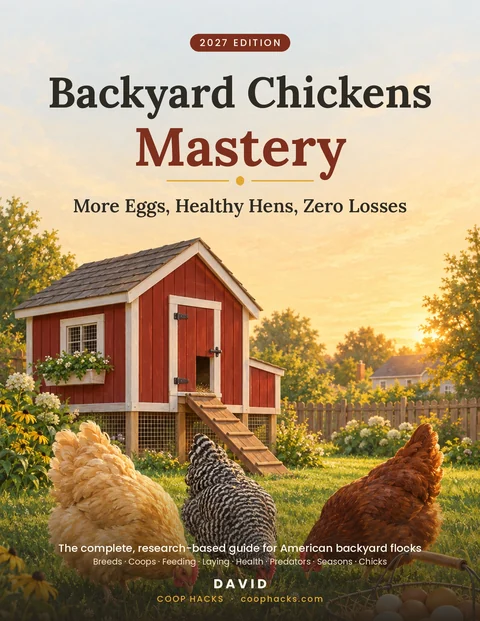
The complete guide · 2027 Edition
Backyard Chickens Mastery
Feed your hens right at every age. More eggs, healthy hens, zero losses: every coop hack in one step-by-step guide.
- 188 pages, 9 parts, 70 Coop Hacks
- 20 breed profiles, a 60-food safe chart and a laying troubleshooter
- 9 printable checklists, including the Winter Egg-Laying Checklist
Gear that helps
- Insoluble poultry grit: Hens need grit to grind whole grains, especially when snow hides natural pebbles.
As an Amazon Associate we earn from qualifying purchases. Check current prices and reviews on Amazon.
How to feed chicken scratch
- Scatter, do not pour into the feeder. Adding grains to the feeder dilutes the complete feed, which Jacob lists as a common mistake.
- Spread it wide. Throw it over a large area so lower-ranked hens get a share.
- Clean ground only. Scatter on dry bedding or grass, not in muddy or manure-heavy spots.
- Pick up leftovers. Alabama Extension advises that hens clean up scattered grain within 20-30 minutes; uneaten grain attracts rodents and wild birds.
- Store it right. Keep scratch in a metal can with a tight lid, dry and away from rodents, and do not feed grain that smells musty or shows mold.
Can chicks eat chicken scratch?
Young chicks should eat starter feed only. Adult scratch is too large and low in protein for growing birds. Some brands sell a finely cracked “chick scratch”; if you use it, wait until chicks are several weeks old, offer chick grit, and keep it to a pinch.
Gear that helps
- Galvanized metal feed storage can with lid: Keeps scratch dry and away from rodents.
As an Amazon Associate we earn from qualifying purchases. Check current prices and reviews on Amazon.
Common mistakes to avoid
- Feeding scratch as the main diet or mixing it into the feeder.
- Giving scratch in the morning, before hens have eaten their layer feed.
- Doubling or tripling the scratch in winter instead of keeping the feeder full.
- Forgetting insoluble grit for birds that eat whole grains.
- Leaving scattered grain on the ground overnight.
- Feeding moldy or musty grain.
FAQ
Is chicken scratch the same as chicken feed?
No. Chicken feed, such as layer feed, is a complete and balanced ration. Scratch is a mix of grains that is low in protein and calcium and is meant only as a treat.
Can chickens live on scratch alone?
No. Grains alone do not meet a chicken’s protein, calcium, vitamin and mineral needs. Hens fed mostly scratch can lay fewer eggs with weaker shells and become unhealthy.
Is cracked corn the same as scratch?
Not quite. Cracked corn is a single grain, while scratch is a blend that usually includes corn plus wheat, milo or other grains. Both are low-protein treats.
When is the best time to give chickens scratch?
Late afternoon is best, after hens have eaten their layer feed during the day. In winter, scratch an hour or two before roosting helps them go to bed with a full crop.
Do chickens need grit if they eat scratch?
Yes. Chickens have no teeth and grind whole grains in the gizzard with small stones, so offer insoluble grit in a separate dish. Oyster shell is a calcium source and does not work as grit.
Keep reading
Sources
- Labeling Poultry Grain Scratch Products – University of Kentucky Division of Regulatory Services
- How to Feed Your Laying Hens (PNW 477) – Oregon State University Extension
- Feeding Chickens for Egg Production in Small and Backyard Flocks – Small and Backyard Poultry (Cooperative Extension, J. Jacob, University of Kentucky)
- Caring for Chickens in Cold Weather – University of Minnesota Extension
- How Should I Take Care of Backyard Chickens in the Winter? – UNH Extension
- Successfully Raising a Small Flock of Laying Chickens – Penn State Extension
- Nutrition for Backyard Chicken Flocks – Alabama Cooperative Extension System
- Fatty Liver Hemorrhagic Syndrome in Poultry – Merck Veterinary Manual