
The best chicken treats are leafy greens, fresh fruit and vegetables, plain cooked grains, and small portions of protein such as dried mealworms. Whatever you choose, treats should stay at about 10% of what your hens eat each day, so a complete layer feed remains the base of their diet. Skip anything moldy, salty, sugary or on the never-feed list.
Quick answer
- Keep all treats, scraps and scratch to about 10% of the daily diet; layer feed stays at roughly 90%.
- A practical limit: no more than your flock can clean up in about 15-20 minutes, served in the afternoon.
- Healthy picks: greens, squash, pumpkin, berries, cut-up grapes, plain cooked rice or oats, and a few mealworms.
- Never feed avocado, chocolate, raw dried beans, green potato peels, moldy food, very salty food, alcohol or coffee.
- Offer grit when hens eat whole grains or scraps, and oyster shell on the side for calcium.
In this guide
What are healthy treats for chickens?
A healthy treat adds variety, moisture or a little extra nutrition without pushing out the balanced feed. Fresh produce fits that description best: most fruits and vegetables are watery, low in calories and full of plant pigments. Oregon State University Extension notes that greens help keep egg yolks a deep orange color, which many keepers love.
Treats also have a behavioral job. Scattering food in bedding or hanging a cabbage encourages scratching and foraging, which keeps hens busy, especially during long days in a run. For the full list of safe and unsafe foods, check the chart of what chickens can and can’t eat.
Best treats for chickens at a glance
| Treat | Why it works | How to serve | How often |
|---|---|---|---|
| Leafy greens (lettuce, kale, chard, weeds like chickweed) | Watery, light, helps yolk color | Hang a bunch or chop and scatter | Several times a week |
| Cabbage, broccoli, cauliflower leaves | Long pecking time, boredom buster | Hang a whole head at beak height | Several times a week |
| Pumpkin and winter squash | Rich in carotenoids, filling | Halve it or scoop out guts and seeds | A few times a week in fall |
| Berries, melon, apple (no seeds) | Hens love them; hydrating in summer | Whole berries, small chunks | Small amounts, 2-3 times a week |
| Grapes | Popular, easy to scatter | Cut in halves or quarters | A few per hen, occasionally |
| Plain cooked rice, oats, pasta | Easy energy in cold weather | Unsalted, unbuttered, cooled | Occasionally |
| Dried mealworms or soldier fly larvae | Protein-rich, great for training | A small pinch per hen, by hand | Small portions, a few times a week |
| Scratch grains | Encourages scratching, adds calories | Toss in bedding late in the day | A handful per 10 birds |
Sugary fruit like bananas and grapes is safe but should stay a small part of the treat ration. Grapes should always be cut up for safety, and the pumpkin guide shows how to use fall leftovers.
How many treats can chickens have?
Poultry specialists keep coming back to the same idea: complete layer feed is formulated so each bite delivers the protein, energy, calcium, vitamins and minerals a laying hen needs, and anything you add dilutes that balance. Oregon State University Extension puts scratch, scraps and similar extras at about 10-15% of total daily intake at most. Most backyard guides round that to the 90/10 rule.
In practical terms, two rules of thumb help:
- The 15-20 minute rule. University of Kentucky poultry specialist Jacquie Jacob recommends giving no more scraps and scratch than the flock can finish in about 15-20 minutes, after hens have eaten their feed.
- The weight rule. Alabama Extension feed tables put laying hens at roughly 18 to 27 lbs of feed per 100 birds per day, or about 0.18 to 0.27 lb (80-120 g) per hen. Ten percent of that works out to roughly 0.3 to 0.4 ounce (about 8-12 g) of treats per hen per day, all treats combined. That is a rough estimate, since intake varies with breed, laying rate and weather.
That is not much: a few grape halves, a pinch of mealworms and some greens can reach it quickly. Watery greens are the exception that gives you some slack, because much of their weight is water.
Warning: Too many treats is a common reason hens lay fewer eggs or get overweight. The Merck Veterinary Manual describes fatty liver hemorrhagic syndrome, linked to too much energy and too little exercise, as a leading noninfectious cause of death in backyard chickens. A hen that is lethargic, pale, hunched or not eating should see an avian or poultry vet; the guide to why chickens stop laying eggs covers diet-related causes.
Treats chickens should never eat
Some foods are unsafe at any amount. UF/IFAS Extension lists these among the foods to keep away from chickens:
- Avocado skin, pit and leaves, which contain persin.
- Chocolate, coffee grounds, tea bags and energy drinks, because of theobromine and caffeine.
- Raw or dried beans, which contain a toxin destroyed only by thorough cooking.
- Green or sprouting potato peels, which contain solanine.
- Moldy or rotten food, which can contain mold toxins.
- Salty foods like chips, fast food and salted leftovers.
- Apple seeds and fruit pits from cherries, peaches and plums.
- Alcohol and heavily fermented foods.
Onions are a gray area: small amounts are usually harmless, but large amounts can damage red blood cells, and strong flavors like onion can show up in the taste of eggs. Leftovers that sit and rot are also a risk; Jacob notes that spoiled scraps can lead to botulism, so remove anything uneaten by evening.
Store-bought treats vs. kitchen scraps
Store-bought chicken treats come in a few main types: scratch grains, dried insects, seed blocks and mixed “treat” blends with dried fruit or herbs. They are convenient and easy to portion, but they count toward the 10% just like scraps do. Read the tag: if the feeding directions tell you to feed it alongside a complete feed, it is a treat, not a ration.
Kitchen scraps cost nothing and cut food waste. Fresh vegetable trimmings, fruit cores without seeds, plain cooked grains and stale (not moldy) bread in small amounts are all fair game. The University of Florida’s backyard egg guide warns that too many table scraps can hurt growth and egg production, and that greasy, salty, sweet or spoiled foods should be avoided.
Coop hack: Keep a lidded “chicken bucket” in the fridge for safe scraps. Once a day, take out only what the flock can finish in about 15 minutes and compost the rest. Scraps stay fresh, and you can see at a glance when you are overdoing it.
Homemade chicken treats

Homemade treats are a fun way to use garden extras and keep hens entertained. Keep them simple: no added salt, sugar, butter or seasoning.
- Summer frozen fruit block. Drop berries, chopped melon and a few grape halves into a muffin tin, cover with water and freeze. Set one block in the shade on a hot afternoon.
- Hanging veggie pinata. Hang a cabbage or a bunch of kale from a string so hens have to stretch and peck. It lasts a long time and creates very little waste.
- Warm oatmeal for cold mornings. Cook plain rolled oats in water, let it cool to lukewarm, and mix in a little chopped greens or pumpkin.
- Treat scatter in hay or leaves. Toss a small handful of scratch or chopped greens into a pile of leaves or hay. University of Minnesota Extension suggests laying a little hay in the run so hens scratch and forage through the winter.
- Pumpkin pucks. Freeze pumpkin guts and seeds in muffin cups for a fall and winter treat.
Avoid recipes that bind seeds with honey, peanut butter or bacon grease in large amounts. They are calorie bombs, and calories are where most treat problems start.
Gear that helps
- Hanging treat feeder / vegetable holder for chickens: Holds a cabbage or greens at beak height so hens peck for longer with less waste.
As an Amazon Associate we earn from qualifying purchases. Check current prices and reviews on Amazon.
Best treats for chickens by season
Hens’ needs shift through the year, and treats can follow along.
- Winter: Flock feed intake can rise by up to 25% in cold weather, according to UMN and UNH Extension. A small handful of chicken scratch in the late afternoon is the classic choice, because digesting it produces some body heat overnight. Squash, pumpkin and hanging greens keep cooped-up birds busy.
- Spring and summer: Cool, watery treats like melon, cucumber and frozen fruit blocks. Free-ranging hens find plenty of insects and greens on their own, so cut back on extras.
- Fall molt: Hens regrowing feathers need protein. A few mealworms for chickens or soldier fly larvae fit here, but the main protein boost should come from the feed itself, as explained in the chicken molting guide.
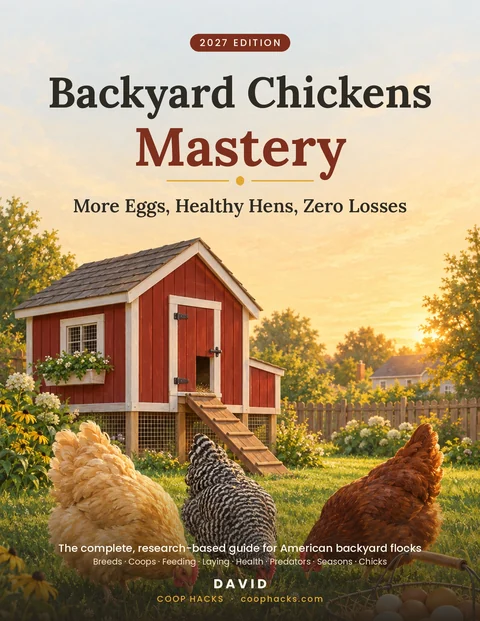
The complete guide · 2027 Edition
Backyard Chickens Mastery
Feed your hens right at every age. More eggs, healthy hens, zero losses: every coop hack in one step-by-step guide.
- 188 pages, 9 parts, 70 Coop Hacks
- 20 breed profiles, a 60-food safe chart and a laying troubleshooter
- 9 printable checklists, including the Winter Egg-Laying Checklist
Gear that helps
- Dried black soldier fly larvae: Protein-rich treat with more calcium than mealworms, handy during molt.
As an Amazon Associate we earn from qualifying purchases. Check current prices and reviews on Amazon.
How to give treats the right way
- Feed first, treats later. Let hens fill up on layer feed in the morning and offer treats in the afternoon.
- Measure, do not guess. Use the same cup or scoop each day so portions do not creep up.
- Spread it out. Scatter treats or use several spots so bossy hens cannot eat everything and timid hens still get a share.
- Offer grit. Hens that eat whole grains, seeds or fibrous scraps need insoluble grit to grind them in the gizzard. Oyster shell does not replace grit.
- Clean up. Pick up leftovers before dark so they do not mold or attract rats.
Coop hack: Use treats as a recall signal. Shake the same container every time you hand out a few mealworms, and hens soon come running at the sound, which makes it much easier to get them into the coop at dusk.
Gear that helps
- Insoluble poultry grit: Needed for hens that eat whole grains, seeds and scraps.
As an Amazon Associate we earn from qualifying purchases. Check current prices and reviews on Amazon.
Common mistakes to avoid
- Letting treats, scraps and scratch add up to far more than 10% of the diet.
- Mixing treats or cracked corn into the feeder, which dilutes the complete feed.
- Feeding salty, sugary, greasy or seasoned leftovers.
- Offering moldy bread or produce “because chickens eat anything.”
- Leaving uneaten scraps in the run overnight.
- Free-feeding mealworms or larvae all day.
- Forgetting grit for hens that eat grains and scraps.
FAQ
What is the healthiest treat for chickens?
Leafy greens and other fresh vegetables are among the healthiest treats because they are low in calories, high in water and help keep yolks orange. Serve them within the 10% treat limit.
Can chickens have treats every day?
Yes, a small daily portion is fine as long as all treats together stay around 10% of the diet and hens eat their layer feed first.
Are treats bad for egg production?
Treats are not bad in small amounts, but too many can lower egg production because hens fill up on low-nutrient foods and eat less of their balanced feed.
Can baby chicks have treats?
Chicks can try tiny amounts of soft, finely chopped greens or mashed vegetables after a few weeks, with chick grit available. Starter feed should make up almost all of their diet.
Is bread a good treat for chickens?
Bread is safe in small amounts if it is not moldy, but it is low in nutrition and fills hens up. Vegetables and greens are better choices.
Keep reading
Sources
- How to Feed Your Laying Hens (PNW 477) – Oregon State University Extension
- Feeding Chickens for Egg Production in Small and Backyard Flocks – Small and Backyard Poultry (Cooperative Extension, J. Jacob, University of Kentucky)
- Nutrition for Backyard Chicken Flocks – Alabama Cooperative Extension System
- 10 Foods You Should Never Feed Chickens – UF/IFAS Extension
- Raising Backyard Chickens for Eggs (AN239) – UF/IFAS Extension
- Caring for Chickens in Cold Weather – University of Minnesota Extension
- How Should I Take Care of Backyard Chickens in the Winter? – UNH Extension
- Fatty Liver Hemorrhagic Syndrome in Poultry – Merck Veterinary Manual