For most families, raising chickens is not cheaper than buying eggs, at least not at today’s prices. As of August 2026, the US average for a dozen Grade A large eggs was about $2.27, while a small backyard flock usually produces eggs for roughly $4 to $6 a dozen once it is set up, and much more in year one when you count the coop. Where backyard eggs can compete is against premium pasture-raised eggs, with a budget-built coop, or when store prices spike the way they did in 2025.
Quick answer
- US average price, Grade A large eggs: about $2.27 a dozen in August 2026 (BLS), down from a peak of about $6.23 in March 2025.
- Typical ongoing cost of backyard eggs: about $4 to $6 a dozen for feed, bedding and supplies, before the coop.
- Year one is the expensive year: coop, chicks and gear often run $500 to $1,500 or more, and hens lay only part of that year.
- Each hen eats roughly 90 to 100 lbs of feed a year and lays about 150 to 250 eggs in her first full year, depending on breed.
- You will probably not save money on eggs, but you gain fresh eggs, compost, pest control and a hobby the whole family enjoys.
In this guide
Egg prices in 2026: where things stand
The Bureau of Labor Statistics tracks the average US retail price of a dozen Grade A large eggs every month. That price climbed to about $6.23 in March 2025, then fell steadily. The latest figure available, for August 2026, is about $2.27 a dozen, slightly above the 2026 low of roughly $2.14 in June.
Grocery ads are lower still. The USDA Agricultural Marketing Service Egg Markets Overview dated October 2, 2026, reported an average advertised price of $1.31 a dozen for conventional caged large eggs and $2.83 for cage-free barn or aviary eggs. Organic, free-range and pasture-raised eggs cost more, and prices vary a lot by region and store.
Why are eggs so expensive (and why did prices drop)?
The main driver has been highly pathogenic avian influenza (HPAI). Since 2022, outbreaks forced the loss of millions of commercial laying hens, which cut supply and pushed prices up. According to USDA’s Economic Research Service, retail egg prices rose 21.9% in 2025 and are forecast to fall about 29% in 2026, thanks to fewer HPAI detections early in the year and enough replacement pullets to rebuild flocks. Prices can climb again if outbreaks return, which is why backyard keepers watch the egg aisle closely.
Warning: Avian influenza is still active in the US as of October 2026. Keep wild birds away from your feed and water, use dedicated coop shoes, and report sudden deaths or several sick birds to your state veterinarian or USDA APHIS. For a single hen that is lethargic, not eating or breathing hard, call an avian vet or your state poultry lab.
How much does it cost to raise chickens?
Split the cost into two buckets: one-time startup costs and ongoing yearly costs. The startup bucket is what makes year one so expensive. The ongoing bucket is what decides your real cost per dozen in year two and beyond.
Startup costs
- Chicks or pullets: day-old chicks often cost about $4 to $6 each (University of Maryland Extension uses $6 in its 2026 budget). Ready-to-lay pullets cost more but start laying sooner.
- Brooder setup: a brooder box, heat plate, chick feeder and waterer, roughly $75 to $150.
- Coop and run: the big one. A DIY coop from reclaimed materials can come in under $300; a sturdy predator-resistant prefab or custom coop and run often costs $800 to $2,000 or more. Maryland Extension’s example budget uses $500.
- Feeder, waterer and basics: about $50 to $100.
Ongoing costs
- Feed: a mature hen eats about a quarter pound a day, or roughly 91 lbs a year, according to Oklahoma State University Extension. University of Minnesota Extension puts it at about 3 lbs a week for a 6-lb hen. Conventional layer feed often runs about $15 to $25 per 50-lb bag; organic feed can cost roughly twice that. Prices vary by region.
- Bedding: pine shavings or straw, often $50 to $100 a year for a small coop.
- Oyster shell and grit: about $20 to $30 a year.
- Extras: replacement waterers, treats, cleaning supplies, the occasional vet visit. Budget a cushion for surprises.
Gear that helps
- Galvanized feed storage can with lid: Lets readers buy feed in bulk and keep it dry and rodent-proof.
As an Amazon Associate we earn from qualifying purchases. Check current prices and reviews on Amazon.
Is it cheaper to raise chickens for eggs? The cost-per-dozen math
Here is a worked example for a beginner flock bought as day-old chicks. Every number is an assumption you can swap for your own, and real results vary by region, breed and how you manage the flock.
Assumptions: conventional layer feed at about $0.40 a pound; startup of about $800 for 4 hens and $1,000 for 6 hens (chicks, brooder, mid-range coop, feeder and waterer); bedding, oyster shell and supplies of about $110 a year for 4 hens and $140 for 6. Year one includes about 5 months of chick growing with no eggs, so each hen lays about 140 eggs and eats about $35 of feed. In year two, each hen lays about 200 eggs and eats about 100 lbs of feed ($40).
| Scenario | Total cost | Eggs (dozens) | Cost per dozen, all-in | Cost per dozen, ongoing only |
|---|---|---|---|---|
| 4 hens, year 1 | about $1,050 | about 47 | about $22.50 | about $5.35 |
| 4 hens, year 2+ | about $270 | about 67 | about $4.05 | about $4.05 |
| 6 hens, year 1 | about $1,350 | about 70 | about $19.30 | about $5.00 |
| 6 hens, year 2+ | about $380 | about 100 | about $3.80 | about $3.80 |
“Ongoing only” leaves out the startup costs. Spread the startup over three years and a 4-hen flock lands at roughly $9 a dozen, a 6-hen flock at roughly $8. Laying also slows as hens age, so year three usually brings fewer eggs for the same feed. For comparison, University of Maryland Extension’s 2026 budget for a 10-hen flock kept three years came out at about $3.37 a dozen, not counting labor. Larger flocks spread fixed costs over more eggs.
When does a backyard flock break even?
Break-even depends on two numbers: what you would otherwise pay for eggs and what you spent to get started. At about $2.27 a dozen, even your year-two eggs cost more than the store average. If your family buys pasture-raised or organic eggs, the gap shrinks or disappears once the coop is paid off. And when prices spiked above $6 a dozen in early 2025, a well-run flock past its first year was cheaper than the store.
University of Florida IFAS Extension reached a similar conclusion: keeping hens is unlikely to save money for most people, and the real payoff is the experience. That is a fair way to go in, with no surprises.
What you get that the store can’t sell you
- Fresh eggs you trust: you know what your hens eat and how they live.
- Garden gold: chicken manure and used bedding make excellent compost.
- Pest patrol: free-ranging hens eat bugs, grubs and weed seeds.
- Less food waste: safe kitchen scraps become eggs instead of trash. Check which foods are safe for chickens first.
- Family time and life lessons: kids learn where food comes from and how to care for animals.
- A small buffer: when store prices jump or shelves run short, you still have eggs.
Gear that helps
- Kitchen compost bin: Collects safe scraps for the hens and the compost pile.
As an Amazon Associate we earn from qualifying purchases. Check current prices and reviews on Amazon.
Coop hacks to cut the cost of raising chickens
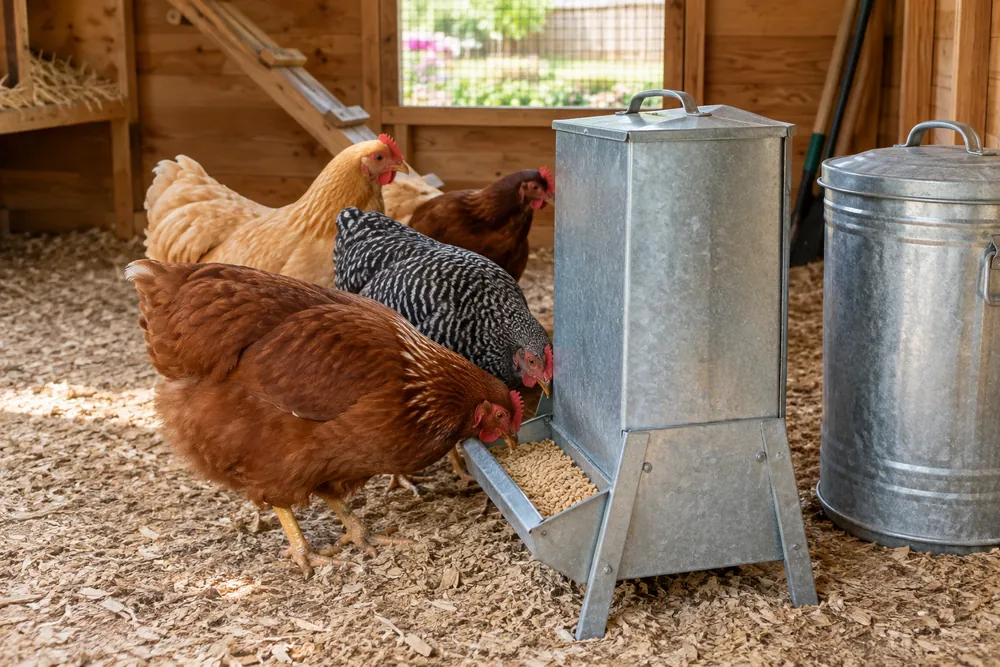
- Stop feed waste. Spilled and scattered feed can quietly add a lot to your bill. Use a covered or treadle-style feeder, hang it at back height and use pellets instead of crumbles.
- Buy feed smart. Larger bags, local feed mills and co-ops are often cheaper per pound. Store feed in a sealed metal can so it stays dry and rodent-free.
- Build or buy right-sized. A simple, solid DIY coop from reclaimed lumber can cost a fraction of a prefab. Size it with our coop size guide so you are not heating, bedding and cleaning unused space.
- Choose productive breeds. High-production layers convert feed to eggs more efficiently. See our best egg-laying chickens.
- Use the deep litter method. Adding fresh bedding on top and turning it can mean fewer full clean-outs and less bedding bought.
- Treats stay treats. Keep scraps and treats to about 10% of the diet so hens still get balanced layer feed.
- Don’t lose birds. One predator attack wipes out years of savings. Hardware cloth costs less than replacing a flock.
Coop hack: Keep a simple egg ledger on the coop door. Write the date, eggs collected and any money spent. After six months you will know your true cost per dozen, which beats any online estimate, including ours.
Coop hack: Start with pullets instead of chicks if your goal is eggs fast. You pay more per bird, but you skip the brooder gear and about five months of feed with no eggs.

The complete guide · 2027 Edition
Backyard Chickens Mastery
Start your flock the right way. More eggs, healthy hens, zero losses: every coop hack in one step-by-step guide.
- 188 pages, 9 parts, 70 Coop Hacks
- 20 breed profiles, a 60-food safe chart and a laying troubleshooter
- 9 printable checklists, including the Winter Egg-Laying Checklist
Gear that helps
- Treadle chicken feeder: Cuts feed waste and keeps wild birds and rodents out, the biggest lever on ongoing cost.
As an Amazon Associate we earn from qualifying purchases. Check current prices and reviews on Amazon.
How many hens make the math work?
Fixed costs like the coop, feeder and bedding do not double when you double the flock, so the cost per dozen falls a little with each extra hen, up to what your space and local rules allow. But more hens also means more eggs than you may use. If your family eats a dozen a week, 3 or 4 hens covers you. Our guide to how many chickens you should get walks through the numbers, and the beginner’s guide to backyard chickens covers the full setup.
Common mistakes to avoid
- Comparing year-one costs to store prices. Year one includes the coop and months with no eggs. Judge the hobby on year two and beyond.
- Counting on one egg per hen per day. Plan on about 3 to 4 eggs per hen per week across a year, with winter slowdowns and molt.
- Buying the fanciest coop first. A secure, well-ventilated coop matters more than looks.
- Ignoring feed waste. Cheap feeders that let hens fling feed can cost more than a good feeder within a year.
- Forgetting aging hens. Hens keep eating after they slow down. Decide early whether older hens stay as pets.
- Skipping local rules. Check your city code and HOA before spending a dollar.
FAQ
Is it cheaper to raise chickens or buy eggs?
At current US prices, buying eggs is usually cheaper. Backyard eggs often cost about $4 to $6 a dozen in ongoing costs, more when you include the coop, compared with a US average of about $2.27 a dozen in August 2026.
How much does it cost to raise chickens per month?
For 4 to 6 hens, ongoing costs often run about $20 to $35 a month for feed, bedding and supplies, depending on feed prices in your area. Startup costs come on top of that.
How much does a chicken eat in a year?
A mature laying hen eats roughly a quarter pound of feed a day, or about 90 to 100 lbs a year. Larger breeds and wasteful feeders push that higher.
How many eggs do you get for the cost of one bag of feed?
A 50-lb bag feeds one hen for about half a year, or 4 hens for about 7 weeks. In that time, 4 healthy hens in laying season might give you roughly 8 to 11 dozen eggs.
Why are eggs so expensive?
The main reason has been avian influenza, which wiped out millions of laying hens and cut supply. Prices peaked at about $6.23 a dozen in March 2025 and fell to about $2.27 by August 2026 as flocks recovered.
Are backyard eggs worth it if they cost more?
For many families, yes. You get fresh eggs, compost, pest control and a rewarding hobby. Go in expecting a hobby that pays you back in eggs, not a money-saving plan.
Keep reading
Sources
- Average Price: Eggs, Grade A, Large (Cost per Dozen) in U.S. City Average – U.S. Bureau of Labor Statistics via FRED
- Egg Markets Overview (October 2, 2026) – USDA Agricultural Marketing Service
- Food Price Outlook: Summary Findings – USDA Economic Research Service
- Backyard Layer Flock Economics: How Much Does It Cost You to Produce a Dozen Eggs? – University of Maryland Extension
- Simple Budgeting and Pricing Calculations for Backyard Hens – Oklahoma State University Extension
- Egg-onomics of Keeping Backyard Chickens – UF/IFAS Extension
- Raising chickens for eggs – University of Minnesota Extension