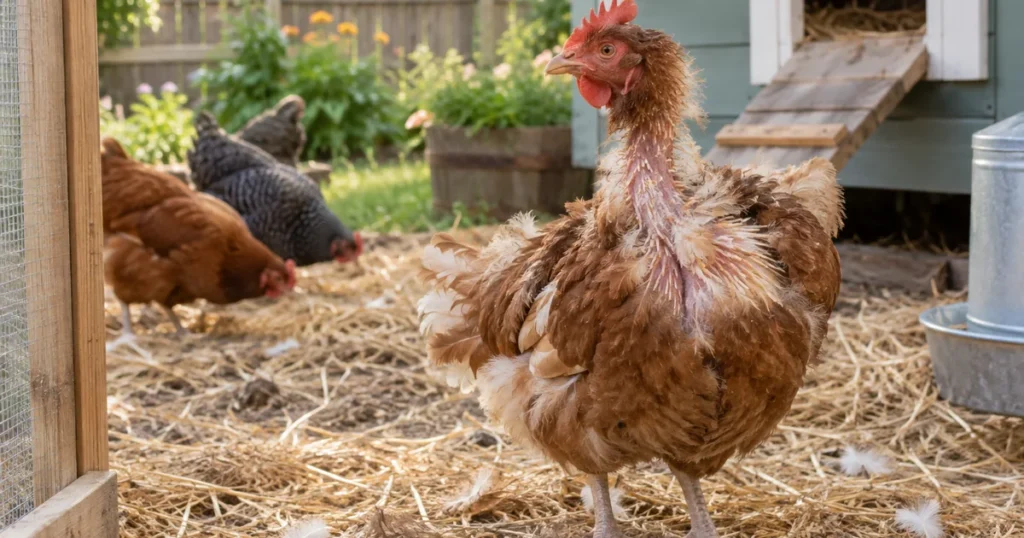
Chicken molting is the yearly process in which hens and roosters shed their old feathers and grow a new set, usually in late summer or fall as the days get shorter. It looks alarming, with feathers all over the coop and patchy, scruffy birds, but it is normal and healthy. Most chickens molt for 8 to 12 weeks, stop laying while they regrow feathers, and come back looking glossy and laying again once it is over.
Quick answer
- Molting is normal: chickens replace their feathers about once a year, typically starting in late summer or fall.
- Most molts last 8 to 12 weeks, sometimes up to 16 weeks or longer for older hens.
- Most hens stop laying during molt because their body diverts protein to new feathers.
- Feathers are 80-85% protein, so switch to an 18-20% protein feed and offer oyster shell on the side.
- Feather loss with scabs, crusty skin, lethargy or at odd times of year may not be molt: check for mites, lice and pecking.
In this guide
What is chicken molting?
Feathers wear out. They fade, fray and break over a year of dust baths, rain and roosting. Molting is how chickens replace them. The trigger is mostly day length: as days shorten in late summer and fall, hormone changes slow egg production and start the shedding and regrowth cycle.
During a molt, the hen’s reproductive tract shrinks and rests, and the protein she would have put into eggs goes into new feathers instead. That is why molting and laying rarely happen at the same time.
When do chickens molt?
Most adult chickens molt once a year, usually starting between August and October in the US. A few points help you predict it:
- First adult molt: usually at around 18 months of age, during the hen’s second fall. Pullets hatched in spring often skip a full molt in their first fall and keep laying.
- Juvenile molts: chicks replace their down and baby feathers several times in their first months. That is normal growth, not a true molt.
- Out-of-season molts: a sudden stress, such as running out of water or feed, a predator attack or a big change in light, can trigger a molt at any time of year.
How long do chickens molt?
A typical molt lasts 8 to 12 weeks, and it can stretch to 16 weeks or more. Age, breed, nutrition and individual genetics all play a part.
Mississippi State University Extension describes two broad patterns. Late molters tend to be the best layers: they lay longer into the season, then drop feathers quickly in groups and finish in about 2 to 3 months. Early molters start sooner, drop feathers a few at a time and can take 4 to 6 months to finish. Older hens and lighter layers usually molt longer.
| Phase | Typical timing | What you see |
|---|---|---|
| Slowdown | Late summer to early fall | Fewer eggs, paler comb, a few loose feathers |
| Shedding | Weeks 1-4 | Feathers drop from head and neck first, then breast, body, wings and tail |
| Pin feathers | Weeks 3-8 | Spiky quills emerge; bird looks scruffy and is sensitive to touch |
| Regrowth | Weeks 6-12 | Quills open into new feathers; bird looks fuller each week |
| Back to laying | Weeks 8-16+ | Comb reddens again, eggs return gradually |
Signs of molting in chickens
You will usually notice molt in this order:
- Laying slows or stops.
- The comb and wattles shrink and turn pale.
- Loose feathers pile up in the coop and run, often enough to look like a pillow fight.
- Bald or thin patches appear on the neck, back, breast or around the vent.
- Pin feathers poke out: short, spiky shafts wrapped in a waxy sheath.
- Hens become quieter, less social and may dislike being touched.
- Appetite may change; some birds eat more to fuel feather growth.
Feathers drop in a predictable sequence, starting at the head and moving down the neck, breast and body before the wings and tail. Each wing has 10 large primary flight feathers, and fast molters lose these in groups while slow molters lose them one at a time.
Hard molt vs soft molt
Backyard keepers often describe molts as hard or soft. These are informal terms, but they are useful.
- Hard molt: the hen drops a lot of feathers in a short time and may look half bald, especially on the neck, back and tail. She stops laying completely. It looks dramatic, but fast molts often finish sooner.
- Soft molt: feathers drop gradually and the hen never looks very bare. You may only notice extra feathers in the coop. Some hens keep laying a little during a soft molt, but production still dips.
Both are normal. The same hen can have a soft molt one year and a hard molt the next.
Do chickens lay eggs while molting?
Usually not. Most hens stop laying until the molt is complete. Making feathers and making eggs both take large amounts of protein, and the hen’s body chooses feathers. Her reproductive tract also shrinks and rests during this time.
Expect eggs to return a few weeks after new feathers fill in. After the first molt, hens often lay slightly fewer but larger eggs with better shells. If the molt ends in late fall, short days may delay laying further until spring unless you add light; see our guide on getting chickens to lay in winter. For every other reason a hen might stop, see why your chickens are not laying eggs.
What to feed molting chickens
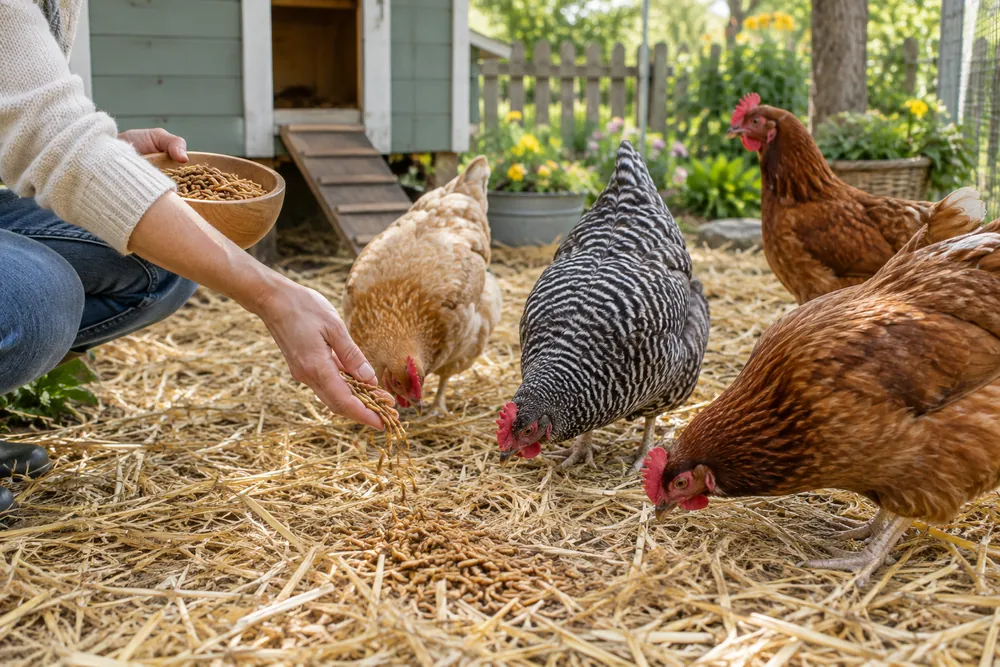
Nutrition is the one thing you can control that shortens and eases a molt. Feathers are about 80 to 85% protein, so protein is the priority.
Raise the protein from 16% to 18-20%
Standard layer feed is usually about 16% protein. During molt, switch the flock to a higher-protein feed, roughly 18 to 20%. Options include a feed made for molting birds, an all-flock or grower feed, or a game bird feed for very high protein. Make the switch gradually over about a week by mixing the old and new feed.
Keep calcium available, not forced
Many higher-protein feeds contain less calcium than layer feed. That is fine for non-laying, molting hens, but put crushed oyster shell in a separate dish so any hen still laying can take what she needs. When laying resumes and feathers are in, transition back to layer feed over a week.
Protein-rich treats in moderation
Dried mealworms and black soldier fly larvae are popular molt treats because they are high in protein, and soldier fly larvae also provide calcium. A few cooked scrambled eggs from your own hens work too. Keep all treats to about 10% of the diet so hens still eat their balanced feed. For what is safe and what is not, see our chart of what chickens can and can’t eat.
Cut back on scratch and scraps
Scratch grains and bread are low in protein. During molt, they fill hens up without feeding their feathers. Skip them or keep them to a small handful.
Coop hack: Scatter a small handful of dried mealworms or soldier fly larvae into fresh bedding in the afternoon. Molting hens get a protein boost and something to do, which keeps them busy instead of picking at each other’s pin feathers.
Backyard Chickens Mastery
More eggs, healthy hens, zero losses: the step-by-step guide that puts every coop hack in one place, from first flock to fifth winter.
Get the guide ($17)Gear that helps
- High-protein molting feed (18-20% protein): Feathers are 80-85% protein; a higher-protein ration speeds regrowth.
- Dried black soldier fly larvae: Protein-rich treat that also supplies calcium, ideal in small amounts during molt.
- Dried mealworms: Popular high-protein treat to scatter in bedding for molting hens.
As an Amazon Associate we earn from qualifying purchases. Check current prices and reviews on Amazon.
How to care for a molting chicken
Handle as little as possible
New feathers grow from pin feathers, also called blood feathers. Each one has a blood supply inside the shaft while it grows, which makes molting birds tender and itchy. Avoid picking them up unless you need to, and if you must, support the body gently without squeezing the wings.
Watch for bleeding pin feathers
A broken pin feather can bleed more than you expect, and red attracts pecking from flockmates. Apply gentle pressure with a clean cloth, dab on cornstarch or a styptic powder made for birds, and keep the hen apart until the bleeding stops and the spot is clean. If bleeding does not stop within a few minutes, call a vet.
Reduce stress
Molting is hard work. Avoid adding new birds, moving the coop or making big routine changes. Give enough space so lower-ranking hens can eat and drink without being chased; add a second feeder and waterer if needed.
Keep them dry and out of drafts
Molting hens have less insulation, and molts often run into cold weather. Keep bedding dry, block drafts at roost level and keep ventilation high in the coop. A hen with patchy feathers on a 40°F (4°C) night is fine in a dry, draft-free coop. Do not add a heat lamp; they are a leading cause of coop fires.
Never force a molt
Withholding feed or water to make hens molt is outdated, harmful and not appropriate for backyard flocks. Let molt happen naturally.
Chicken losing feathers: when it is NOT molt
Not every bald chicken is molting. Look for these clues that something else is going on:
| What you see | Possible cause | What to do |
|---|---|---|
| Crusty, dirty skin around the vent; tiny moving specks | Northern fowl mites | Inspect all birds; treat flock and coop with a product labeled for laying hens |
| Egg clusters at feather bases, chewed-looking feathers | Lice | Same as mites; clean and refresh bedding |
| Birds restless on the roost at night, pale combs | Red mites hiding in roost cracks | Check roost ends with a flashlight after dark |
| Bald back or back of the head, no pin feathers | Rooster mating damage | Hen saddles, fewer hens per rooster |
| Bald spots with wounds, one hen targeted | Feather pecking or bullying | More space, distractions, isolate the injured bird |
| Bare breast on a hen sitting in the nest | Broodiness (hens pluck breast feathers) | Normal; break or manage the broody hen |
| Feather loss plus lethargy, weight loss or discharge | Illness | Isolate and contact a poultry vet |
True molt is symmetrical, follows the head-to-tail pattern and comes with new pin feathers. Patchy loss with scabs, sores or crusty skin, especially in spring or summer, deserves a closer look. Our guide to signs of a sick chicken explains when to worry.
Warning: A molting hen should still be alert, eating and drinking. If a bird is hunched, lethargic, not eating, breathing with effort or has bloody droppings, molt is not the explanation. Contact a poultry or avian vet or your state extension service. Several sick birds at once or sudden deaths should be reported to your state veterinarian or USDA APHIS because avian influenza remains active in the US as of October 2026.
Common mistakes to avoid
- Panicking and treating molt as a disease: feather loss in fall with pin feathers is normal.
- Keeping molting hens on 16% layer feed and lots of scratch, which slows feather regrowth.
- Removing oyster shell when switching to a higher-protein feed.
- Picking up, cuddling or showing molting birds while pin feathers are tender.
- Adding new flock members or making big changes mid-molt.
- Using a heat lamp to keep bald hens warm.
- Assuming any feather loss is molt without checking for mites, lice and pecking.
FAQ
How long does chicken molting last?
Most chickens molt for 8 to 12 weeks. Fast molters can finish in about 2 months, while slow molters and older hens can take up to 4 to 6 months.
Do all chickens molt at the same time?
No. Each bird follows its own timing, so molts often roll through a flock over several weeks. Older hens tend to start earlier, and pullets in their first fall may skip it entirely.
Should I give molting chickens extra protein?
Yes. Switch to an 18 to 20% protein feed during molt and keep oyster shell available on the side. Protein treats like dried mealworms help, but keep them to about 10% of the diet.
Do roosters molt?
Yes. Roosters molt every year too, often losing their long tail and hackle feathers. They need the same extra protein and gentle handling.
Does molting hurt chickens?
Dropping feathers is not painful, but growing pin feathers can make birds tender and itchy. That is why molting chickens often avoid being touched.
Why is my chicken molting in spring?
A spring or summer molt is usually triggered by stress, such as running out of water, a predator scare, a change in light or broodiness. Check for those causes and for mites, lice or pecking that can look like molt.
Keep reading
Sources
- Molting of Laying Hens – Mississippi State University Extension
- Feeding Chickens for Egg Production in Small and Backyard Flocks – Extension Poultry (eXtension)
- Raising Backyard Chickens for Eggs – University of Florida IFAS Extension
- Producing Your Own Eggs – UNH Cooperative Extension
- Three Tips to Help Molting Chickens – Purina Animal Nutrition
- Mites of Poultry – Merck Veterinary Manual
- Lice of Poultry – Merck Veterinary Manual
- Poultry Parasites: Northern Fowl Mites – Virginia Cooperative Extension