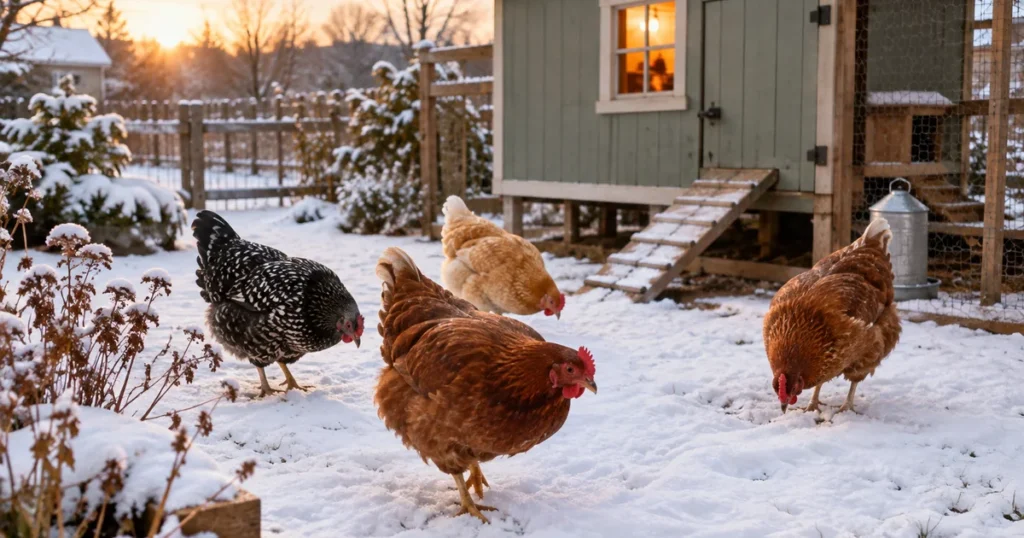
Yes, chickens can lay eggs in winter, but most hens slow down or stop because short days, not cold, switch off egg production. Hens need about 14 to 16 hours of light a day to lay steadily, and in most of the US the natural day drops to 9 or 10 hours by December. You can keep eggs coming with a little supplemental light on a timer, good feed and liquid water, or you can let your hens take a natural winter break.
Quick answer
- Laying slows when days fall below about 12 hours and often stops in December and January.
- To keep hens laying, aim for 14 hours of total light (never more than 16) with a timer.
- Add light in the morning, before sunrise, so hens go to roost naturally at dusk.
- A 4-5 watt warm LED per 100 sq ft is enough; do not use heat lamps.
- Layer feed, oyster shell and unfrozen water matter as much as light in winter.
In this guide
- Do chickens lay eggs in winter?
- How many hours of light do chickens need to lay eggs?
- Supplemental light for chickens: pros and cons
- How to set up a chicken coop light safely
- Why the light should come on in the morning, not the evening
- When to start and stop adding light
- How to get chickens to lay eggs in winter: feed, water and comfort
- Breeds that lay in winter
- Common mistakes to avoid
- FAQ
Do chickens lay eggs in winter?
Some do, many don’t, and that is normal. A hen’s reproductive system responds to day length. Light reaching special receptors in the brain triggers the hormones that keep the ovary working. When days get shorter in fall, those signals weaken, laying slows and many hens molt. By the shortest days of December, a backyard flock without added light may produce only a fraction of its summer eggs, or none at all.
Three things decide how many winter eggs you get:
- Light: the biggest factor by far.
- Age: pullets in their first laying season often keep laying through their first winter, while hens 2 years and older are more likely to stop.
- Molt: hens that are molting in fall will not lay until they have regrown their feathers, regardless of light.
If your hens have stopped and you are not sure why, our guide to why chickens stop laying eggs covers every other cause.
How many hours of light do chickens need to lay eggs?
Extension poultry specialists generally recommend 14 to 16 hours of total light per day for steady egg production. Laying starts to drop when the day is shorter than about 12 hours. More than 16 hours does not add eggs and can disrupt hens’ hormone cycles, so 14 to 15 hours is a good target for backyard flocks.
Total light means natural daylight plus whatever you add. If the sun is up for 9.5 hours, you need about 4.5 hours of supplemental light to reach 14.
| Natural day length (mid-December, approx.) | Example US location | Light to add for 14 hours |
|---|---|---|
| About 8.5-9 hours | Minnesota, North Dakota, Maine, Washington | 5-5.5 hours |
| About 9-9.5 hours | Ohio, Pennsylvania, Colorado, New York | 4.5-5 hours |
| About 9.5-10 hours | Tennessee, North Carolina, Oklahoma, Georgia, Southern California | 4-4.5 hours |
| About 10-10.5 hours | South Texas, Florida, southern Arizona | 3.5-4 hours |
Check your local sunrise and sunset times and adjust. Remember that dawn and dusk are already dim for hens inside a coop, so err slightly on the generous side.
Supplemental light for chickens: pros and cons
Adding light is a choice, not a requirement. Here is what to weigh.
Pros
- Steady eggs through the months when store prices are often highest.
- Pullets hatched in spring or summer are more likely to start and keep laying through winter.
- A lit coop on a dark morning makes chores and egg collection easier.
Cons
- Hens get no natural winter break. Many keepers prefer to let older hens rest and rebuild body reserves. Research on whether lighting shortens a backyard hen’s laying life is limited, so this is a judgment call.
- Electricity in a dusty, bedding-filled coop adds a fire risk if wiring and fixtures are not done properly.
- A small cost for the bulb, timer, outdoor cord and power.
A common middle path: light the coop for your younger hens and let hens 3 years and older take the winter off if you keep them separately, or simply light the whole flock and give everyone extra care.
How to set up a chicken coop light safely
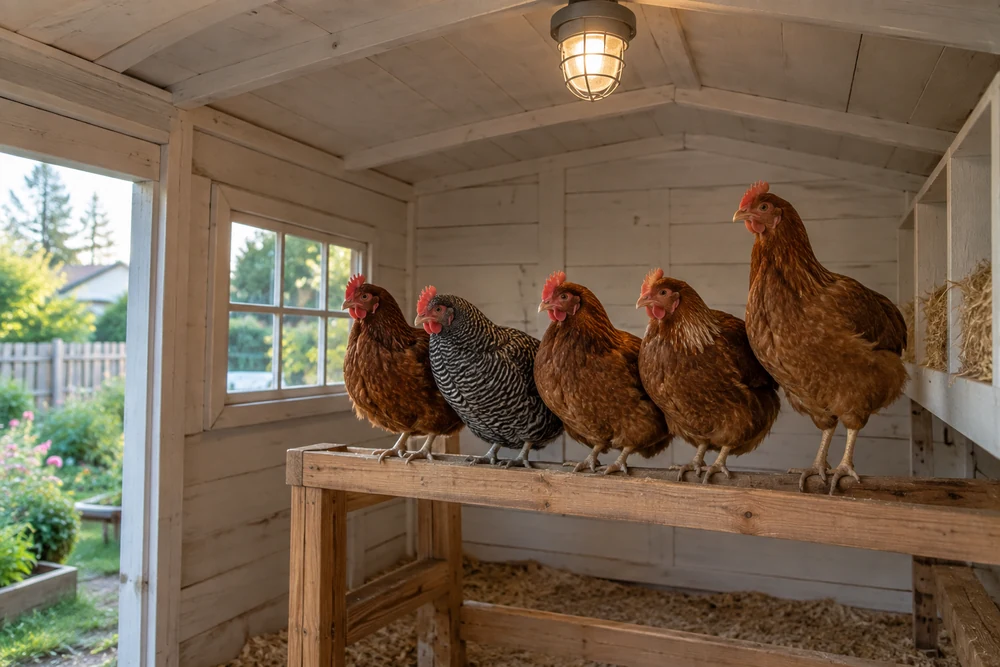
A good winter lighting setup is cheap and takes about an hour. Follow these steps.
- Choose a low-wattage LED. One 4 to 5 watt LED per 100 sq ft of coop floor is enough, according to Virginia Cooperative Extension; a 9 watt LED covers about 200 sq ft. Warm white (2,700-3,000 K) is a good choice. You want enough light to read a newspaper at bird level, not stadium lighting.
- Use a fixture rated for damp or outdoor use, with a cage or cover so birds cannot peck or perch on it. Mount it on the ceiling or high wall, away from roosts, bedding and nest boxes.
- Run power safely. Use a grounded, outdoor-rated extension cord or have an electrician install a GFCI outlet. Keep cords off the floor and out of pecking reach.
- Add a timer. A grounded outdoor outlet timer or a light with a built-in timer does the work every day. Without a timer, the schedule will slip and hens will be confused.
- Set the light to come on before sunrise. Count back from sunrise: if sunrise is 7:15 am and you need 4.5 extra hours, set the timer for about 2:45 am and turn the light off around 7:30 am.
- Increase light gradually. Add 15 to 30 minutes per week until you reach 14 hours. A sudden jump can stress hens.
- Adjust monthly. Sunrise changes through the season. Update the timer every few weeks so the total stays near 14 hours.
Coop hack: Plug the timer into the outlet first, then the light into the timer, and label the timer with your target “on” time with a marker. When the power goes out or the clocks change in March, you will reset it in seconds instead of guessing.
Gear that helps
- LED coop light with built-in timer: Low-wattage, cool-running light that switches on before sunrise automatically.
- Outdoor grounded outlet timer: Turns any safe coop light into a set-and-forget morning lighting program.
As an Amazon Associate we earn from qualifying purchases. Check current prices and reviews on Amazon.
Why the light should come on in the morning, not the evening
Chickens see poorly in the dark. If you add light in the evening and the timer cuts it off suddenly, hens are caught on the floor in total darkness and cannot find the roost. They may sleep on the cold floor or pile up in corners.
With morning light, the natural sunset tells them to head to bed as it gets darker, just like any other day. If you must add light in the evening, use a dimmer or leave a very low night light so the switch-off is gradual.
Also make sure hens still get a full night: with 14 to 16 hours of light, they will get 8 to 10 hours of darkness, which they need for rest.
Warning: Heat lamps are a leading cause of coop fires. The 250 watt bulbs get hot enough to ignite dust, feathers and dry bedding, and a falling lamp can start a fire within minutes. Do not use a heat lamp as your winter laying light. Healthy, fully feathered adult chickens do not need added heat in most US winters; see our guide to keeping chickens warm in winter without fire risk.
When to start and stop adding light
The best time to start is in early fall, before days drop below about 12 to 13 hours, so hens never get the signal to stop. If your flock is already molting, wait until the molt is finished and new feathers are in, then start the light program.
Avoid adding light to pullets younger than about 20 weeks. Increasing light too early can push them to lay before their bodies are ready, which raises the risk of small eggs and prolapse.
Once you start, keep the schedule steady all winter. Cutting the light back suddenly can trigger a molt. In spring, when natural day length passes 14 hours (late April to May in much of the US), you can unplug the timer.
How to get chickens to lay eggs in winter: feed, water and comfort
Light starts the process; nutrition and comfort keep it going.
Feed
Hens eat more in cold weather because they burn energy to stay warm. Keep the feeder full of a complete layer feed (about 16% protein, 3.5-4% calcium) all day, and offer crushed oyster shell on the side. A small handful of scratch grains in the late afternoon helps hens head into a long, cold night with a full crop, but keep treats under about 10% of the diet so they still eat enough layer feed. During and right after molt, a higher-protein feed (18-20%) helps them regrow feathers before laying resumes.
Water
Frozen water is one of the fastest ways to lose winter eggs. Hens need water to make eggs and to digest feed, and they often will not eat much if they cannot drink. Check water at least twice a day, or use a heated base or heated waterer. Our guide to heated chicken waterers compares the options.
A dry, draft-free coop
Cold alone does not stop laying, but cold plus damp does. Keep bedding dry, ventilate near the roof so moisture escapes, and block drafts at roost level. Large-combed breeds such as Leghorns and Minorcas are more prone to frostbite in damp coops.
Calm routines
Winter stress adds up: predators are hungrier, hens spend more time indoors and boredom can lead to pecking. Give them something to scratch through, such as a pile of leaves or a hanging cabbage, and secure the coop every night.
Backyard Chickens Mastery
More eggs, healthy hens, zero losses: the step-by-step guide that puts every coop hack in one place, from first flock to fifth winter.
Get the guide ($17)Gear that helps
- Heated poultry waterer or heated base: Frozen water quickly stops winter laying; a heated waterer keeps it liquid.
As an Amazon Associate we earn from qualifying purchases. Check current prices and reviews on Amazon.
Breeds that lay in winter
No breed lays at full speed through a dark winter without added light, but some keep going better than others, mostly because they handle cold comfortably and are good layers to begin with. Dependable choices for cold climates include:
- Australorp: calm, heavy and a strong brown-egg layer.
- Plymouth Rock (Barred Rock): hardy, friendly and steady.
- Rhode Island Red: tough and productive in most climates.
- Wyandotte: small rose comb resists frostbite.
- Buff Orpington: fluffy, cold-hardy and gentle, though it can go broody.
- Easter Egger: small pea comb and colorful eggs.
- Sussex and Brahma: very cold-hardy; Brahmas often lay more in cooler months than in summer heat.
Hybrid layers such as Golden Comets and ISA Browns lay heavily in their first year, including their first winter, but tend to slow down sooner. For full profiles, see our list of the best egg-laying chicken breeds.
Common mistakes to avoid
- Using a heat lamp as the coop light, or any light that is not securely mounted.
- Adding light in the evening with a timer that switches off abruptly, leaving hens in the dark.
- Going from 9 hours to 15 hours of light overnight instead of increasing gradually.
- Lighting pullets before they are about 20 weeks old.
- Turning the light off for good in midwinter, which can trigger an unwanted molt.
- Giving more than 16 hours of light, or none of the dark hours hens need to rest.
- Fixing the light but leaving water to freeze or treats to replace layer feed.
FAQ
Do chickens need light at night?
No. Chickens need darkness at night to rest, ideally at least 8 hours. Supplemental light should add hours in the morning, not keep the coop lit all night.
What color light is best for a chicken coop?
Warm white LED light works well for laying hens. Light in the warm, red-orange range reaches the receptors that stimulate laying, and LEDs use little power and stay cool.
Is it cruel to put a light in a chicken coop?
Not when it is done well. Commercial and backyard flocks have been lit this way for decades. Keep the total under 16 hours, add light gradually, give hens a full night of darkness and make sure the setup is fire-safe.
How long does it take for hens to start laying after adding light?
Expect about two to four weeks after you reach 14 hours of light, assuming the hens are healthy, well fed and finished molting.
Should I give my chickens a break from laying in winter?
It is your choice. Many keepers let older hens rest naturally and light the coop only for younger hens. There is no clear evidence that one approach is better for a backyard hen’s long-term health.
Do chickens need heat to lay eggs in winter?
No. Healthy adult hens tolerate freezing temperatures well when they have a dry, draft-free coop and liquid water. Light, not heat, is what keeps them laying.
Keep reading
Sources
- Lighting Schedules for Arizona Backyard Laying Flocks – University of Arizona Cooperative Extension
- Why Have My Hens Stopped Laying? 5 Factors that Impact Egg Production – Virginia Cooperative Extension
- Small-Scale Egg Production – Penn State Extension
- Life Cycle of a Laying Hen – University of Wisconsin-Madison Extension
- Winter Weather and Small Flocks: What You Need to Know – University of Maryland Extension
- Raising Backyard Chickens for Eggs – University of Florida IFAS Extension
- Why Did My Chickens Stop Laying? – Oregon State University Extension