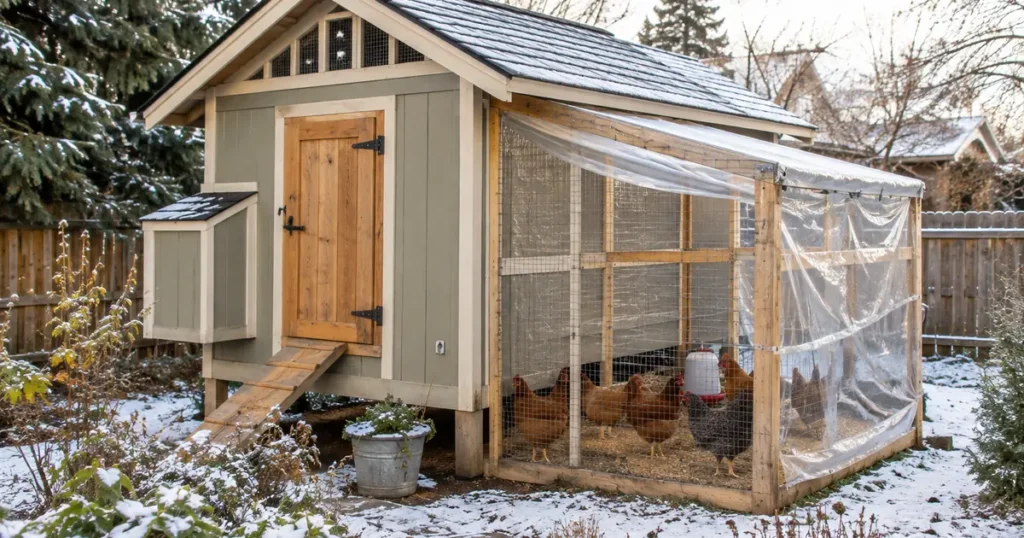
To winterize a chicken coop, you want it dry, draft-free at roost level and well ventilated up high, not sealed tight and heated. Healthy, fully feathered hens handle cold well. What hurts them is damp air, wind blowing across the roost, frozen water and predators looking for an easy winter meal. Fix those, and most backyard flocks get through a US winter without any added heat.
Quick answer
- Moisture, not cold, causes most winter problems. Keep high vents open all winter.
- A common rule of thumb is about 1 sq ft of ventilation per 10 sq ft of coop floor, placed above the roosts.
- Insulation is optional; if you add it, cover it so hens cannot peck it and rodents cannot nest in it.
- Block drafts at roost height, add windbreaks to the run, and use 6+ inches of deep litter.
- Avoid heat lamps: they are a leading cause of coop and barn fires.
In this guide
Do chickens need a winterized coop?
Yes, but probably less than you think. A chicken carries a built-in down jacket: by fluffing its feathers, it traps warm air against its skin. On the roost, hens tuck their feet under their bodies and huddle together. University of Minnesota Extension notes that heavier standard and dual-purpose breeds such as Plymouth Rocks, Wyandottes and Orpingtons handle cold especially well.
The goal of winterizing is to support that natural system. That means a coop that is dry, protected from wind at bird level, safe from predators and easy to keep clean. For the heat question itself, see our guide on how to keep chickens warm in winter.
Winterizing checklist: what, why and how
Work through this list in October or early November, before the first hard freeze.
| What | Why | How |
|---|---|---|
| Deep clean | Start winter with less ammonia, mites and moisture. | Remove all old bedding, scrape roosts and nest boxes, let the coop dry fully. |
| Check vents | Moisture from breath and droppings must escape. | Open or add vents high on the walls, above the roosts, covered with hardware cloth. |
| Seal drafts low | Wind at roost height chills birds. | Caulk or patch gaps near the floor and roosts; leave high vents open. |
| Predator-proof | Hungry predators work harder in winter. | Replace chicken wire with 1/2-inch hardware cloth; check latches. |
| Rodent-proof | Mice and rats move into warm coops. | Close holes larger than 1/4 inch; store feed in metal cans. |
| Bedding | Insulates the floor and absorbs moisture. | Start a deep litter of pine shavings or straw, 6 inches or more. |
| Roosts | Hens cover their feet with their bodies when perching. | Use flat 2×4 roosts, wide side up, at least 8-12 inches per bird. |
| Water | Hens need water daily to eat and lay. | Set up a heated waterer or base on a safe, grounded outlet. |
| Run cover and windbreaks | Keeps snow and wind out so hens can get outside. | Wrap the windward side with clear plastic or a tarp; add a sloped roof. |
| Electrical safety | Dust, bedding and cords create fire risk. | Use outdoor-rated cords, keep them away from bedding and out of beaks. |
Chicken coop ventilation in winter
Ventilation is the most misunderstood part of winter chicken keeping. It feels wrong to leave holes open when it is 10°F (-12°C) outside, but a sealed coop quickly fills with moisture. Every hen releases water through her breath and droppings, and that moist air condenses on cold walls, soaks the bedding and settles on combs and wattles.
Why moisture causes frostbite
Frostbite is most likely at night in a cold, poorly ventilated coop with damp litter. Wet tissue freezes faster than dry tissue, so a humid coop at 20°F (-7°C) can be harder on combs than a dry, airy one at 0°F (-18°C). Birds with large single combs and wattles, like Leghorns and roosters, are most at risk. Condensation on windows, frost on the inside of the roof or a strong ammonia smell are all signs that air is not moving enough.
How much ventilation does a chicken coop need?
There is no single official number for backyard coops, but a widely used rule of thumb, cited by hatcheries such as Meyer Hatchery, is about 1 square foot of vent opening per 10 square feet of floor. An 8×10-foot coop (80 sq ft) would need around 8 sq ft of total vent area. Many experienced keepers in cold climates find that more ventilation, not less, works better, as long as it is placed correctly.
Where to put the vents
- High on the walls, well above the roosts, so warm, moist air and ammonia can rise and escape.
- Not directly over the birds. Penn State Extension advises keeping openings away from perching areas to avoid drafts.
- On the side away from prevailing winter winds, usually south or east, with a roof overhang or hood to keep snow out.
- Covered with 1/2-inch hardware cloth, never just chicken wire, which raccoons can tear through.
Use this simple test: stand where your hens roost on a windy day. If you feel a breeze on your face, that is a draft. Fix it at that level and keep the high vents open.
Coop hack: Hang an inexpensive digital hygrometer in the coop at roost height. If humidity regularly stays much higher inside than outside, open more high ventilation and add fresh bedding before frostbite shows up.
Gear that helps
- 1/2-inch hardware cloth: Covers vents so they stay open without letting predators in.
As an Amazon Associate we earn from qualifying purchases. Check current prices and reviews on Amazon.
How to insulate a chicken coop (the right way)
Insulation is not required in most of the US, but in very cold regions it can reduce condensation on walls and roofs and keep the inside temperature more even. It only helps if it works together with ventilation.
Insulation do’s
- Do use rigid foam board (polyiso or XPS) between wall studs or under the roof.
- Do cover all insulation with plywood, OSB, thin paneling or sheet metal. Chickens peck and eat foam, and exposed fiberglass is a nesting spot for mice.
- Do seal gaps before insulating, especially low on the walls and around the floor.
- Do keep vents open above the insulated area. Insulation without airflow just traps moisture.
Insulation don’ts
- Don’t seal the coop airtight or cover vents with plastic.
- Don’t leave insulation exposed where hens can reach it.
- Don’t stuff straw bales inside the coop as wall insulation; they hold moisture and harbor mites and rodents. Stack them outside as a windbreak instead.
- Don’t insulate over existing rot or wet wood; fix leaks first.
If your coop is a small prefab model, focus on placement and windbreaks instead: move it out of low, wet spots, turn the vents away from the wind and shelter it with straw bales or a wall. Our coop size guide also explains why a coop that is too small gets damp faster.
Gear that helps
- Rigid foam insulation board: Reduces condensation in very cold climates when covered with plywood.
As an Amazon Associate we earn from qualifying purchases. Check current prices and reviews on Amazon.
Deep litter method for winter
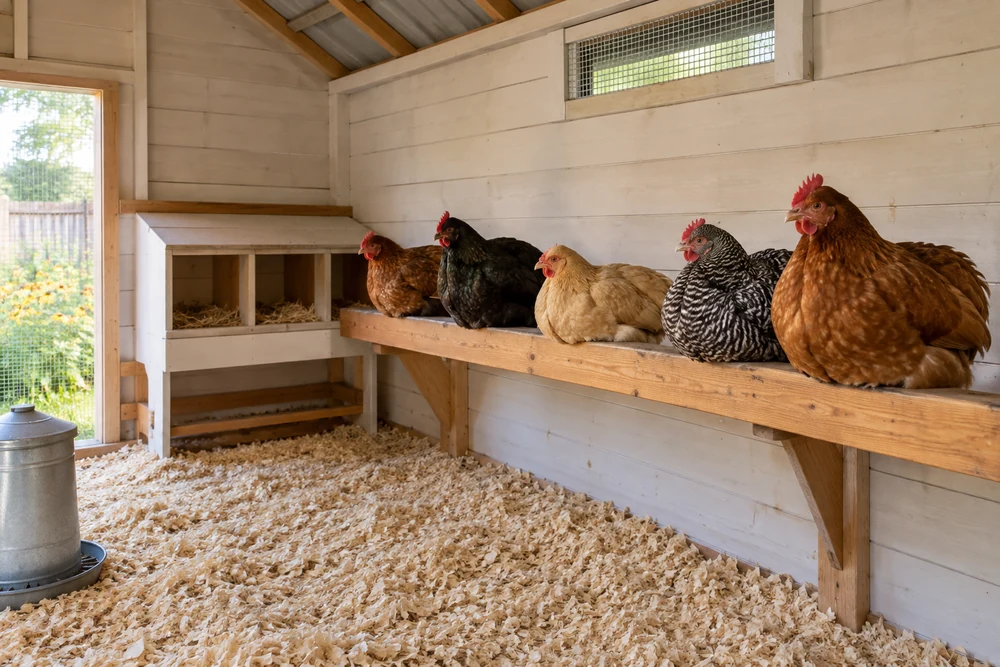
The deep litter method is a simple way to add warmth and insulation from the floor up. University of Minnesota Extension describes it as starting with 4-6 inches of pine shavings or straw, then turning it regularly so droppings work down and adding fresh material on top. Over time, the bottom layer slowly composts and gives off a little heat.
- Start in fall with a clean, dry floor and 4-6 inches of pine shavings or chopped straw.
- Every few days, stir the litter with a rake or toss a handful of scratch grains so hens turn it for you.
- Add a fresh layer whenever the top looks soiled or damp, building up to 8-12 inches over the winter.
- Remove any wet clumps under waterers right away.
- Clean out completely in spring and add the old litter to your compost pile.
Deep litter works best in coops with good ventilation and a dry floor. If the litter smells strongly of ammonia or feels wet, it is not working; remove the wet layer and increase airflow.
Gear that helps
- Pine shavings or chopped straw bedding: Absorbent bedding to build a deep litter layer.
As an Amazon Associate we earn from qualifying purchases. Check current prices and reviews on Amazon.
Windbreaks, run covers and snow load
Hens that can get outside on cold days stay more active and less bored. A sheltered run makes that possible.
- Windbreaks: wrap the windward side (usually north and west) of the run with clear plastic sheeting, heavy-duty vinyl or a tarp. Leave the leeward side open for airflow.
- Clear run covers: clear vinyl lets in sunlight, which warms the run and keeps the ground drier.
- Roof over the run: keeps snow and rain off and reduces contact with wild birds, an important biosecurity step while avian influenza (HPAI) remains active in the US as of October 2026.
- Straw or wood chips on the ground: give hens a dry surface to walk on instead of snow.
Snow load
Wet snow is heavy. Tarps and plastic sag and can tear, and flat, netted or lightweight run roofs can collapse under a storm’s worth of snow. Give run roofs a pitch so snow slides off, add a center support, and brush snow off after every storm with a broom from the outside. Never let a sagging tarp hold a pool of ice water over the birds.
Backyard Chickens Mastery
More eggs, healthy hens, zero losses: the step-by-step guide that puts every coop hack in one place, from first flock to fifth winter.
Get the guide ($17)Gear that helps
- Clear vinyl tarp / clear run cover: Blocks wind and snow while letting sunlight warm the run.
As an Amazon Associate we earn from qualifying purchases. Check current prices and reviews on Amazon.
Should you heat the coop?
For most healthy flocks, no. Hens that live with gradual fall cold adjust to it, and a sudden loss of heat in a heated coop, such as a power outage, can be harder on them than steady cold. Heat also adds humidity problems if ventilation is poor.
Warning: Heat lamps are a leading cause of coop and barn fires. Dust, dry bedding and feathers ignite easily, and a lamp can fall or be knocked down. If you must add heat for very young, sick or bald molting birds, choose a safer radiant panel heater and read our guide to safe chicken coop heaters. Mount any heater securely with hardware, never by its cord, and keep it well away from bedding.
Spend that energy on dry bedding, extra calories from a handful of scratch in late afternoon and unfrozen water instead.
Common mistakes to avoid
- Closing every vent to “keep the heat in,” which traps moisture and leads to frostbite.
- Covering vents or windows with plastic from the inside.
- Leaving foam insulation or fiberglass exposed for hens and mice.
- Using chicken wire over vents instead of hardware cloth.
- Using heat lamps, hanging them by the cord or running cords through bedding.
- Letting snow pile up on flat tarps or netting over the run.
- Ignoring wet bedding around waterers.
FAQ
How cold is too cold for chickens?
Healthy, adult cold-hardy hens with a dry, draft-free coop can handle temperatures well below freezing, even below 0°F (-18°C). Watch for frostbite, lethargy or hens that stay hunched on the roost all day.
Should I close the chicken coop windows in winter?
Close low windows that create drafts at roost level, but keep high vents open. If you have only one window, open it partway on the side away from the wind.
Is straw or pine shavings better for winter bedding?
Both work. Pine shavings absorb moisture well and are easy to turn. Chopped straw is hollow and insulating but can mat and hold mites. Avoid hay, which molds easily.
Can I use a tarp to winterize my chicken run?
Yes. A tarp or clear vinyl panel on the windward side makes a good windbreak. Leave some sides open for airflow and clear snow so it does not collapse.
Do chickens need light in the coop in winter?
Not for warmth. Some keepers add light to keep hens laying; see our guide on winter egg laying for the pros and cons.