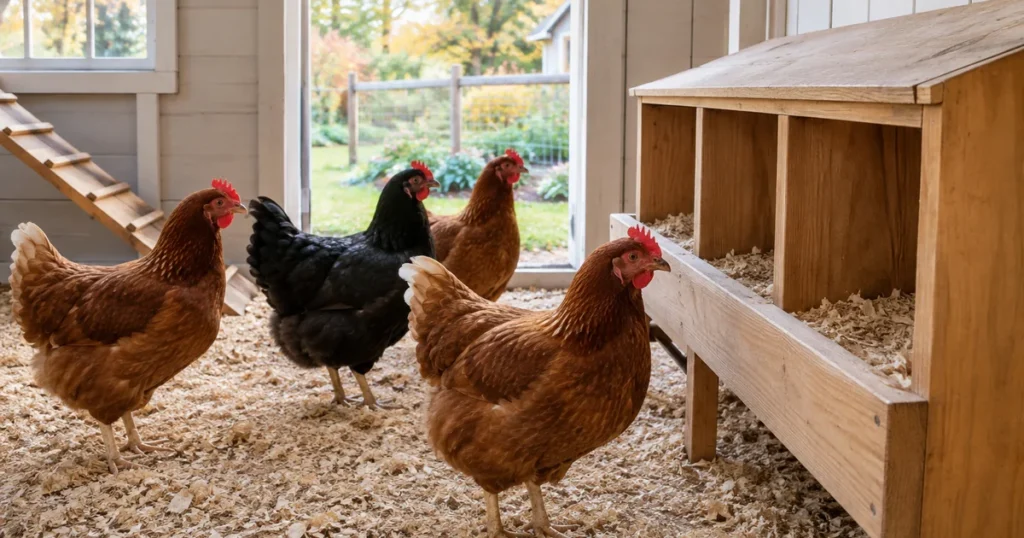
Most of the time, chickens stop laying for a normal, fixable reason: shorter days, the yearly molt, age, stress or a gap in their feed. Less often, the cause is parasites, illness or eggs that are being laid (or eaten) somewhere you are not looking. Work through the causes below in order, use the diagnostic table to narrow it down, and you will usually find the answer within a few days.
Quick answer
- Hens need about 14 to 16 hours of light a day to lay well; below roughly 12 hours, laying slows or stops.
- Fall molt shuts down laying for 8 to 12 weeks (sometimes longer) while hens regrow feathers.
- Laying drops each year after a hen’s first two laying seasons.
- Layer feed (about 16% protein, 3.5-4% calcium) should be most of the diet; too many treats cut egg numbers.
- A sudden stop plus lethargy, a hunched posture or breathing trouble means a sick hen: call a poultry vet or your state extension service.
In this guide
Why are my chickens not laying eggs? Start with three questions
- What month is it? From October through February, short days and molt explain most laying stops in the US.
- How old are your hens? Pullets start at 18 to 22 weeks; hens over 3 lay noticeably less.
- What changed in the last two weeks? New feed, new birds, a move, a predator, a heat wave or a cold snap can all stop laying.
If none fit, check feed, hidden nests, egg eating, parasites and health, in that order.
11 reasons chickens stop laying (and how to fix each one)
1. Not enough daylight
Light, not temperature, is the main switch for egg production. Extension services agree that hens need around 14 to 16 hours of light for steady laying, and that production falls off once days drop below about 12 hours, roughly October to February in most of the US.
Fix: accept a winter slowdown, or add supplemental light on a timer in the early morning. Our guide to getting eggs in winter with coop lighting walks through a safe setup.
2. Molting
Once a year, usually in fall, hens drop old feathers and grow new ones. Feathers are mostly protein, so most hens stop laying until the molt is over. The first adult molt typically comes at around 18 months of age.
Fix: feed a higher-protein ration, handle hens as little as possible and be patient. See our full guide to chicken molting and what to feed molting hens.
3. Age
A hen lays the most eggs in her first two laying seasons. After that, egg numbers and shell quality decline a little each year, though many hens still lay at 4 or 5, just less often.
Fix: no supplement reverses age. Add a few pullets every 2 to 3 years for a steady supply.
4. Stress
Moving coops, new flock members, a chasing dog, rough handling or a predator prowling at night can stop laying for a couple of weeks. Even stress you do not notice can cut production.
Fix: remove the source and keep the routine boring. Look for dug holes or torn wire. Quarantine new birds for at least 30 days and introduce them gradually.
5. Feed problems: protein, calcium and too many treats
Layer feed is typically 16% protein (sometimes 17-18%) with roughly 3.5 to 4% calcium. When hens fill up on scratch, bread or scraps, their real protein and calcium intake drops, and so does laying. An empty feeder for a day or two also sets them back.
Fix: make layer feed at least 90% of the diet. Limit scratch and scraps to what the flock finishes in 15 to 20 minutes. Offer crushed oyster shell free choice, and switch feeds gradually over a week.
Coop hack: Weigh a day’s treats against a day’s feed. A standard-size hen eats roughly a quarter pound (about 115 g, or half a cup) of feed a day, a bit more for large breeds, so a single slice of bread or a big handful of scratch per hen is a large share of her diet. If treats are piling up, they are probably costing you eggs.
6. Water
An egg is mostly water. A waterer that runs dry on a hot afternoon or freezes on a January morning can interrupt laying for days.
Fix: check water twice a day, shade it in summer and use a heated waterer in freezing weather.
7. A broody hen
A broody hen sits in the nest all day, puffs up and growls when you reach under her, and stops laying. Silkies, Cochins and Orpingtons go broody often; Leghorns rarely do.
Fix: collect eggs twice a day, lift her off the nest often and block the nest box at night. For a stubborn hen, a few days in a wire-bottomed crate with food and water usually breaks the cycle.
8. Hidden nests
Free-range hens hide eggs under bushes, porches and hay bales. Healthy hens with red combs and empty nest boxes are probably still laying, just not for you.
Fix: keep the flock in the run until late morning for a week; most hens lay in the first half of the day. Make nests dim, clean and about 12 x 12 x 12 inches, one per 4 to 5 hens, with a dummy egg in each.
9. Egg eating
Once a hen learns a broken egg is a snack, she breaks them on purpose and others copy her. Clues: shell bits, yolk on beaks, sticky bedding. Boredom, crowding, heat, bright nests and thin shells make it more likely.
Fix: collect eggs often, darken nests with a curtain, add bedding and offer oyster shell. Hang a cabbage for distraction. A roll-away nest box solves stubborn cases.
10. Mites, lice and worms
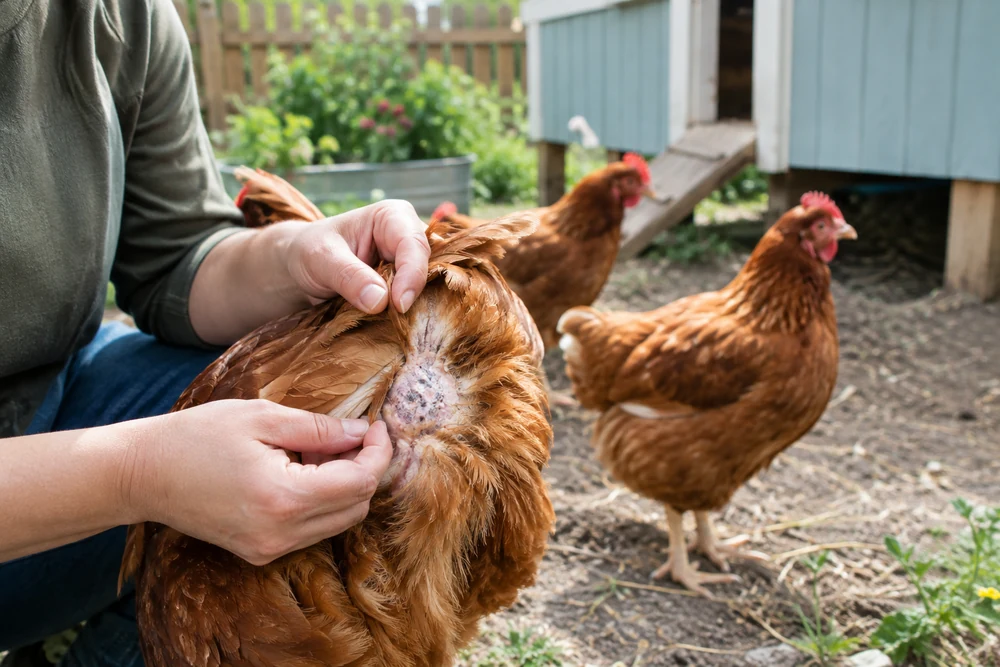
Virginia Cooperative Extension links northern fowl mite infestations to a 10 to 15% drop in egg production and smaller eggs. These mites live on the bird, around the vent. Red mites hide in roost cracks by day and feed at night. Worms can also reduce laying; only a fecal test confirms them.
Fix: check every hen monthly: part the feathers below the vent and look for moving specks, egg clusters or crusty skin, and inspect roost ends with a flashlight at night. If you find parasites, treat flock and coop with a product labeled for laying hens, follow the label and egg-withdrawal times, and ask your vet.
11. Illness
A drop in laying is often the first sign of disease, from respiratory infections to reproductive problems. Watery eyes, sneezing, diarrhea, lameness, weight loss or a penguin-like stance are warning signs. Our guide to signs of a sick chicken covers what to look for.
Fix: isolate the bird, keep her quiet and hydrated, and contact a poultry vet or your state extension service. Do not give antibiotics or other drugs without veterinary advice.
Bonus: extreme heat or cold
Chickens are most comfortable at about 60 to 75°F (16 to 24°C). Around 85°F (29°C), they eat less, pant and lay fewer, thinner-shelled eggs. In winter, damp drafty coops and frozen water hurt more than the cold itself.
Fix: summer shade, airflow and extra water; winter dry bedding and draft-free ventilation, not heat.
Warning: Highly pathogenic avian influenza (HPAI) is still circulating in US wild birds and poultry as of October 2026. Sudden deaths, a sharp drop in laying, swollen heads, purple combs or many sick birds at once should be reported right away to your state veterinarian or USDA APHIS (toll-free 1-866-536-7593). Keep wild birds away from feed and water, and use dedicated coop shoes.
Gear that helps
- Crushed oyster shell for laying hens: Free-choice calcium supports shell quality and helps prevent thin shells and egg eating.
As an Amazon Associate we earn from qualifying purchases. Check current prices and reviews on Amazon.
Diagnostic table: sign, likely cause, fix
Match what you see to the most likely cause. Several causes often overlap, especially in the fall.
| What you notice | Likely cause | What to do |
|---|---|---|
| Whole flock slows from October to February, hens look healthy | Short days | Add morning light on a timer to reach about 14 hours, or wait for spring |
| Feathers everywhere, bald patches, new pin feathers | Molt | Higher-protein feed, fewer treats, minimal handling |
| Fewer, larger eggs from hens over 3 years old | Age | Normal; add pullets every 2-3 years |
| Laying stopped after new birds, a move or a predator scare | Stress | Remove the cause, secure the coop, keep routines steady |
| Thin or soft shells, hens fill up on scraps | Low calcium or protein | Layer feed as 90% of diet, free-choice oyster shell |
| One hen flattens in the nest, growls, will not leave | Broodiness | Collect eggs often, block nest at night, broody crate |
| Healthy hens with red combs, but empty nest boxes | Hidden nests | Confine until late morning, improve nests, add dummy eggs |
| Shell bits, yolk on beaks, sticky bedding | Egg eating | Collect early, darken nests, oyster shell, distractions |
| Crusty or dirty skin at the vent, pale comb, scratching | Mites or lice | Inspect at night, treat flock and coop with a labeled product |
| Panting, wings held out, heavy drinking | Heat stress | Shade, cool water, airflow, extra waterers |
| Lethargy, hunched posture, discharge, breathing noise | Illness | Isolate the bird and call a poultry vet or extension service |
Gear that helps
- LED coop light with timer: The most common fall and winter cause is short days; a timed morning light restores 14 hours.
As an Amazon Associate we earn from qualifying purchases. Check current prices and reviews on Amazon.
Why did my chickens stop laying suddenly?
A sudden, flock-wide stop usually points to something that changed: an empty feeder or frozen waterer, a predator attack, a heat wave, a feed change or a move. If the stop came with sick-looking birds or deaths, treat it as a possible disease outbreak and call your vet or state poultry lab immediately.
A sudden stop in a single hen is more often broodiness, the start of molt or a health problem. If she is eating and alert, check her comb: pale with new pin feathers points to molt, bright red with no eggs points to a hidden nest or an egg eater. If she sits hunched, strains or stops eating, she needs help quickly.
Coop hack: Keep a simple egg log on the coop door or your phone: date and number of eggs. When production drops, you can see whether it was gradual (light, age, molt) or overnight (stress, water, predator, illness), which is the fastest way to narrow the cause.
When to call a vet
Most laying stops do not need a vet. Call a poultry or avian vet, your state extension office or your state poultry diagnostic lab if you see any of these:
- A hen that is lethargic, hunched, not eating or not drinking
- Labored breathing, gurgling, sneezing or discharge from eyes or nostrils
- Straining with no egg, a swollen abdomen or a penguin-like stance
- Bloody or very watery droppings
- Several birds sick at once, or sudden deaths
Many states offer low-cost testing, and a necropsy of a dead bird can protect the rest of your flock.
Common mistakes to avoid
- Changing feed or adding supplements before checking the calendar.
- Filling hens up on scratch grains and scraps, then wondering why eggs dropped.
- Adding supplemental light to pullets younger than about 20 weeks, which can push them to lay too early.
- Using a heat lamp to “help” winter laying: heat lamps are a leading cause of coop fires and do not add useful laying hours.
- Treating for worms or mites “just in case” with products not labeled for laying hens.
- Ignoring a single quiet, hunched hen because the rest of the flock looks fine.
Backyard Chickens Mastery
More eggs, healthy hens, zero losses: the step-by-step guide that puts every coop hack in one place, from first flock to fifth winter.
Get the guide ($17)How to get your chickens laying again
Once you have found the likely cause, follow this order to get eggs flowing again:
- Today: full feeder of layer feed, liquid water, oyster shell on the side.
- Cut treats to a small afternoon portion.
- Check every hen for mites, lice and illness.
- Secure the coop and remove stress.
- Freshen nests and collect eggs twice a day.
- Fall to spring: add morning light or let hens rest.
Give changes two to three weeks. Long term, choosing the best egg-laying chicken breeds and adding young hens regularly keep eggs coming all year.
Gear that helps
- Ceramic or wooden dummy nest eggs: Shows hens where to lay, helps with hidden nests and discourages egg pecking.
- Roll-away nest box: Eggs roll out of reach, which stops egg eating and keeps eggs clean.
As an Amazon Associate we earn from qualifying purchases. Check current prices and reviews on Amazon.
FAQ
How long do chickens stop laying in the winter?
Without added light, many hens slow or stop from about November to February and resume as days pass 12 hours in late winter. Young hens often keep laying at a lower rate.
At what age do chickens stop laying eggs?
Hens do not stop at a fixed age. Production is highest in the first two laying seasons and declines each year after that. Many hens lay occasionally into their 5th or 6th year, then stop completely.
Can stress stop a chicken from laying?
Yes. A move, new birds, a predator scare or rough handling can stop laying for days to weeks. Eggs usually return once the routine settles.
Do chickens stop laying when it is hot?
They often lay less. Above about 85°F (29°C), hens eat less, pant and may lay fewer eggs with thinner shells. Shade, cool water and good ventilation help them recover.
Will chickens lay eggs without a rooster?
Yes. Hens lay eggs with or without a rooster. A rooster is only needed if you want fertile eggs to hatch chicks.
How do I know if my chicken is still laying?
A laying hen usually has a bright red, full comb and a moist, oval vent. A hen that is not laying often has a smaller, paler comb and a dry, puckered vent. Watching which hen visits the nest box also helps.
Keep reading
Sources
- Why Did My Chickens Stop Laying? – Oregon State University Extension
- Why Have My Hens Stopped Laying? 5 Factors that Impact Egg Production – Virginia Cooperative Extension
- Feeding Chickens for Egg Production in Small and Backyard Flocks – Extension Poultry (eXtension)
- Life Cycle of a Laying Hen – University of Wisconsin-Madison Extension
- Raising Backyard Chickens for Eggs – University of Florida IFAS Extension
- Poultry Parasites: Northern Fowl Mites – Virginia Cooperative Extension
- Mites of Poultry – Merck Veterinary Manual
- Preventing Heat Stress in Poultry – University of Minnesota Extension
- Producing Your Own Eggs – UNH Cooperative Extension
- Avian Influenza – USDA APHIS